
COLON CANCER • Patient Education
Colon Cancer Signs and Symptoms: What to Watch For and When to See a Surgeon
Colon cancer rarely announces itself early. Its first signs are often small changes that are easy to explain away: a shift in bowel habit, a little blood in the stool, tiredness that has no obvious cause. Because it grows slowly and is highly treatable when found early, knowing which changes deserve attention matters more for this cancer than for almost any other.
This article explains the signs and symptoms of colon cancer, who is at higher risk, why screening is recommended from age 45, how the diagnosis is made, and how it is treated, including when a surgical oncologist becomes involved.
By Surgical Associates of Southern Texas · Katy and Sugar Land, TX · April 2022
On This Page
- Early Signs of Colon Cancer
- Symptoms That Depend on Where the Cancer Is
- Warning Signs That Need Prompt Attention
- Who Is at Higher Risk
- Why Screening Matters Even Without Symptoms
- How Colon Cancer Is Diagnosed
- Treatment Options
- When to See a Surgeon
- What Recovery Looks Like After Colon Surgery
- Final Takeaway
- Frequently asked questions

Symptoms that won’t settle? Get a clear answer.
Consult with Dr. Murtaza Shakir, board-certified general surgeon. Call now, or send us your details and our team will call you back.
What You’ll Learn
- Early Signs of Colon Cancer
- Symptoms That Depend on Where the Cancer Is
- Warning Signs That Need Prompt Attention
- Who Is at Higher Risk
- Why Screening Matters Even Without Symptoms
Early Signs of Colon Cancer
Early colon cancer often causes no symptoms at all. When symptoms do appear, they tend to be subtle and easy to attribute to diet, hemorrhoids, or stress. The changes that most often turn out to be significant are:
- A change in bowel habits that lasts more than a few weeks: new constipation, new diarrhea, or alternating between the two
- Narrower stools than usual, sometimes described as pencil-thin
- Blood in or on the stool, which may be bright red or dark and tarry
- A feeling that the bowel does not empty completely after a movement
- Persistent abdominal discomfort: cramps, gas, bloating, or a dull ache
- Unexplained fatigue, often from slow blood loss and anemia
- Unintended weight loss
None of these symptoms is specific to cancer. Each has more common, benign causes. What should prompt evaluation is persistence: symptoms that last beyond two to three weeks, or that keep coming back, are the ones to have checked rather than watched.
Symptoms That Depend on Where the Cancer Is
Right-sided (ascending) colon
The right side of the colon is wide, and stool there is still liquid, so tumors can grow large without blocking anything. Cancers here often cause slow, hidden bleeding that leads to iron-deficiency anemia. The first clue may be fatigue, shortness of breath on exertion, or a low blood count on a routine test, with no visible blood in the stool at all.
Left-sided (descending and sigmoid) colon
The left colon is narrower and stool is formed, so tumors here are more likely to change bowel habits, narrow the stool, and cause visible bright-red blood, cramping, or a sense of incomplete emptying.
Rectum
Rectal cancers commonly cause bright-red bleeding, a persistent urge to pass stool, and changes in stool shape. Because rectal bleeding is so often caused by hemorrhoids, it is frequently dismissed. Bleeding that is new, persistent, or occurs in someone over 40 should be evaluated even when hemorrhoids are present.
Warning Signs That Need Prompt Attention
Some symptoms suggest that a tumor is blocking the bowel or has caused significant blood loss. Seek care promptly, or go to the emergency department, for:
- Severe or worsening abdominal pain with bloating
- Inability to pass stool or gas, with nausea or vomiting
- Heavy rectal bleeding or passing large clots
- Black, tarry stools
- Dizziness, rapid heartbeat, or fainting, which can signal anemia or bleeding
- Rapid, unexplained weight loss
Who Is at Higher Risk
Anyone can develop colon cancer, but several factors raise the likelihood:
- Age. Risk rises steadily after 45, although rates in younger adults have been increasing for two decades.
- Personal history of colorectal polyps (especially adenomas) or a previous colorectal cancer.
- Family history of colorectal cancer or advanced polyps in a first-degree relative, particularly before age 60.
- Inherited syndromes such as Lynch syndrome or familial adenomatous polyposis (FAP).
- Inflammatory bowel disease: long-standing ulcerative colitis or Crohn's colitis.
- Lifestyle factors: a diet high in red and processed meat and low in fiber, obesity, physical inactivity, smoking, and heavy alcohol use.
- Type 2 diabetes.
People with a family history or an inherited syndrome usually need earlier and more frequent screening than the general population, and this is worth discussing with a physician even before any symptoms appear.
Why Screening Matters Even Without Symptoms
Most colon cancers begin as a polyp, a small growth on the inner lining of the colon, that takes years to turn cancerous. Screening finds and removes polyps before that happens, and finds cancers at an early, curable stage. The U.S. Preventive Services Task Force recommends that adults at average risk begin screening at age 45 and continue through 75, with individualized decisions from 76 to 85.
Screening options include:
- Colonoscopy, typically every 10 years if normal. It examines the whole colon and allows polyps to be removed at the same time.
- Stool-based tests such as the fecal immunochemical test (FIT) every year, or a stool DNA test every one to three years. A positive result must be followed by a colonoscopy.
- CT colonography or flexible sigmoidoscopy at set intervals.
The best test is the one that actually gets done. If you are 45 or older and have never been screened, that is the single most useful step you can take, regardless of symptoms.
Key Takeaway So Far
So far we have covered early signs of colon cancer, symptoms that depend on where the cancer is, warning signs that need prompt attention, and more. Next, we look at how colon cancer is diagnosed, treatment options, when to see a surgeon, followed by answers to common questions.
How Colon Cancer Is Diagnosed
Colonoscopy and biopsy
When symptoms or a positive screening test raise concern, a colonoscopy is the definitive next step. A flexible camera examines the full length of the colon, and any suspicious area is biopsied. The biopsy confirms whether cancer is present and what type.
Blood tests
A complete blood count checks for anemia. A CEA (carcinoembryonic antigen) level is often measured as a baseline; it is not a screening test but is useful for follow-up after treatment.
Imaging and staging
Once cancer is confirmed, a CT scan of the chest, abdomen, and pelvis determines whether it has spread to lymph nodes, the liver, or the lungs. For rectal cancer, an MRI of the pelvis or endorectal ultrasound shows how deeply the tumor has grown. Together these tests establish the stage, from stage I (confined to the inner layers of the bowel wall) to stage IV (spread to distant organs), which guides treatment.
Treatment Options
Surgery
Surgery is the primary treatment for most colon cancers that have not spread widely. The operation, a colectomy, removes the segment of colon containing the tumor along with its blood supply and nearby lymph nodes, then reconnects the healthy ends. Depending on the tumor's location this may be a right, left, sigmoid, or extended colectomy. Most colectomies can be performed laparoscopically or robotically through small incisions, which typically means less pain and a faster recovery than open surgery. Some very early cancers within a polyp can be removed entirely during colonoscopy.
Chemotherapy
Recommended after surgery for many stage III cancers and some higher-risk stage II cancers to reduce the chance of recurrence, and used as the main treatment when cancer has spread to distant organs.
Radiation therapy
Used mainly for rectal cancer, often combined with chemotherapy before surgery to shrink the tumor.
Targeted therapy and immunotherapy
Options for certain advanced cancers, selected based on the tumor's genetic features.
Treating cancer that has spread to the liver
Colon cancer that has spread to the liver can sometimes still be treated with intent to cure, by removing or ablating the liver tumors in addition to the primary cancer. This is where a surgeon trained in both colorectal and liver surgery is particularly valuable. Learn more on our liver cancer and surgical oncology pages.
When to See a Surgeon
A primary care physician or gastroenterologist is usually the first stop for symptoms and for screening. A surgical consultation is appropriate once a cancer or a polyp too large to remove endoscopically has been found, or when a patient wants to understand what an operation would involve before deciding on treatment.
Dr. Murtaza Shakir is board certified in both General Surgery and Complex General Surgical Oncology, with fellowship training at the University of Pittsburgh Medical Center that included colorectal and liver cancer surgery. He evaluates patients with newly diagnosed colon and rectal cancer at the Katy and Sugar Land offices and coordinates care with gastroenterologists and medical oncologists. See our colon cancer surgery page and meet Dr. Shakir.
What Recovery Looks Like After Colon Surgery
After a laparoscopic or robotic colectomy, most patients stay in the hospital for two to four days, walking from the first day and returning to a light diet as bowel function recovers. Open surgery generally involves a longer stay. Desk work is often possible within two to three weeks; heavy lifting is limited for about six weeks. Bowel habits may take several weeks to settle, and a temporary or, less commonly, permanent stoma is needed in some rectal cancer operations, which is discussed in detail beforehand. Our pre-operative and post-operative care pages cover general preparation and recovery.
Follow-up after treatment includes regular visits, CEA blood tests, CT scans, and a repeat colonoscopy, typically at one year and then at intervals, to catch any recurrence or new polyps early.
Final Takeaway
Colon cancer is common, slow-growing, and very treatable when caught early. Two habits make the difference: get screened from age 45, and do not wait out bowel changes or bleeding that last more than a few weeks. If a cancer or a large polyp is found, a consultation with a surgical oncologist will clarify the stage, the treatment plan, and what surgery and recovery would involve. Patients across Katy, Sugar Land, Richmond, Fulshear, and West Houston can request a consultation at either of our two Fort Bend County offices.
Frequently Asked Questions
What are the first signs of colon cancer?
Usually a lasting change in bowel habits, blood in the stool, narrower stools, persistent abdominal discomfort, or unexplained fatigue from anemia. Early cancers often cause no symptoms, which is why screening matters.
At what age should I start colon cancer screening?
Age 45 for people at average risk, according to the U.S. Preventive Services Task Force. People with a family history, inherited syndromes, or inflammatory bowel disease may need to start earlier.
Is blood in the stool always cancer?
No. Hemorrhoids and anal fissures are far more common causes. But new or persistent bleeding, especially after age 40, should be evaluated with a colonoscopy rather than assumed to be hemorrhoids.
Can colon cancer be cured?
Yes. When found at an early stage, colon cancer is highly curable with surgery, and many stage III cancers are cured with surgery plus chemotherapy. Even some cancers that have spread to the liver can be treated with curative intent.
Is colon cancer surgery done laparoscopically?
Most colectomies today are performed laparoscopically or robotically through small incisions. Open surgery is used for very large tumors, emergencies, or extensive prior surgery.
Will I need a colostomy bag?
Most colon cancer operations do not require a stoma. Some rectal cancer operations require a temporary stoma while the reconnection heals, and a small number require a permanent one. Your surgeon will explain what applies to you.
How long does recovery from colon cancer surgery take?
Typically a two-to-four-day hospital stay after minimally invasive surgery, light activity within two to three weeks, and a return to full activity in about six weeks.
Who treats colon cancer near Katy and Sugar Land?
Dr. Murtaza Shakir, a board-certified general surgeon and surgical oncologist, evaluates and treats colon cancer at 410 W Grand Pkwy S, Suite 4D, Katy, TX 77494 and 17510 W Grand Pkwy S, Suite 320, Sugar Land, TX 77479. Request a consultation or call 713-955-9191.
Need Help With These Symptoms?
If your symptoms are persistent, worsening, or affecting daily life, a surgical evaluation can help determine the cause and whether treatment may be appropriate. Dr. Murtaza Shakir sees patients at the Katy and Sugar Land offices.
Medical Disclaimer
This article is intended for general educational purposes only and is not a substitute for professional medical advice, diagnosis, or treatment. Symptoms can have many possible causes, and treatment decisions should be based on an individual medical evaluation. If you are experiencing severe or rapidly worsening symptoms, seek prompt medical attention. For a medical emergency, call 911 or go to the nearest emergency department.
References
- U.S. Preventive Services Task Force. Colorectal Cancer: Screening - Final Recommendation Statement (2021). uspreventiveservicestaskforce.org.
- National Cancer Institute. Colorectal Cancer - Patient Version. cancer.gov.
- National Comprehensive Cancer Network. NCCN Guidelines for Patients: Colon Cancer; Rectal Cancer; Colorectal Cancer Screening. nccn.org.
- American Cancer Society. Cancer Types: Colorectal Cancer. cancer.org.
- American College of Surgeons. Surgical Patient Education: Operations and Procedures. facs.org.
Your Surgeon
About the Physician
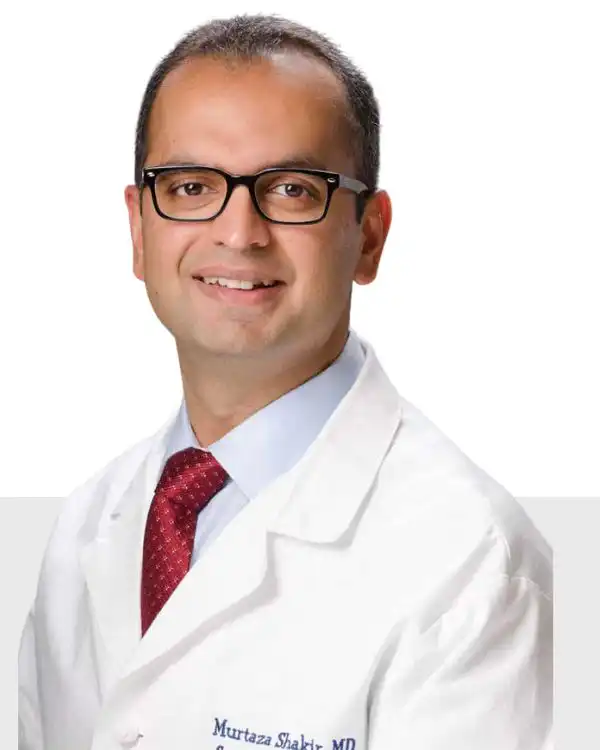
Murtaza Shakir, MD
Dr. Murtaza Shakir is a board-certified General Surgeon and is board certified in Complex General Surgical Oncology. He earned his medical degree at Aga Khan University, completed General Surgery residency at Riverside Methodist Hospital in Columbus, Ohio, and a two-year Surgical Oncology fellowship at the University of Pittsburgh Medical Center.
He evaluates and treats patients at Surgical Associates of Southern Texas in Katy and Sugar Land.
Board certified by the American Board of Surgery in:
- General Surgery
- Complex General Surgical Oncology
Surgical focus:
- Hernia repair: open, laparoscopic, and robotic
- Gallbladder surgery: laparoscopic and robotic
- General surgery
- Surgical oncology
Recognized by Houstonia Magazine among Houston’s top general surgeons. Learn more about general surgery.