
Sebaceous Cyst • Patient Education
Signs of Infected Sebaceous Cyst
Sebaceous cysts are common, harmless lumps that develop under the skin when a sebaceous gland becomes blocked. While most sebaceous cysts are painless and non-threatening, they can sometimes become infected, leading to redness, swelling, and discomfort. Recognizing the signs of an infected sebaceous cyst early is essential for proper treatment and to prevent complications such as abscess formation or systemic infection. This article explains the symptoms, causes, risk factors, and when to seek medical care.
By Surgical Associates of Southern Texas · Katy and Sugar Land, TX · January 2026
On This Page
Symptoms that won’t settle? Get a clear answer.
Consult with Dr. Murtaza Shakir, board-certified general surgeon. Call now, or send us your details and our team will call you back.
What You’ll Learn
- What Is a Sebaceous Cyst?
- How a Sebaceous Cyst Becomes Infected
- Common Signs of an Infected Sebaceous Cyst
- Pain-Related Symptoms
- Visual and Physical Changes
What Is a Sebaceous Cyst?
A sebaceous cyst is a closed sac under the skin filled with a thick, oily substance called sebum, which is produced by sebaceous glands. These cysts can form anywhere on the body but are most common on the face, neck, scalp, and torso. Typically, sebaceous cysts grow slowly and remain painless unless they become irritated or infected. Understanding their basic characteristics can help differentiate a normal cyst from one that may require medical attention.
How a Sebaceous Cyst Becomes Infected
Infection occurs when bacteria enter the cyst, either through a break in the skin or by blockage that traps sebum inside. The trapped material can then become inflamed, leading to swelling, redness, and tenderness. Poor hygiene, trauma to the cyst, or scratching can increase the risk of infection. Once infected, the cyst may fill with pus and become increasingly painful.
Common Signs of an Infected Sebaceous Cyst
Recognizing infection early is important for prompt care. Common signs of an infected sebaceous cyst include:
- Rapid enlargement of the cyst
- Increased redness and warmth over the area
- Pain or tenderness when touched
- Formation of pus or foul-smelling discharge
- Development of a hard or firm lump beneath the skin
These signs indicate that the cyst is no longer harmless and needs evaluation by a healthcare professional.
Visual and Physical Changes
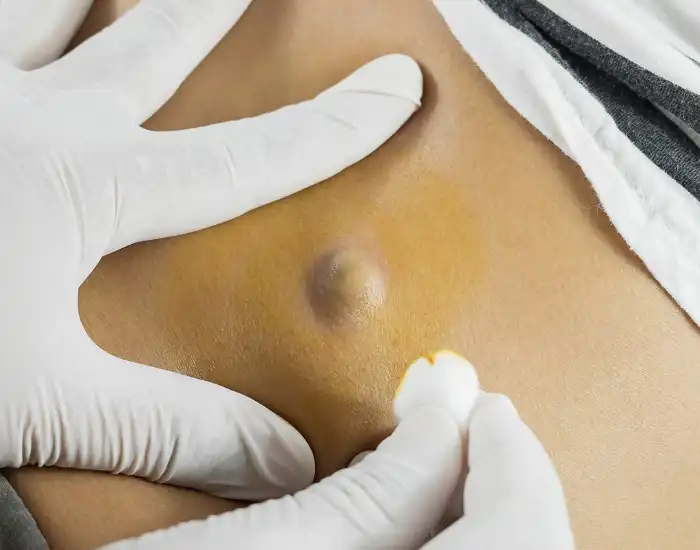
An infected sebaceous cyst usually exhibits noticeable changes in appearance. The skin around the cyst may become red, inflamed, or shiny, indicating inflammation. Swelling is common and may make the cyst larger than before. In some cases, the cyst may rupture, releasing a thick, yellowish, or foul-smelling discharge. Persistent warmth or a hardening of the cyst can also be signs of infection.
Key Takeaway So Far
So far we have covered what is a sebaceous cyst, how a sebaceous cyst becomes infected, common signs of an infected sebaceous cyst, and more. Next, we look at who is at higher risk for infection, when to see a doctor, complications of an untreated infection.
Who Is at Higher Risk for Infection?
Some individuals are more likely to develop an infected sebaceous cyst. High-risk groups include:
- People with existing skin conditions such as acne or eczema
- Those with poor hygiene or frequent skin trauma
- Individuals with weakened immune systems
- People with large or deep cysts that are more prone to blockage
Understanding these risk factors can help individuals monitor cysts more carefully and seek medical attention early if signs of infection appear.
When to See a Doctor
Medical evaluation is necessary if a sebaceous cyst shows signs of infection. Immediate care is especially important if there is severe pain, spreading redness, fever, or pus. A healthcare provider may drain the cyst, prescribe antibiotics, or recommend surgical removal depending on the severity of the infection. Do not attempt to squeeze or lance the cyst at home, as this can worsen the infection or lead to scarring.
Complications of an Untreated Infection
If an infected sebaceous cyst is left untreated, it can lead to several serious complications. The infection may cause the formation of an abscess that requires surgical drainage, or it could spread to the surrounding skin and deeper tissues, increasing the risk of more extensive infection. In rare cases, the infection can enter the bloodstream, leading to a systemic infection or sepsis, which is a medical emergency. Additionally, untreated cysts can result in persistent scarring or discoloration of the affected area. Early recognition and timely treatment are essential to reduce these risks and prevent further complications.
Final Thoughts
Most sebaceous cysts are harmless, but infection can transform a simple cyst into a painful and potentially serious condition. Recognizing the signs of an infected sebaceous cyst, monitoring changes, and seeking timely medical care are crucial for preventing complications and ensuring proper treatment.
If you notice redness, swelling, pain, or pus around a cyst, contact Surgical Associates of Southern Texas promptly. Their experienced medical team can evaluate the cyst, provide treatment, and prevent further complications safely and effectively.
Disclaimer: This article is for informational purposes only and does not replace professional medical advice, diagnosis, or treatment. Always consult a qualified healthcare provider for any concerns regarding skin lumps or infections.
Need Help With These Symptoms?
If your symptoms are persistent, worsening, or affecting daily life, a surgical evaluation can help determine the cause and whether treatment may be appropriate. Dr. Murtaza Shakir sees patients at the Katy and Sugar Land offices.
Medical Disclaimer
This article is intended for general educational purposes only and is not a substitute for professional medical advice, diagnosis, or treatment. Symptoms can have many possible causes, and treatment decisions should be based on an individual medical evaluation. If you are experiencing severe or rapidly worsening symptoms, seek prompt medical attention. For a medical emergency, call 911 or go to the nearest emergency department.
References
- American Academy of Dermatology. Melanoma: Signs and symptoms (the ABCDEs of melanoma). aad.org.
- National Cancer Institute. Skin Cancer (Including Melanoma) - Patient Version. cancer.gov.
- National Cancer Institute. Melanoma Treatment (PDQ) - Patient Version. cancer.gov.
- American Cancer Society. Melanoma Skin Cancer. cancer.org.

Your Surgeon
About the Physician
Murtaza Shakir, MD
Dr. Murtaza Shakir is a board-certified General Surgeon and is board certified in Complex General Surgical Oncology. He earned his medical degree at Aga Khan University, completed General Surgery residency at Riverside Methodist Hospital in Columbus, Ohio, and a two-year Surgical Oncology fellowship at the University of Pittsburgh Medical Center.
He evaluates and treats patients at Surgical Associates of Southern Texas in Katy and Sugar Land.
Board certified by the American Board of Surgery in:
- General Surgery
- Complex General Surgical Oncology
Surgical focus:
- Hernia repair: open, laparoscopic, and robotic
- Gallbladder surgery: laparoscopic and robotic
- General surgery
- Surgical oncology
Recognized by Houstonia Magazine among Houston’s top general surgeons. Learn more about general surgery.