 EN
EN ES
ES UR
UR HI
HI
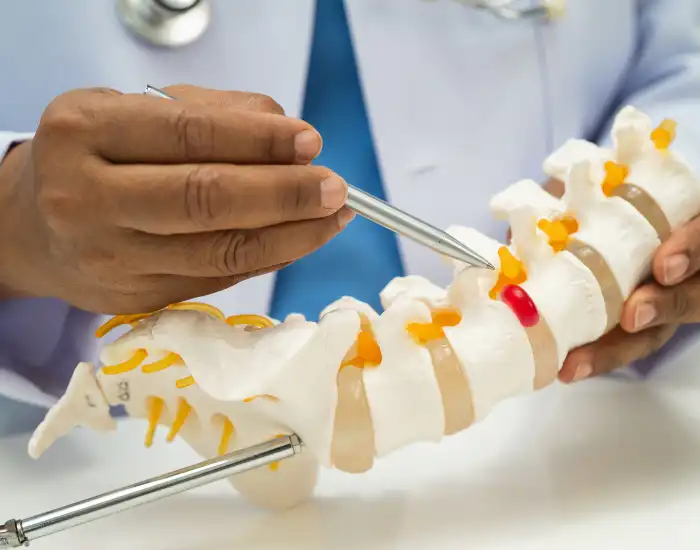
Planning hernia surgery around work?
Talk through your repair and recovery timeline with board-certified general surgeon Dr. Murtaza Shakir in Katy or Sugar Land. Call (713) 955-9191, or send your details and our team will call you back.
THE SHORT ANSWER
Most people go home the same day after hernia surgery, walk within hours, return to desk work within about 1 to 3 weeks and get back to full activity, including heavier lifting, in about 4 to 6 weeks. Recovery is often quicker after laparoscopic repair, and slower for large, complex or recurrent hernias.
Why Is Hernia Surgery Usually Recommended?
Hernia surgery is usually recommended because hernias do not heal on their own, and repair prevents complications such as bowel obstruction or strangulation. A hernia occurs when an organ or tissue pushes through a weak spot in the surrounding muscle or connective tissue, often creating a bulge that is more noticeable with coughing, lifting or activity.
Common types include:
- Inguinal hernia in the groin
- Umbilical hernia near the belly button
- Incisional hernia at the site of a previous surgical incision
- Hiatal hernia involving the upper stomach and the diaphragm
- Femoral hernia in the upper thigh, just below the groin
Hernia repair is one of the most frequently performed operations in the United States, and most patients recover on a predictable timeline. The timelines below apply mainly to abdominal wall and groin hernias. Hiatal hernia repair is a different operation on the diaphragm with its own recovery plan; see reflux surgery.
How Long Does Hernia Surgery Recovery Take?
For most patients, full recovery from hernia surgery takes about four to six weeks, with the biggest improvement in the first one to two weeks. Some people recover sooner and others need a little longer.
Surgeons tailor the timeline to a few factors:
- The size and location of the hernia
- Whether the repair is open or minimally invasive
- Your age and overall health
- How active you were before surgery
- Whether any complications occur during or after the operation
Most modern hernia repairs use mesh reinforcement, and many use minimally invasive techniques, which often allow a faster recovery than older approaches. Large, complex or recurrent hernia repairs usually come with longer activity limits; the American College of Surgeons notes that lifting limits after these repairs may last up to 6 months.
How Does Recovery Differ After Open and Laparoscopic Repair?
Recovery is often shorter and less uncomfortable after laparoscopic repair, but both approaches are safe and effective. The right one depends on the hernia type, its size and your health.
| Milestone | Open repair | Laparoscopic repair |
|---|---|---|
| Going home | Same day or within 24 hours | Usually same day |
| Walking | Light activity after a few days | Within hours of surgery |
| Desk work | Within 2 to 3 weeks for many patients | Within 1 to 2 weeks |
| Exercise and full activity | Within 4 to 6 weeks | Gradual return within 3 to 4 weeks |
Open repair: the surgeon makes a small incision near the hernia, returns the tissue to its place and reinforces the weakened wall, often with surgical mesh. Laparoscopic repair: several very small incisions and a camera guide the repair, which often means less discomfort. Not every patient is a candidate for laparoscopic repair. Robotic hernia repair is another minimally invasive option, and Cleveland Clinic notes that both laparoscopic and robotic approaches tend to recover faster than open surgery.
These are typical ranges, not rules. Some patients with desk jobs return within days; the National Institute of Diabetes and Digestive and Kidney Diseases notes that many people resume work and daily activities within 3 to 5 days after inguinal hernia repair. See time off work after hernia surgery.
What Happens in the First Days and the First Week?
The first week is about rest, pain control and gentle walking. After the operation you are monitored for a short period, and most people go home the same day.
In the first few days it is common to have:
- Mild to moderate soreness around the incision
- Temporary swelling or bruising
- Fatigue
- Limited mobility at first
These typically improve steadily. The American College of Surgeons notes that by day 4 most people report no severe pain, and incision pain is usually gone within 7 to 10 days. During the first week, most patients are encouraged to:
- Walk short distances several times a day to improve circulation
- Avoid lifting heavy objects
- Keep the incision clean and dry
- Take prescribed or recommended pain medicines as needed
Avoid strenuous activity during this early phase. Do not drive while taking narcotic pain medicine. More detail is on our post-operative care page.
Want a Recovery Plan That Fits Your Life?
Ask about your hernia type, repair approach and expected time off during a consultation with Dr. Murtaza Shakir in Katy or Sugar Land.
What Does Recovery Look Like From Week Two to Week Six?
From week two to week four, most patients return to daily routines and many go back to desk jobs, while heavy lifting is still off limits. During this stage:
- Walking and light activity become easier
- Pain is usually minimal or comes and goes
- Swelling starts to go down
- Many patients return to desk work
Avoid heavy lifting and strenuous exercise until your surgeon clears you. Pushing too fast can slow healing or raise the risk of complications. The American College of Surgeons advises not lifting more than 10 pounds or doing strenuous activity for at least 4 to 6 weeks after groin hernia repair; your surgeon will give you limits for your specific repair.
By about weeks four to six, most patients can:
- Exercise normally
- Lift heavier objects
- Do physically demanding work
- Return to sports and fitness
Build back up gradually rather than going straight to maximum effort. For workout guidance, see how long after hernia surgery you can work out.
What Is Normal Healing, and When Should I Call the Surgeon?
Normal healing means discomfort that improves a little each day. Expected signs include:
- Mild soreness near the incision
- Temporary swelling around the surgical area
- Slight firmness under the incision as it heals
- Gradual improvement in mobility
Call your surgeon if you have:
- Pain that is increasing instead of slowly improving
- Fever or chills (the American College of Surgeons uses a fever above 101°F as a reason to call)
- Redness or drainage from the incision
- Severe swelling
- Persistent nausea or vomiting
- Difficulty urinating
These can signal infection, a fluid collection or another complication that needs prompt attention. Go to the emergency room or call 911 if you cannot urinate at all, have severe belly pain with vomiting and bloating, or notice a firm, very painful bulge that will not go back in. Those can be signs of a trapped or blocked bowel, which is an emergency.
How Can I Recover Well and Lower the Chance of Another Hernia?
Steady walking, good nutrition and following your lifting limits support healing and help protect the repair. Helpful habits include:
- Walking regularly to promote circulation
- Eating a balanced diet with enough protein
- Staying hydrated
- Avoiding smoking and tobacco products
- Following lifting restrictions carefully
- Keeping your follow-up appointments
Over the long term, these steps may lower the risk of a new hernia:
- Maintain a healthy body weight
- Use proper lifting technique, bending at the knees
- Avoid chronic constipation and straining
- Get a persistent cough treated
- Strengthen your core muscles gradually once cleared
Mesh repair lowers, but does not eliminate, the chance of a hernia coming back.
Who Manages Hernia Surgery and Recovery?
A general surgeon with experience in abdominal procedures performs the repair and guides your recovery plan. Others may be involved:
- Primary care physician: often first notices the hernia and refers you for surgical evaluation.
- General surgeon: performs the repair, sets your activity limits and follows your healing.
- Surgeons focused on advanced abdominal wall surgery: may be consulted for complex or recurrent hernias.
Before surgery, it helps to tell the surgeon what your job involves, how far you drive and who can help at home. Those details shape a realistic plan for time off and lifting limits. Our guide to questions to ask your hernia surgeon can help you prepare.
How Do Patients in Katy, Sugar Land and Houston Plan Hernia Surgery Recovery?
Plan the first week around rest and short walks, arrange a ride home and help with errands, and schedule your follow-up visit before surgery. Many Houston-area commutes are long, so build in time before you return to a daily drive.
- Arrange a driver for surgery day and the first days afterward
- Ask your employer about light duty if your job involves lifting
- Set up your home so everyday items are at waist height
- Stock easy, high-fiber foods and fluids to prevent constipation
Dr. Shakir performs hernia surgery and follows patients through recovery at offices in Katy and Sugar Land. Learn more about hernia repair, call (713) 955-9191 or request an appointment.
Questions to Ask Your Surgeon About Hernia Surgery Recovery
- Will my repair be open, laparoscopic or robotic, and how does that change recovery?
- When can I return to my job, given what my work involves?
- How much can I lift, and for how long?
- When can I drive, exercise and return to sports?
- Will you use mesh, and how does it affect healing?
- Which symptoms after surgery should make me call you or go to the ER?
What Is Recovery Like After Robotic Inguinal or Ventral Hernia Repair?
Recovery after a robotic groin repair is usually quick, while a robotic ventral repair takes longer because the abdominal wall itself has been rebuilt.
Robotic inguinal (groin) hernia repair
Recovery is usually similar to laparoscopic repair. Most patients go home the same day, walk that evening and are back to light daily activity within a few days. Soreness at the three or four small incisions is common, as is a bloated or shoulder-tip feeling for the first day or two from the gas used during surgery. Desk work is often possible within about a week and physical work in two to four weeks. Lifting over about 15 pounds is typically limited for four to six weeks so the mesh can incorporate.
When both groins are repaired in the same operation, recovery is usually only modestly longer than for one side, because there is no second set of incisions. Some patients feel close to normal within a week, while others need the full month. See inguinal hernia repair for how the operation is done.
Robotic ventral and incisional hernia repair
This repair usually involves suturing the defect closed and placing mesh within the layers of the abdominal wall. Early soreness is often more noticeable than after a groin repair, and an abdominal binder may be recommended for support. Small to medium repairs are frequently same-day or one-night procedures, while larger defects may involve a stay of one to several nights. Expect desk work within one to two weeks, physical work in three to six weeks and lifting restrictions of six to eight weeks for larger repairs. Bowel function can be sluggish for a few days. See ventral and incisional hernia repair for how the operation is planned.
What Affects How Long Your Recovery Takes?
The hernia itself, your health and how closely you follow instructions all shape recovery time. Larger or more complex hernias typically need more time to heal.
Type of hernia
- Inguinal hernia: often a quicker recovery, especially with laparoscopic or robotic repair
- Umbilical hernia: recovery depends on size and whether mesh was used
- Ventral or incisional hernia: may need a longer recovery because of abdominal wall weakness
- Hiatal hernia: recovery often includes dietary changes and a gradual return to normal eating
Health conditions
- Diabetes: slower wound healing and higher infection risk, so blood sugar control is essential
- Obesity: more pressure on the repair, slower mobility and healing, and more strain on the abdominal muscles
- Smoking: reduced blood flow to tissues, delayed healing and a higher complication risk
- Chronic cough or constipation: frequent straining can stress the repair and prolong discomfort
- Prior abdominal surgery: scar tissue can add complexity, especially for recurrent hernias
Other factors
- First-time versus recurrent repair, since reoperations involve scar tissue and often take longer to settle
- Whether mesh was placed, and where
- Age, fitness and weight
- Medications such as steroids or blood thinners
- Your job and activity goals, which set what “fully recovered” means for you
- Following instructions: walking early, respecting lifting limits and attending follow-up
Recovery can also be extended if the hernia was large or complex, emergency surgery was required, complications occurred or other health conditions are present. This does not mean the surgery failed. It means the body needs more time to heal.
When Can You Return to Work, Drive, Lift and Exercise?
Most people return to desk work within one to two weeks, drive within a few days once off narcotic pain medicine, and wait four to eight weeks before heavy lifting or hard exercise. During recovery, surgeons generally ask you to avoid heavy lifting, limit strenuous exercise and increase activity gradually. These precautions protect the repair, help prevent recurrence and allow proper internal healing. Following your post-operative instructions closely is one of the most important factors in a successful recovery.
Work
Most patients with desk jobs return within about one week after a robotic groin or small umbilical repair, and within one to two weeks after a ventral or incisional repair. Physically demanding jobs generally require two to four weeks after groin repair and three to six weeks after abdominal wall repair, sometimes with temporary lifting limits on return. Dr. Shakir provides a work note tailored to your job and the repair performed. More detail is in time off work after hernia surgery.
Driving
You can drive once you are no longer taking narcotic pain medication and can twist, brake and react without hesitation. That is typically three to five days after a minimally invasive repair and somewhat longer after a large open or abdominal wall reconstruction. Do not drive home on the day of surgery.
Lifting
Light lifting of everyday objects is fine from the start. Lifting more than about 10 to 15 pounds is usually limited for four to six weeks after a groin, umbilical or small ventral repair, and for six to eight weeks or longer after a large ventral or incisional repair. Mesh integrates into the abdominal wall over the first several weeks, and straining too early is one of the main avoidable causes of recurrence. The American College of Surgeons notes that after complex or recurrent repairs, lifting limits may last up to 6 months.
Exercise
Walking is encouraged from the first day and can be increased daily. Light cardio such as a stationary bike is often reasonable at two weeks. Running, weight training and core exercise are usually cleared at four to six weeks for groin repairs and six to eight weeks for abdominal wall repairs, depending on healing at your follow-up visit. Ease back in rather than resuming your previous routine at full intensity. See how long after hernia surgery you can work out.
Frequently Asked Questions
How painful is recovery after hernia surgery?
Most people have mild to moderate soreness for the first few days. The American College of Surgeons notes most patients report no severe pain by day 4, and incision pain usually fades within 7 to 10 days.
When can I go back to work after hernia surgery?
Many people return to desk work within 1 to 2 weeks, and some within days. Jobs that involve heavy lifting usually need 4 to 6 weeks or light duty. See time off work after hernia surgery.
How long should I avoid lifting after hernia repair?
A common guideline is no more than about 10 pounds and no strenuous activity for 4 to 6 weeks after groin hernia repair. Complex or recurrent repairs may need longer limits. Follow your surgeon’s specific instructions.
Is laparoscopic hernia recovery faster than open?
Often, yes. Laparoscopic and robotic repairs tend to cause less discomfort and a quicker return to activity, though open repair remains safe and effective for many hernias.
Is a firm lump under the incision normal after hernia surgery?
Slight firmness and swelling are common while tissue heals. A lump that keeps growing, becomes very painful, red or drains fluid should be checked by your surgeon.
Is hernia surgery done as an outpatient procedure?
Often, yes. Many groin, umbilical and smaller ventral repairs are same-day procedures. Larger ventral or incisional repairs may need a stay of one to several nights.
Why are lifting restrictions so important after hernia repair?
Mesh and tissue integrate into the abdominal wall over the first several weeks. Straining too early is one of the main avoidable causes of the hernia coming back.
Does a longer recovery mean my surgery did not work?
No. Large or complex hernias, emergency surgery, complications and health conditions such as diabetes or smoking can all lengthen recovery. It means the body needs more time to heal.
Key Takeaway
Most people recover from hernia surgery in about four to six weeks, walking the same day and returning to desk work within one to three weeks. Laparoscopic repair often shortens recovery, while complex or recurrent repairs take longer. Follow lifting limits, keep follow-up visits and call your surgeon for worsening pain, fever, wound drainage or trouble urinating.
Sources and Further Reading
- Inguinal and Femoral Groin Hernia Repair, American College of Surgeons Patient Education
- Inguinal Hernia, National Institute of Diabetes and Digestive and Kidney Diseases (NIDDK)
- Hernia Surgery: Types, What to Expect, Recovery and Complications, Cleveland Clinic
This article is general education, not personal medical advice. For a hernia that becomes hard, very painful or discolored and will not go back in, or for severe abdominal pain with vomiting, call 911 or go to the nearest emergency room.

Meet the Surgeon
Dr. Murtaza Shakir is a board-certified General Surgeon and is board certified in Complex General Surgical Oncology. He earned his medical degree at Aga Khan University, completed General Surgery residency at Riverside Methodist Hospital in Columbus, Ohio, and a two-year Surgical Oncology fellowship at the University of Pittsburgh Medical Center. He sees patients at Surgical Associates of Southern Texas in Katy and Sugar Land.
Related Reading and Care
Schedule a Hernia Evaluation
Get a repair plan and realistic recovery timeline from Dr. Shakir in Katy or Sugar Land.
This page provides general information and is not a substitute for medical advice. For severe abdominal pain or other emergencies, call 911 or go to the nearest emergency room. Last updated October 16, 2026.