 EN
 ES
 UR
 HI

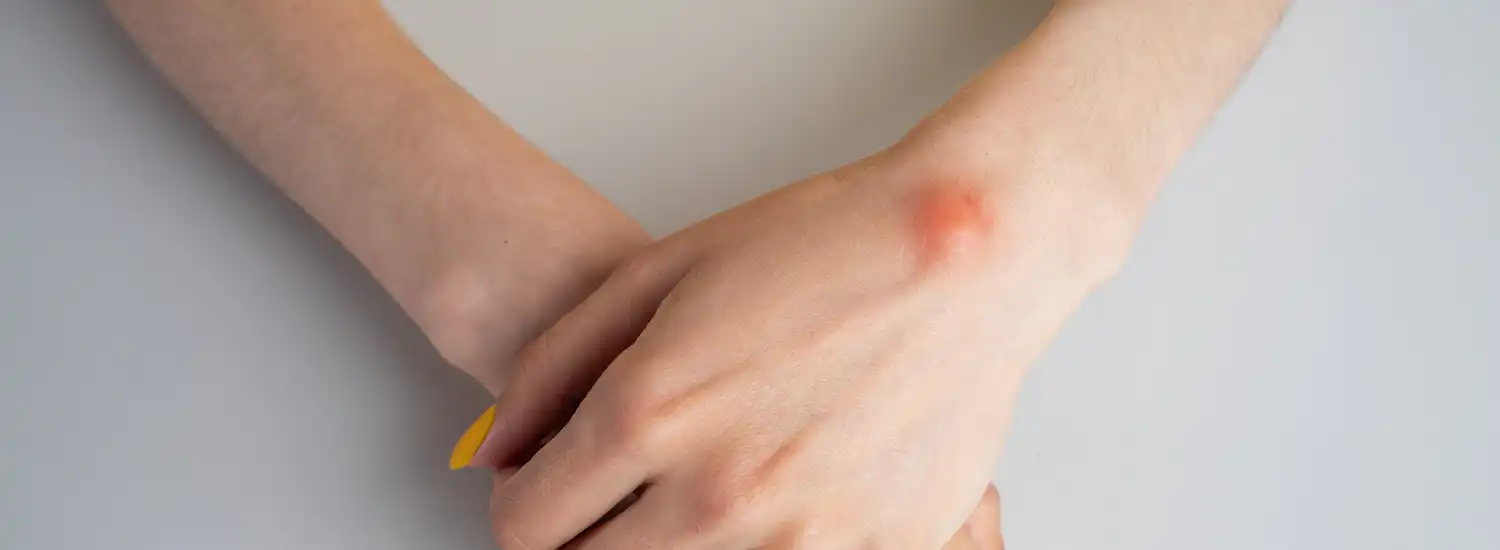
Found a new lump or bump?
Have it examined by board-certified general surgeon Dr. Murtaza Shakir in Katy or Sugar Land. Call (713) 955-9191, or send your details and our team will call you back.
THE SHORT ANSWER
A skin cyst is a sac under the skin filled with fluid, keratin or pus, while a skin mass is a solid lump that can be benign, like a lipoma, or occasionally cancerous. Any lump that is new, growing, painful, infected or uncertain should be examined. Many cysts and benign masses can simply be watched, and those that need removal are usually taken out under local anesthesia as an outpatient.
What Are Skin Lesions, Masses and Cysts?
A skin lesion is any abnormal change or growth on the skin, a skin mass is a solid lump under the surface, and a skin cyst is a closed sac under the skin filled with fluid, pus or other material. The three terms overlap, which is why lumps that look alike at first glance can have very different causes.
- Skin lesion: the broad term for any abnormal spot or growth, including moles, rashes, lumps and discolored patches. Lesions range from harmless to serious depending on the cause.
- Skin mass: a solid lump beneath the surface, often firmer and less movable than a cyst. Many masses are benign, but some raise concern for cancer and need a closer look.
- Skin cyst: a sac-like pocket that holds fluid, pus, keratin or other material. Cysts are usually noncancerous and grow slowly. They often form from a blocked oil gland, an infection or a minor injury to the skin.
These growths can appear anywhere on the body. Some are harmless and may never need treatment, while others grow, cause discomfort, become infected or, less often, point to a more serious condition. Telling them apart is the first step in deciding what to do.
How Can You Tell a Skin Cyst From a Skin Mass?
A cyst usually feels soft or rubbery and may shift slightly under the skin, while a solid mass usually feels firmer and moves less. Those are general patterns, not rules, so a surgeon’s exam is what settles the question.
| Feature | Skin cyst | Skin mass |
|---|---|---|
| Feel | Soft or rubbery | Usually firmer, made of solid tissue |
| Movement | Often shifts slightly under the skin | Often less mobile |
| Contents | Fluid, keratin or pus | Solid tissue |
| Common causes | Blocked glands, infection, minor trauma | Varies with the type of growth |
| Examples | Epidermoid (often called sebaceous) cysts | Benign: lipomas, dermatofibromas. Malignant: melanoma |
Some benign masses break the pattern. A lipoma, a slow-growing fatty lump, typically feels soft and doughy and moves easily under light finger pressure. An epidermoid cyst often has a tiny dark opening over its center and can leak a thick, cheese-like material. Because cancer can occasionally look like a cyst, and the treatment for each growth differs, a proper diagnosis matters more than how the lump feels at home.
When Should a Skin Cyst Be Removed?
A skin cyst should be considered for removal when it hurts, gets infected, grows or changes, gets in the way, or when you are not sure it is really a cyst. Many small, painless cysts never need treatment. Consider removal if:
- The cyst is painful or tender
- It becomes infected or fills with pus
- It grows quickly or changes shape
- It interferes with daily activities or movement, or sits where it is often rubbed or bumped
- It is in a cosmetically sensitive area, such as the face or neck
- You are unsure whether it is a cyst or something more serious
Early evaluation can help prevent complications such as an abscess, scarring or a cyst that keeps coming back. Surgeons generally prefer to remove a cyst when it is calm rather than inflamed, because an inflamed cyst is harder to remove completely. If a cyst is already red and sore, read about the signs of an infected sebaceous cyst.
When Is a Skin Lump Urgent?
A skin lump becomes urgent when it shows signs of a spreading infection or a quickly forming abscess. A cyst that ruptures under the skin can turn into a boil-like infection that needs prompt treatment. Seek same-day care if a lump:
- Becomes rapidly more swollen, hot and painful
- Has redness that spreads outward into the surrounding skin
- Drains pus and is getting worse rather than better
- Comes with fever or chills or makes you feel generally unwell
If you have high fever, confusion or redness spreading fast, especially with diabetes or a weakened immune system, go to the nearest emergency room. Do not squeeze or cut open a cyst at home; it can push infection deeper and make removal harder later.
Other changes are not emergencies but should be checked within days to weeks rather than months: a lump that grows quickly, a firm lump that does not move, a sore that bleeds or does not heal, or a dark spot that changes in size, shape or color. See skin cancer symptoms you should not ignore.
Not Sure What Your Lump Is?
Board-certified general surgeon Dr. Murtaza Shakir examines skin cysts, lumps and lesions for patients from across the Houston area. Request a consultation in Katy or Sugar Land.
How Do Surgeons Evaluate a Lump Under the Skin?
Surgeons evaluate a skin lump with a hands-on exam first, then add imaging or a biopsy only when the exam leaves questions. The goal is to separate benign cysts from masses that could be cancerous.
- History: how long the lump has been there, whether it has grown, drained, become painful or come back after earlier treatment.
- Physical examination: feeling the lump to judge its texture, size, mobility and tenderness, and checking the skin over it for a central opening, redness or a color change.
- Imaging: an ultrasound or MRI for lumps that are deeper, larger or unclear on exam, to show what the lump contains and what it sits next to.
- Biopsy: taking a tissue sample for a pathologist to examine when cancer is a concern.
What changes the plan is usually the combination of findings. A soft, mobile lump that has not changed for years is handled very differently from a firm, fixed or fast-growing one. A spot on the skin surface that is changing in color or shape is evaluated as a possible skin cancer; read what melanoma looks like early.
What Are the Treatment Options for Skin Cysts and Masses?
Treatment depends on the type, location and cause of the lesion, and ranges from simple observation to surgical removal.
- Observation: reasonable when a lump is small, painless and not growing, with a recheck if anything changes.
- Drainage: gives temporary relief for an infected cyst by releasing pus. Because the cyst wall usually stays behind, drainage is often followed later by removal.
- Antibiotics: used when infection is present, sometimes together with drainage.
- Excision: surgical removal of the whole cyst or mass. Removing the entire wall of a cyst lowers the chance it returns, and the removed tissue can be examined to rule out cancer.
Surgical removal of a skin cyst or small mass is typically done under local anesthesia as a quick outpatient procedure. Larger or deeper masses, or those that may be cancerous, may need more planning, and a confirmed skin cancer is managed with the principles described under surgical oncology.
Why Does a Professional Evaluation Matter?
A professional evaluation matters because a lump that looks like a harmless bump can occasionally be a sign of something more serious, and the right treatment depends on what it actually is. Early consultation with a dermatologist or surgeon gives you:
- An accurate diagnosis rather than a guess based on appearance
- A treatment plan matched to the type of growth
- A lower risk of complications such as infection, abscess or recurrence
- Peace of mind that the lump is being managed properly
Watch for symptoms such as rapid growth, pain, redness or a change in shape, and have any new lump or a change in an existing one checked. Learn more about how the practice evaluates and removes skin lesions, masses and cysts.
Where Can Patients in Katy, Sugar Land and Houston Have a Skin Lump Checked?
Patients from across the Houston area can have a skin lump evaluated at Surgical Associates of Southern Texas, with offices in Katy and Sugar Land. Dr. Murtaza Shakir is a board-certified general surgeon and is board certified in Complex General Surgical Oncology, so he evaluates both everyday cysts and lumps that need to be checked for cancer.
- Note when you first noticed the lump and whether it has grown, drained or become painful
- Take a dated photo if the lump or the skin over it is changing
- Bring any prior ultrasound, MRI or biopsy reports
- Mention any personal or family history of skin cancer
Read more about general surgery at the practice, call (713) 955-9191, or request an appointment.
Questions to Ask Your Surgeon About a Skin Lump or Cyst
- Do you think this is a cyst, a benign mass or something that needs a biopsy?
- Do I need an ultrasound or MRI before deciding?
- Is it safe to watch, and what changes should make me call you?
- If it is infected, should it be drained now and removed later?
- Will removal be done under local anesthesia in the office or as an outpatient procedure?
- Will the tissue be sent to a pathologist, and how will I get the results?
- What is the chance it comes back after removal?
Frequently Asked Questions
Are most lumps under the skin cancerous?
No. Most skin cysts and many solid lumps, such as lipomas, are benign. A lump that is growing, firm and fixed, painful without a clear cause, or simply uncertain should still be examined, because cancer can occasionally look like a cyst.
Can a skin cyst go away on its own?
Some small cysts stay the same for years or shrink, and many never need treatment. Because the cyst wall usually remains, a cyst that has been drained or has shrunk can fill up again. Complete surgical removal is the most reliable way to keep it from returning.
Should I pop or squeeze a cyst?
No. Squeezing a cyst can push infection deeper, increase inflammation and scarring, and make later removal harder. If a cyst is painful, red or draining, have it examined instead. See signs of an infected sebaceous cyst.
What is the difference between a lipoma and a cyst?
A lipoma is a solid, slow-growing lump of fatty tissue that feels soft and doughy and moves easily. A cyst is a sac filled with fluid, keratin or pus and may have a small opening on top. A surgeon can usually tell them apart on exam, sometimes with an ultrasound.
Is cyst removal painful?
Most skin cyst removals are done under local anesthesia, so you feel pressure rather than sharp pain during the procedure. Mild soreness afterward is common and is usually managed with simple measures your care team explains.
Key Takeaway
Skin cysts, masses and lesions are common, and most are harmless, but they differ in cause and risk. Have any new lump, or one that grows, hurts, becomes red or changes shape, examined so the right plan can be made, from watching it to removal under local anesthesia. Spreading redness, fever or a rapidly swelling painful lump needs prompt care.
Sources and Further Reading
- Cyst, MedlinePlus Medical Encyclopedia (U.S. National Library of Medicine)
- Epidermoid Cysts: Symptoms and Causes, Mayo Clinic
- Lipoma: Symptoms and Causes, Mayo Clinic
- Melanoma: Signs and Symptoms, American Academy of Dermatology
This article is general education, not personal medical advice. If you think you are having a medical emergency, call 911 or go to the nearest emergency room.

Meet the Surgeon
Dr. Murtaza Shakir is a board-certified General Surgeon and is board certified in Complex General Surgical Oncology. He earned his medical degree at Aga Khan University, completed General Surgery residency at Riverside Methodist Hospital in Columbus, Ohio, and a two-year Surgical Oncology fellowship at the University of Pittsburgh Medical Center. He sees patients at Surgical Associates of Southern Texas in Katy and Sugar Land.
Related Reading and Care
Schedule a Skin Lesion Evaluation
Have a new, growing or bothersome lump examined by Dr. Shakir in Katy or Sugar Land.
This page provides general information and is not a substitute for medical advice. For severe abdominal pain or other emergencies, call 911 or go to the nearest emergency room. Last updated October 16, 2026.