 EN
 ES
 UR
 HI


Worried about lower right belly pain?
For severe or worsening pain, go to the nearest emergency room. For follow-up or questions about appendix surgery, call Dr. Murtaza Shakir’s office in Katy or Sugar Land at (713) 955-9191, or send your details and our team will call you back.
THE SHORT ANSWER
The four classic signs that you may need your appendix removed are pain that moves to the lower right abdomen and keeps getting worse, nausea or vomiting that starts after the pain, fever with chills, and changes in bowel habits. Appendicitis rarely settles on its own, so worsening pain with any of these signs needs same-day medical evaluation.
What Is Appendicitis?
Appendicitis is inflammation and infection of the appendix, a small, narrow pouch attached to the beginning of the large intestine in the lower right abdomen. The National Institute of Diabetes and Digestive and Kidney Diseases (NIDDK) describes it as the most common cause of sudden abdominal pain that needs surgery.
For years the appendix was thought to have no purpose. More recent research suggests it may play a small role in the immune system and in keeping healthy gut bacteria, mainly in childhood. It is still not an essential organ, and people who have it removed generally live normal, healthy lives without long-term digestive problems from its removal.
The trouble starts when the opening of the appendix becomes blocked, most often by hardened stool, enlarged lymph tissue or inflammation, and less commonly by a growth. Bacteria then multiply inside, pressure builds and blood flow to the appendix drops. Without treatment the tissue can begin to die and the appendix can rupture, sometimes within 24 to 72 hours after symptoms start.
What Are the 4 Signs You Might Need Your Appendix Removed?
The four classic warning signs are worsening lower right abdominal pain, nausea or vomiting that follows the pain, fever, and changes in bowel movements. Surgeons pay most attention to how these signs combine and whether they are getting worse.
1. Sharp pain in the lower right abdomen
Pain is the hallmark symptom. It often starts as a dull ache near the belly button and moves over several hours to the lower right side, where it becomes sharper, more focused and constant rather than coming in waves. Walking, coughing, laughing, a deep breath or riding over bumps in a car often makes it worse, because movement stretches the inflamed tissue around the appendix. Many people bend forward or hold their right side because standing straight hurts. Unlike ordinary cramps, the pain usually does not ease after a bowel movement or passing gas.
2. Nausea and vomiting after the pain begins
With appendicitis, the pain usually comes first, followed by nausea, loss of appetite and sometimes vomiting. That order helps doctors tell it apart from a stomach virus, where vomiting often starts before much pain. A sudden lack of interest in food is common. Unlike food poisoning, symptoms usually keep worsening after vomiting, and repeated vomiting can lead to dehydration.
3. Fever and chills
Early appendicitis may cause only a low-grade fever that rises as the infection gets worse. Chills, sweating, fatigue and a strong sense that something is wrong are common. If the appendix ruptures and infection spreads through the abdomen (peritonitis), fever is often higher, pain becomes much more intense and people usually look visibly ill.
4. Changes in bowel movements
Inflammation next to the appendix can disturb how the intestine moves. Some people become constipated, others have diarrhea, and some notice bloating or trouble passing gas. On their own these changes rarely mean appendicitis, but together with lower right pain that keeps building they become much more concerning.
Not everyone has all four signs. Some people have only mild nausea, and others have severe pain without vomiting or fever early on. Persistent or worsening abdominal pain should be checked by a clinician rather than an online symptom checker. For a broader overview, see appendicitis warning signs.
Which Appendicitis Symptoms Are Easy to Overlook?
The symptoms people most often overlook are bloating, unexplained tiredness or weakness, and loss of appetite, because each seems minor on its own. They matter more when they appear alongside abdominal pain that is getting worse.
- Belly bloating or swelling as the appendix becomes more inflamed
- Feeling unusually tired or weak without a clear reason
- Pain when climbing stairs, not just when walking or coughing
- Losing all interest in food
Children, older adults and pregnant women often have less typical symptoms. Mayo Clinic notes that the location of pain can vary with age and the position of the appendix, and that during pregnancy the appendix sits higher, so the pain may seem to come from the upper abdomen. Abdominal pain in these groups should not be dismissed without an exam.
Does Appendicitis Go Away on Its Own?
True appendicitis rarely goes away on its own. The pain may ease for a while, but the inflammation underneath usually keeps progressing until it is treated, and a brief lull can be misleading.
Gas, constipation, a stomach virus or food poisoning often improve within a day or two. Appendicitis pain instead becomes more intense and localized. Several other conditions can cause similar pain, which is why doctors rely on an exam, lab tests and imaging rather than symptoms alone:
| Condition | Common symptoms |
|---|---|
| Appendicitis | Lower right abdominal pain, nausea, fever, loss of appetite |
| Kidney stones | Severe flank pain, blood in the urine, nausea |
| Gastroenteritis | Vomiting, diarrhea, stomach cramps, fever |
| Ovarian cyst | Pelvic pain, menstrual changes, bloating |
| Crohn’s disease | Long-lasting abdominal pain, diarrhea, weight loss |
If you are unsure what is causing your pain, our guide to abdominal pain and stomach discomfort covers other common causes.

When Should You Go to the Emergency Room?
Treat possible appendicitis as an emergency until a doctor rules it out. Go to the emergency room, or call 911 if you are very unwell, if you have:
- Sudden or worsening pain in the lower right abdomen
- Abdominal pain that lasts several hours
- Nausea or repeated vomiting after the pain began
- Fever with abdominal pain
- Pain that gets worse when you walk, cough or move
- Severe abdominal swelling or tenderness
- Trouble standing upright because of pain
- Confusion, weakness or signs of dehydration
Delay raises the chance that the appendix ruptures and spreads infection through the abdomen. A rupture can also leave a pocket of pus (an abscess). Mayo Clinic notes an abscess is usually drained with a tube placed through the abdominal wall and treated with antibiotics, with the appendix removed then or later. Early evaluation often allows treatment before these complications develop.
Questions After an ER Visit for Belly Pain?
Dr. Murtaza Shakir sees patients in Katy and Sugar Land for follow-up and surgical evaluation of appendicitis and other abdominal problems. Call (713) 955-9191 to arrange a visit.
How Do Doctors Diagnose Appendicitis?
Doctors diagnose appendicitis by combining your story, the physical exam, lab tests and imaging. No single symptom settles it.
- Your history: when the pain started, where it began, whether it moved, and whether nausea, vomiting, fever or bowel changes followed.
- The exam: gentle pressure on different areas of the belly. Pain focused over the lower right side, especially when the pressure is released, suggests irritation around the appendix.
- Blood and urine tests: a raised white blood cell count and other markers point to infection or inflammation, while a urine test helps rule out a urinary infection or kidney stone. NIDDK notes a pregnancy test may also be done.
- Imaging: CT is commonly used in adults because it shows the appendix and nearby organs in detail. Ultrasound is often used for children and pregnant patients to avoid radiation, and MRI is sometimes recommended.
An early diagnosis lets treatment start before the appendix ruptures, which lowers the risk of complications and shortens recovery.
Does Appendicitis Always Mean Surgery?
Most people with appendicitis are advised to have the appendix removed, an operation called an appendectomy, because it removes the source of infection and prevents another episode. Treatment should not be delayed once appendicitis is diagnosed or strongly suspected. The exact plan depends on how severe the infection is, whether the appendix has ruptured and your overall health.
In some carefully selected cases of very early or uncomplicated appendicitis, antibiotics alone may be used first. Many of these patients later have another episode, which is why surgery remains the most reliable long-term treatment.
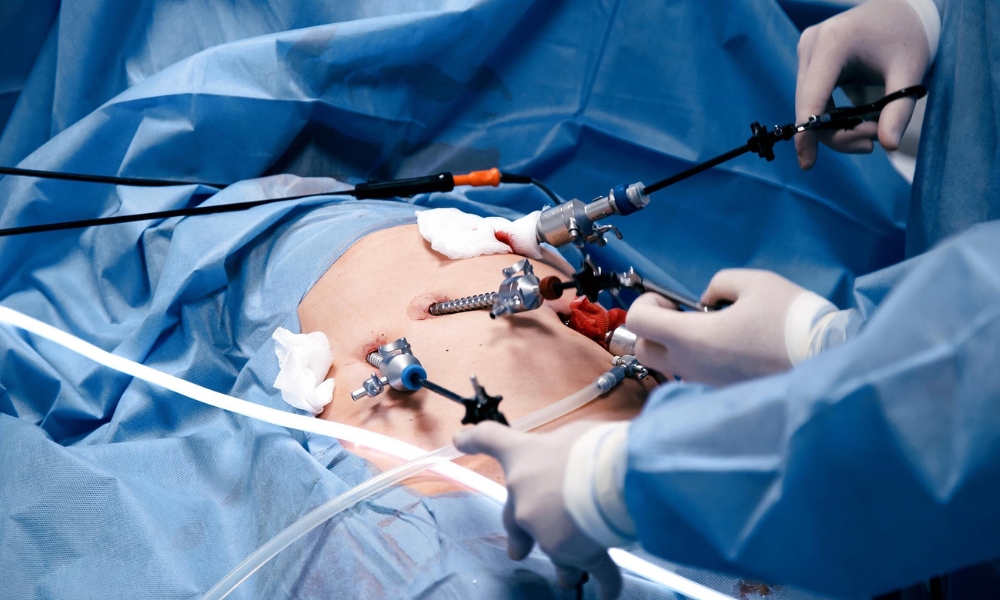
Laparoscopic appendectomy
Most appendectomies today are done laparoscopically. The surgeon works through a few small incisions using a tiny camera and slim instruments. Compared with traditional open surgery, laparoscopic appendectomy generally offers:
- Smaller incisions and less scarring
- Less pain after surgery
- A lower risk of wound complications
- A shorter hospital stay
- A quicker return to work and daily activities
If the appendix has already ruptured or infection has spread through the abdomen, a more extensive operation or a longer hospital stay may be needed. Catching appendicitis early makes a minimally invasive operation more likely. Learn more about appendicitis surgery.
What Is Recovery Like After Appendix Removal?
Most people recover well after a routine laparoscopic appendectomy. Recovery depends on whether the appendix was removed before or after it ruptured, the type of surgery and your general health.
- Going home: many patients go home the same day or within about 24 hours.
- First days: mild soreness around the incisions is expected and usually improves steadily.
- Walking: encouraged soon after surgery to help circulation and healing and to lower the risk of blood clots.
- Light activity: most people return to light daily activities within one to two weeks.
- Heavy lifting and hard exercise: may need to wait several weeks, depending on your surgeon’s advice.
After a rupture, recovery often takes longer because intravenous antibiotics, drainage or a longer hospital stay may be needed. Call your surgeon for severe or increasing pain, a high fever, or redness, foul-smelling drainage or more drainage from an incision. Following your instructions closely supports a smoother recovery; see our post-operative care guidance.
Where Can Patients in Katy, Sugar Land and Houston Get Care for Appendicitis?
If you think you have appendicitis right now, go to the nearest emergency room rather than waiting for an office appointment. Appendicitis is diagnosed and often operated on the same day through the hospital.
Surgical Associates of Southern Texas cares for patients with appendicitis and other abdominal conditions at offices in Katy and Sugar Land. Dr. Murtaza Shakir is a board-certified general surgeon who uses minimally invasive techniques whenever appropriate. Contact the office if:
- You were seen in an ER for right-sided pain and told to follow up with a surgeon
- You were treated with antibiotics and want to discuss whether to have the appendix removed
- You have questions about recovery after an appendectomy
Read more about general surgery at the practice, meet Dr. Shakir, or call (713) 955-9191 and request a call back.
Questions to Ask Your Surgeon About Appendicitis
- Do my symptoms, exam and scan point clearly to appendicitis?
- Has my appendix ruptured, or is there an abscess?
- Am I a candidate for antibiotics first, or do you recommend surgery now?
- Will you use a laparoscopic or open approach, and why?
- How long will I likely stay in the hospital?
- When can I return to work, drive and lift?
- Which symptoms after surgery should make me call you?
Frequently Asked Questions
Where is appendix pain usually located?
It usually starts near the belly button and moves to the lower right side of the abdomen, becoming sharper and more localized as inflammation worsens. In children, older adults and pregnant women the pain can be in a slightly different place.
Can gas feel like appendicitis?
Yes. Gas, constipation and indigestion can mimic early appendicitis. Gas pain generally improves after passing gas or having a bowel movement, while appendicitis pain usually keeps getting worse.
How quickly can appendicitis become serious?
Quickly. In some cases the appendix can rupture within 24 to 72 hours after symptoms begin, which is why worsening abdominal pain needs same-day evaluation.
Can adults get appendicitis?
Yes. Appendicitis is most common in teenagers and young adults, but it can happen at any age, including in older adults, who may have less typical symptoms.
How long does recovery take after an appendectomy?
Most people recover within one to three weeks after a routine laparoscopic appendectomy. Recovery may take longer if the appendix ruptured or complications develop. See post-operative care for general guidance.
Can appendicitis be prevented?
Usually not. It often starts when the opening of the appendix becomes blocked unexpectedly. A diet rich in fiber, fruits, vegetables and whole grains supports digestive health and reduces constipation, but no diet has been proven to prevent appendicitis. Recognizing symptoms early is the most important step.
Key Takeaway
Lower right abdominal pain that keeps getting worse, especially with nausea after the pain starts, fever or bowel changes, may mean you need your appendix removed. Appendicitis rarely resolves on its own and can rupture within days, so get same-day evaluation. Caught early, it is usually treated with a laparoscopic appendectomy and most people recover well.
Sources and Further Reading
- Appendicitis, National Institute of Diabetes and Digestive and Kidney Diseases (NIDDK)
- Appendectomy: Surgical Removal of the Appendix, American College of Surgeons
- Appendicitis: Symptoms and Causes, Mayo Clinic
This article is general education, not personal medical advice. For severe abdominal pain, fever with abdominal pain, heavy bleeding, or yellowing of the skin or eyes, seek emergency care.

Meet the Surgeon
Dr. Murtaza Shakir is a board-certified General Surgeon and is board certified in Complex General Surgical Oncology. He earned his medical degree at Aga Khan University, completed General Surgery residency at Riverside Methodist Hospital in Columbus, Ohio, and a two-year Surgical Oncology fellowship at the University of Pittsburgh Medical Center. He sees patients at Surgical Associates of Southern Texas in Katy and Sugar Land.
Related Reading and Care
Schedule an Appendicitis Follow-Up Evaluation
For non-emergency questions about appendicitis or appendix surgery, see Dr. Shakir in Katy or Sugar Land.
This page provides general information and is not a substitute for medical advice. For severe abdominal pain or other emergencies, call 911 or go to the nearest emergency room. Last updated October 16, 2026.