 EN
 ES
 UR
 HI

Surgical Oncology
Surgical Oncology in Katy and Sugar Land, TX
Cancer Surgery From a Board-Certified Surgical Oncologist
A scan that shows a mass, a biopsy that finds cancer, or a lump that keeps growing raises urgent questions. Surgical oncology is the branch of surgery that diagnoses, stages, and removes cancer. A surgical oncologist helps you understand whether surgery should be part of your treatment, and when.
At Surgical Associates of Southern Texas, Dr. Murtaza Shakir is board certified by the American Board of Surgery in General Surgery and Complex General Surgical Oncology. He evaluates and treats breast, colon and rectal, liver, pancreatic, and thyroid and parathyroid cancers, along with skin lesions and soft tissue masses. He sees patients at offices in Katy and Sugar Land, serving Fort Bend County and Greater Houston.
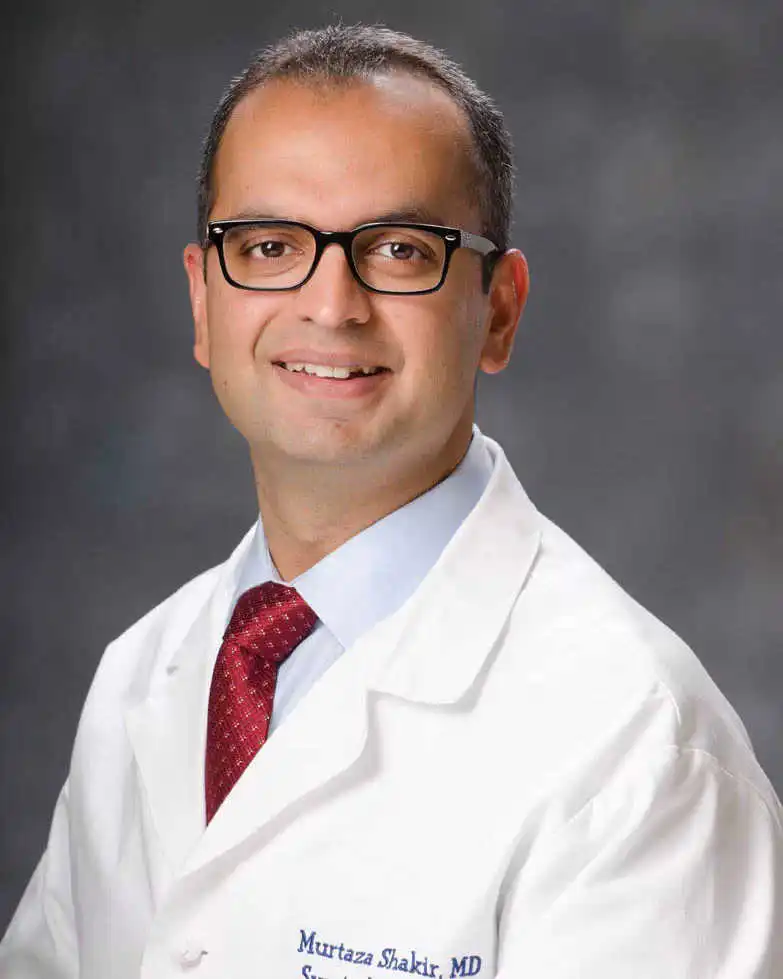
Meet the Surgeon
Dr. Murtaza Shakir, MD, general surgeon and surgical oncologist in Katy and Sugar Land, TX
- Dual board certified in General Surgery and Complex General Surgical Oncology
- Named a Houstonia Top Doctor in General Surgery, 2026 (see listing)
- Highly reviewed: rated 4.9 stars on Google
- Specialized in cancers of the liver, bile ducts, pancreas, colon, rectum, breast, stomach, thyroid, and parathyroid, melanoma and soft tissue sarcoma, plus laparoscopic and robotic general surgery
Patient Reviews
What Patients Say About Dr. Shakir
Rated 4.9 stars on Google. Real experiences from patients treated in Katy and Sugar Land.
Jump to a section
- At a glance
- What is surgical oncology?
- What a surgical oncologist does
- Board certification explained
- Cancers we treat
- When to see a surgical oncologist
- Multidisciplinary care
- Does every cancer need surgery?
- Meet your surgeon
- What to expect at a consultation
- Open, laparoscopic, and robotic surgery
- Preparing and recovering
- Risks of cancer surgery
- Follow-up after treatment
- Patient reviews
- Why choose us
- Insurance
- Locations
- FAQs
- Schedule a consultation
At a Glance
Surgical Oncology at a Glance
- What it is
- The branch of surgery that focuses on cancer: taking biopsies, finding out how far a cancer has spread, and removing tumors.
- What a surgical oncologist does
- Reviews your imaging and biopsy results, explains whether surgery can help, plans the operation, performs it, and follows your pathology results with the rest of your cancer team.
- Cancers treated here
- Breast, colon and rectal, liver, pancreatic, thyroid and parathyroid, and skin and soft tissue cancers and masses.
- Specialty training
- Board certification in Complex General Surgical Oncology follows general surgery certification and an accredited surgical oncology fellowship of at least two years.
- How care is shared
- Cancer care is usually a team effort. Surgery is often combined with chemotherapy, radiation, or other medicines given by medical and radiation oncologists.
- Surgical approaches
- Open, laparoscopic, and robotic surgery, chosen according to the cancer, its location, and your health.
- Get emergency care for
- Vomiting blood, black or bloody stools, severe belly pain, vomiting with no stool or gas, or high fever after surgery. Call 911.
- Where
- Offices in Katy and Sugar Land, TX. Call 713-955-9191.
Cancer Surgery Basics
What Is Surgical Oncology?
Surgical oncology is the branch of surgery devoted to cancer. It uses operations to diagnose cancer, find out how far it has spread, and remove tumors, most often solid tumors in one area of the body.
Surgery is one of the oldest cancer treatments. Today it is one of three main pillars of cancer care, alongside medical oncology, which treats cancer with chemotherapy and other medicines, and radiation oncology, which uses radiation. Many people receive more than one of these treatments.
Surgical Oncologist vs. General Surgeon
Every surgical oncologist first trains as a general surgeon. A surgical oncologist then completes extra fellowship training focused on cancer, including complex operations and planning surgery alongside other cancer treatments. Dr. Shakir is board certified in both fields, so he also treats common general surgery problems such as gallbladder disease and hernias.
The Surgeon's Role
What Does a Surgical Oncologist Do?
A surgical oncologist uses surgery to diagnose, stage, and treat cancer, and works with your other doctors to decide when surgery fits into your plan. Depending on your situation, an operation may have one or more of these goals.
Diagnosis
A surgical biopsy removes some or all of a suspicious area so a pathologist can check it under a microscope. A biopsy is the usual way to confirm cancer.
Staging
Surgery can show how large a tumor is and whether it has spread, sometimes by removing nearby lymph nodes. The stage guides every treatment decision.
Removing the Cancer
When cancer is in one area, the goal is to remove the whole tumor with a rim of healthy tissue around it, called a margin.
Debulking
When removing an entire tumor would harm an organ, the surgeon may remove as much as is safely possible, and other treatments follow.
Relieving Symptoms
Palliative surgery eases problems such as pain, pressure, or a blocked bowel. Its aim is comfort and quality of life rather than cure.
Lowering Future Risk
Some people with a strong inherited risk choose surgery to remove tissue likely to become cancer. This lowers risk but does not remove it completely.
Your surgeon also reviews the final pathology report after surgery with you. That report shows whether the margins are clear and whether lymph nodes contain cancer, which helps your team decide whether more treatment is needed.
Specialty Training
What Does Board Certification in Complex General Surgical Oncology Mean?
Complex General Surgical Oncology is a specialty certification from the American Board of Surgery (ABS) for surgeons with advanced training in cancer surgery. It recognizes knowledge and skill in the diagnosis, multidisciplinary treatment, and rehabilitation of patients with cancer, including complex and uncommon cancers.
What It Takes to Become Certified
The ABS sets the requirements for this certificate:
- General surgery first: the surgeon must already hold ABS certification in General Surgery
- Fellowship training: at least two years in an accredited complex general surgical oncology fellowship
- Operative experience: a record of cases reviewed for volume, range, and complexity
- Two examinations: a written qualifying exam and an oral certifying exam
- Ongoing requirements: continuous certification to keep the credential current
Dr. Shakir's Training
Dr. Murtaza Shakir earned his medical degree at Aga Khan University and completed general surgery residency. He then completed a two-year Surgical Oncology fellowship at the University of Pittsburgh Medical Center. He is board certified in both General Surgery and Complex General Surgical Oncology. Read more about Dr. Shakir.
Areas of Care
Cancers We Treat
Dr. Shakir evaluates and treats solid tumors of the abdomen, breast, neck, and skin. Each condition below has its own page with details on symptoms, diagnosis, staging, and surgery.
Other Cancers
Dr. Shakir’s practice also includes cancers of the stomach and bile ducts, melanoma, and soft tissue sarcoma. If you are not sure whether your diagnosis is one he treats, call 713-955-9191 and the office can help.
Breast Cancer
Evaluation of breast lumps and abnormal mammograms or biopsies, and surgical planning for breast cancer, including lumpectomy and mastectomy options. Learn about breast cancer care.
Colon and Rectal Cancer
Care for colon and rectal cancer and for polyps that cannot be removed during colonoscopy, with surgery planned around your stage. Learn about colon cancer care.
Liver Cancer
Evaluation of liver masses and liver cancer, including whether a tumor can be safely removed and how surgery fits with other treatments. Learn about liver cancer care.
Pancreatic Cancer
Review of pancreatic masses, imaging, and biopsy results, and assessment of whether surgery is possible now or after other treatment. Learn about pancreatic cancer care.
Thyroid and Parathyroid Cancer
Evaluation of thyroid nodules, neck lumps, and high calcium levels, and surgical care for thyroid and parathyroid cancer. Learn about thyroid and parathyroid cancer care.
Skin Lesions, Masses and Cysts
Evaluation, biopsy, and removal of suspicious moles, skin growths, lumps, and soft tissue masses. Learn about skin lesion and mass removal.
Getting Referred
When Should You See a Surgical Oncologist?
You should see a surgical oncologist when a test suggests or confirms a solid tumor that surgery may help diagnose or treat. Many patients are referred by a primary care doctor, gastroenterologist, gynecologist, or medical oncologist. Common reasons include:
- A biopsy that shows cancer
- A mass or abnormal finding on a CT scan, MRI, ultrasound, or mammogram
- A polyp or growth that could not be removed during colonoscopy
- A lump in the breast, neck, or under the skin that is new, growing, or firm
- A mole or skin spot that is changing in size, shape, or color
- A cancer that has shrunk after chemotherapy or radiation and may now be removable
- Wanting another surgeon’s opinion before a recommended cancer operation
Seeing a surgeon early, even before treatment starts, helps your team plan the right order of treatment from the beginning.
When to Get Emergency Care
Seek emergency care for vomiting blood or coffee-ground material, black stools or heavy rectal bleeding, severe belly pain, repeated vomiting with a swollen belly and no stool or gas, yellow skin or eyes with fever and chills, chest pain, sudden shortness of breath, or fainting. For a medical emergency, call 911 or go to the nearest emergency department.
Team-Based Care
How Multidisciplinary Cancer Care Works
Most cancers are treated by a team of specialists who each handle one part of your care and share information about your plan. Your surgeon is one member of that team.
Who Is on a Cancer Care Team
- Surgical oncologist: uses surgery to diagnose and treat cancer
- Medical oncologist: treats cancer with chemotherapy and other medicines
- Radiation oncologist: treats cancer with radiation
- Radiologist: reads your scans and may perform image-guided biopsies
- Pathologist: confirms cancer and its exact type under the microscope
- Your referring doctor: often a primary care doctor or gastroenterologist
- Nurses and navigators: help with scheduling, education, and support
How Treatments Are Sequenced
- Surgery first: common when a cancer is small and can be fully removed
- Treatment before surgery (neoadjuvant): chemotherapy, radiation, or other medicines to shrink a tumor first
- Treatment after surgery (adjuvant): given to lower the chance that cancer returns
- No surgery: when a cancer has spread widely, medicines are often the main treatment
Dr. Shakir also works closely with anesthesiologists and pain management services to care for cancer patients before and after surgery. Ask at your visit how your surgical plan will be shared with your other doctors.
Role of Surgery
Does Every Cancer Need Surgery?
No. Surgery works best for solid tumors that are contained in one area. It is not used for blood cancers such as leukemia, and it rarely cures a cancer that has already spread widely through the body.
- Surgery is often central for early-stage solid tumors that can be completely removed.
- Surgery may come later when chemotherapy or radiation is needed first to shrink a tumor.
- Surgery may relieve symptoms for advanced cancer, such as a blockage or bleeding, even when it cannot cure.
- Surgery may not be advised when the risks outweigh the benefits for your health or cancer stage.
Part of a surgical oncologist’s job is telling you honestly when an operation will not help. That answer is just as important as a surgical plan.
Your Surgeon
Meet Your Surgical Oncologist
Murtaza Shakir, MD
Board-Certified General Surgeon & Surgical Oncologist
Surgical oncology care at Surgical Associates of Southern Texas is led by Dr. Murtaza Shakir, who is board certified in General Surgery and Complex General Surgical Oncology.
Board certification
American Board of Surgery: General Surgery and Complex General Surgical Oncology
Medical degree
Aga Khan University
Residency
General Surgery, Riverside Methodist Hospital, Columbus, Ohio
Fellowship
Two-year Surgical Oncology fellowship, University of Pittsburgh Medical Center
Surgical practice includes
- Hernia repair
- Robotic surgery
- Laparoscopic surgery
- Complex abdominal surgery
- Gallbladder surgery
- Surgical oncology
Named a Houstonia Top Doctor in General Surgery (2026). Learn more about our general surgery services.
Your First Visit
What to Expect at Your Surgical Oncology Consultation
At your first visit, Dr. Shakir reviews your diagnosis, examines you, and explains whether surgery is recommended, what it would involve, and how it fits with your other treatments. Most consultations follow these steps.
- Your story: your symptoms, health history, medications, past surgeries, and family history of cancer.
- Physical exam: focused on the area of concern and nearby lymph nodes.
- Review of results: imaging, endoscopy or colonoscopy reports, blood tests, and biopsy and pathology reports.
- Your stage and options: what is known about the cancer so far and which treatments may fit.
- The plan: any further tests needed, whether surgery should come first or later, and which operation is being considered.
- Your questions: time to talk through benefits, risks, recovery, and what matters most to you.
What to Bring
- Imaging reports and discs (CT, MRI, PET, ultrasound, mammogram)
- Biopsy, pathology, endoscopy, and colonoscopy reports
- Recent blood test results
- A list of medications, supplements, and allergies
- Your family history of cancer
- Insurance card and photo ID
- A family member or friend, if you would like support and an extra set of ears
Questions to Ask Your Surgeon
- What type and stage of cancer do I have?
- Is surgery recommended for me, and what is its goal?
- Should surgery come before or after other treatment?
- Which operation do you recommend, and can it be done laparoscopically or robotically?
- What are the risks, and how long is the recovery?
- Which other specialists will I need to see?
- Is a clinical trial an option for me?
Surgical Approaches
Open, Laparoscopic and Robotic Cancer Surgery
Cancer operations can be performed through one larger incision or through several small ones. The best approach depends on the type, size, and location of the tumor, any earlier surgery, and your overall health. Removing the cancer completely always comes first.
| Feature | Open | Laparoscopic | Robotic |
|---|---|---|---|
| Incisions | One larger incision | A few small incisions | Minimally invasive approach |
| Instruments | Direct access by the surgeon | Thin camera and slim instruments | Wristed instruments controlled from a console |
| View | Direct view of tumor and tissue | Camera view | Magnified 3D view |
| Main strength | Large tumors and complex operations | Less pain, faster recovery than open | Precise work in tight spaces |
Typical patterns only. Dr. Shakir recommends an approach after your exam.
Not every cancer operation can be done with small incisions. Dr. Shakir explains which approach suits your operation and why, and whether a change to an open operation might be needed during surgery.
Before and After
Preparing for and Recovering From Cancer Surgery
Preparation and recovery depend on the operation, so your instructions are tailored at your consultation. Before surgery, you may need blood tests, a chest X-ray, or an ECG, along with an anesthesia review and fasting instructions. See our pre-operative care guidance.
After surgery, recovery time depends on the extent of the operation, the anesthesia used, and your own health. Recovery usually includes:
- Pain control: a plan to keep you comfortable so you can walk and breathe deeply
- Wound care: how to care for your incisions and spot signs of infection
- Activity: walking early, with limits on lifting until you are cleared
- Nutrition: eating well to heal, especially after stomach or bowel surgery
- Follow-up visit: usually within a week or two, when your pathology report is reviewed
For more detail, see our post-operative care instructions, pain management, and Enhanced Recovery After Surgery (ERAS) pages.
When to Call the Office
Call the office if you have a fever, increasing redness, warmth, or drainage from an incision, pain not controlled by your medication, or nausea that keeps you from eating or drinking.
When to Get Emergency Care After Surgery
After surgery, seek care right away for chest pain or sudden shortness of breath, a painful swollen leg, heavy bleeding from an incision, severe or worsening belly pain, vomiting that will not stop, or high fever with chills, confusion or feeling very unwell. For a medical emergency, call 911 or go to the nearest emergency department.
Surgery Risks
Risks of Cancer Surgery
Cancer surgery is planned carefully, but every operation has risks. The specific risks depend on the organ involved and the size of the operation, and Dr. Shakir reviews the ones that apply to you before surgery. General risks include:
- Pain in the area of the operation, which usually improves as you heal
- Infection of the wound or inside the body
- Bleeding
- Injury to nearby organs, nerves, or blood vessels
- Blood clots in the legs or lungs
- Reactions to anesthesia
- Changes in eating or digestion after surgery on the stomach, bowel, or pancreas
Telling your team about all medicines, health conditions, and past reactions to anesthesia helps lower these risks.
After Treatment
Follow-Up After Cancer Surgery
Follow-up after cancer surgery has two goals: making sure you heal well and watching for any sign that the cancer has returned. The schedule depends on the type and stage of cancer.
- Pathology review: the final report on the tumor, margins, and lymph nodes guides whether more treatment is advised
- Coordinated next steps: referral or return to your medical or radiation oncologist when chemotherapy, radiation, or other medicines are recommended
- Surveillance: regular checkups, blood tests, or scans for a period of years, depending on your cancer
- Emotional support: it is normal to feel anxious after a cancer diagnosis and surgery. Tell your team so they can help you find support.
Why Choose Us
Why Choose Surgical Associates of Southern Texas for Cancer Surgery?
Dr. Murtaza Shakir is board certified in General Surgery and Complex General Surgical Oncology, with offices in Katy and Sugar Land for patients who need cancer surgery.
- Two-year Surgical Oncology fellowship at University of Pittsburgh Medical Center
- Diagnosis, stage and choices explained in plain language
- Honest advice, including when surgery is not right
- Surgery coordinated with your other cancer treatments
- Consultations in Katy and Sugar Land
Insurance Coverage
Insurance for Cancer Surgery
Surgical Associates of Southern Texas accepts many major insurance plans for surgical oncology consultations and cancer surgery, including participating Aetna, Cigna, UnitedHealthcare, and Blue Cross Blue Shield plans. Our office can confirm whether your specific plan participates and whether a referral or prior authorization is needed before your visit.
Coverage, network participation, authorization requirements, and your share of the cost vary by plan. You can also review the insurance accepted for surgical care at our practice.
Aetna, Cigna, UnitedHealthcare, and Blue Cross Blue Shield are only some of the plans we accept. Plan-specific details are on our Aetna, Cigna, UnitedHealthcare, and Blue Cross Blue Shield pages. If your plan is not listed, contact our office and our team will help verify it.
Insurance participation and benefits vary by individual plan. Verification does not guarantee coverage, authorization or payment. Please contact our office and your insurer to verify benefits before treatment.
Our Locations
Two Convenient Fort Bend County Offices
Learn more about our Katy and Sugar Land practices, or view all locations.
Katy Office
410 W Grand Pkwy S, Suite 4D
Katy, TX 77494
Serves: Katy, Fulshear, Richmond, Cinco Ranch and West Houston
Sugar Land Office
17510 W Grand Pkwy S, Suite 320
Sugar Land, TX 77479
Serves: Sugar Land, Richmond, Stafford, Missouri City, Fort Bend County and Southwest Houston
Approximate Drive Times
From West Houston (Energy Corridor): about 15 minutes to Katy, or 25 to 30 minutes to Sugar Land.
From North Houston: about 40 to 50 minutes to either office, depending on traffic.
Common Questions
Frequently Asked Questions About Surgical Oncology
What is a surgical oncologist?
A surgical oncologist is a surgeon with extra training in treating cancer with surgery. They take biopsies, find out how far a cancer has spread, remove tumors, and plan surgery with your other cancer doctors.
How is a surgical oncologist different from a general surgeon?
Both train in general surgery. A surgical oncologist then completes a cancer surgery fellowship and focuses on cancer care, including complex and uncommon cancers. Dr. Shakir is board certified in both General Surgery and Complex General Surgical Oncology.
What cancers does Dr. Shakir treat?
He treats breast, colon and rectal, liver, pancreatic, and thyroid and parathyroid cancers, and skin lesions and soft tissue masses. His practice also includes stomach and bile duct cancers, melanoma, and soft tissue sarcoma.
Does every cancer need surgery?
No. Surgery works best for solid tumors contained in one area. Blood cancers are not treated with surgery, and cancers that have spread widely are usually treated mainly with medicines.
Will I need chemotherapy or radiation as well as surgery?
Many people do, but not everyone. Whether you need other treatment depends on the type and stage of your cancer and the findings after surgery. Your surgeon and oncologists decide this together with you.
Why would I have chemotherapy before surgery?
Treatment before surgery, called neoadjuvant therapy, can shrink a tumor so it is easier to remove completely. It is used for some breast, rectal, pancreatic, and other cancers.
Can cancer surgery be done laparoscopically or robotically?
Some cancer operations can be done through small incisions with laparoscopic or robotic surgery, which often means less pain and a quicker recovery. Others need open surgery. Dr. Shakir explains which approach fits your operation.
What happens at my first surgical oncology visit?
Dr. Shakir reviews your history and test results, examines you, explains your stage and options, and outlines the next steps. You will have time to ask questions about surgery, risks, and recovery.
How long does it take to recover from cancer surgery?
It depends on the operation. A small skin excision may need only days, while major abdominal surgery can take several weeks. Your surgeon gives you specific guidance on work, driving, and lifting.
Can I get a second opinion before cancer surgery?
Yes. Getting a second opinion before a major cancer operation is common and reasonable. Call 713-955-9191 to ask about a consultation and which records to send ahead.
Sources and references
- Complex General Surgical Oncology, American Board of Surgery (ABS)
- Surgery to Treat Cancer, National Cancer Institute (NCI)
- Cancer Surgery: How Surgery Is Used for Cancer, American Cancer Society (ACS)
- Who Is the Cancer Care Team?, American Cancer Society (ACS)
- Questions to Ask about Cancer Treatment, National Cancer Institute (NCI)
Reviewed by the Review Team at Surgical Associates of Southern Texas.
Medical Disclaimer: This page provides general information and is not a substitute for medical advice. For vomiting blood, severe abdominal pain, chest pain, trouble breathing, or other emergencies, call 911 or go to the nearest emergency room. Last updated October 16, 2026.
Schedule a Surgical Oncology Consultation
Has a scan, biopsy or exam found a possible cancer, or have you been told you may need cancer surgery? Schedule a consultation with Dr. Murtaza Shakir to understand your results, whether surgery can help, and whether it should come before or after other treatment. Offices in Katy and Sugar Land serve Richmond, Fulshear and Greater Houston.

Contact us now