 EN
 ES
 UR
 HI

Skin Lesion Removal
Skin Lesions / Masses / Cysts
Evaluation and Removal of Skin Lesions, Lumps, Cysts & Lipomas
A new bump under the skin, a cyst that keeps swelling, or a mole that is changing can be worrying. Most skin lumps are harmless, but some need a closer look, a biopsy, or removal before a problem grows.
At Surgical Associates of Southern Texas, Dr. Murtaza Shakir, a board-certified general surgeon and surgical oncologist, examines skin lesions, masses, and cysts and removes them when needed, often in our minor procedures room under local anesthesia. He sees patients in Katy and Sugar Land, serving Fulshear, Richmond, Stafford, Fort Bend County, and Greater Houston. Call 713-955-9191 or email info@surgicalstx.com.
Meet the Surgeon
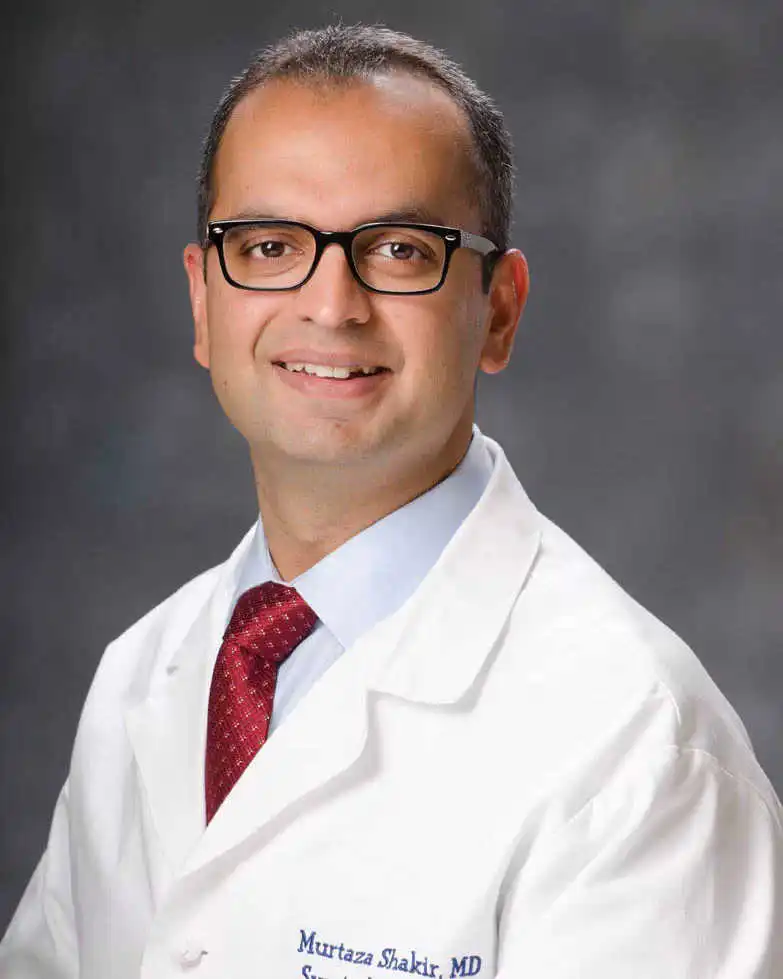
Dr. Murtaza Shakir, MD, general surgeon and surgical oncologist treating skin lesions, masses, and cysts in Katy and Sugar Land, TX
- Dual board certified in General Surgery and Complex General Surgical Oncology
- Named a Houstonia Top Doctor in General Surgery, 2026 (see listing)
- Highly reviewed: rated 4.9 stars on Google
- Specialized in removal of skin lesions, cysts, and lipomas, hernia repair, gallbladder surgery, and cancer surgery
Patient Reviews
What Patients Say About Dr. Shakir
Rated 4.9 stars on Google. Real experiences from patients treated in Katy and Sugar Land.
Jump to a section
- At a glance
- What are skin lesions?
- Common lumps a surgeon removes
- Warning signs
- Skin cancer risk factors
- How lumps are diagnosed
- Does every lump need removal?
- Meet your surgeon
- How the method is chosen
- Removal methods compared
- Office vs. operating room
- What to expect
- Wound care and recovery
- Scarring and recurrence
- Risks and complications
- Patient reviews
- Why choose us
- Insurance
- Locations
- FAQs
- Schedule a consultation
At a Glance
Skin Lesions, Masses, and Cysts at a Glance
- What they are
- A skin lesion is any abnormal change in the skin. A mass is a firm lump under the skin. A cyst is a sac filled with fluid, tissue, or air.
- Common examples
- Epidermoid (often called sebaceous) cysts, lipomas (fatty lumps), moles, skin tags, boils, and folliculitis.
- Warning signs
- A lump that grows quickly, feels hard or fixed, is larger than about 5 cm, hurts, or bleeds, and any mole that is changing (the ABCDEs of melanoma).
- Diagnosis
- A skin exam, imaging such as ultrasound when a lump is deep or unclear, and a biopsy with pathology when cancer is a concern.
- Treatment
- Shave removal, surgical excision, or laser, chosen by the size, depth, and location of the lesion. Many removals are done on-site under local anesthesia.
- Who treats it
- A general surgeon. Dr. Shakir is board certified in General Surgery and Complex General Surgical Oncology.
- Urgent warning signs
- Rapidly spreading redness, fever or chills with a painful swelling, or difficulty breathing. Call 911 or go to the nearest emergency department.
- Where
- Offices in Katy and Sugar Land, TX. Call 713-955-9191.
Skin Lesion Basics
What Are Skin Lesions, Masses, and Cysts?
A skin lesion is any abnormal change you notice on your skin, such as a rash, bump, swelling, pus-filled sore, cyst, or area of discoloration. A mass is a larger lump under the skin that may feel firm or hard. A cyst is a small, sac-like pocket filled with tissue, fluid, or even air.
Most lumps and spots are benign, meaning they are not cancer. Soft lumps that move easily under the fingers are usually harmless. Still, some skin cancers look like ordinary bumps or cysts, so a new or changing lesion deserves an examination.
What Causes Skin Lesions?
Skin lesions have many causes. Common ones include:
- Everyday injuries
- Infections
- Allergies
- Normal aging of the skin
- Chronic conditions such as diabetes or autoimmune disorders
- Skin cancer, which in its early stages often appears as a new or changing lesion
Common Types of Skin Lesions
Many lesions are part of everyday skin health and need no surgery. Common examples include:
- Acne
- Freckles
- Moles
- Skin tags
- Boils and carbuncles
- Folliculitis (inflamed hair follicles)
For a broader overview, read our guide to skin lesions, masses, and cysts.
Types of Lumps
Common Lumps and Lesions a Surgeon Removes
The growths a general surgeon most often removes are cysts, lipomas, and skin lesions that look suspicious or cause symptoms. Each behaves differently, which affects how it is evaluated and treated.
Epidermoid (Sebaceous) Cysts
An epidermoid cyst is a closed sac under the skin filled with dead skin cells. It is usually a slow-growing, painless lump on the face, neck, or trunk, often with a tiny central pore. People often call it a sebaceous cyst, although true sebaceous cysts are less common.
Inflamed or Infected Cysts
A cyst can become red, warm, swollen, and tender, and may leak a thick, foul-smelling material. Infection can lead to a painful abscess. The inflammation is usually treated first, and the cyst may be removed once it settles. Learn the signs of an infected sebaceous cyst.
Lipomas
A lipoma is a fatty lump that grows just under the skin. It usually feels soft or rubbery, moves when pressed, and grows slowly. Lipomas are benign, but they are often removed when they grow, hurt, or get in the way.
Suspicious Moles and Skin Lesions
A mole or spot that is changing, bleeding, or looks different from your other moles may need a biopsy or removal. A lesion may be removed with minor surgery before it has a chance to become cancer, or to stop a skin cancer from spreading.
Other firm or deep masses under the skin, especially ones that are growing, are examined carefully, because a small number are soft tissue tumors that need specialized surgical oncology care.
When to Be Seen
Warning Signs a Lump or Skin Lesion Needs Prompt Evaluation
A lump or spot should be checked soon if it is new, growing, changing, or causing symptoms. Most turn out to be harmless, but these features call for a timely visit rather than waiting:
- A lump that grows quickly over weeks or months
- A lump that feels hard or fixed in place rather than soft and movable
- A lump larger than about 5 cm (roughly the size of a golf ball)
- A lump that is painful, or that returns after it was removed
- A sore, spot, or mole that bleeds, oozes, or does not heal
- A mole that is new or changing in size, shape, color, or height
The ABCDEs of Melanoma
The American Academy of Dermatology and the National Cancer Institute use the ABCDEs to describe warning signs of melanoma:
- A, Asymmetry: one half of the spot does not match the other half.
- B, Border: the edge is irregular, scalloped, notched, or poorly defined.
- C, Color: the color varies from one area to another, with shades of tan, brown, or black, or areas of white, red, or blue.
- D, Diameter: the spot is larger than 6 millimeters, about the size of a pencil eraser, although melanomas can be smaller.
- E, Evolving: the spot looks different from your other moles or is changing in size, shape, or color.
See what early melanoma can look like and skin cancer symptoms you should not ignore.
Other Symptoms That Can Occur With Skin Lesions
Symptoms that come with a skin lesion help point to its cause. Doctors look for:
- Itchiness
- Redness, warmth, or swelling
- Sores that contain pus
- Fever and chills or sweating
- Nausea with or without vomiting
- Headache
- Joint pain or stiffness
- Difficulty breathing
Redness, warmth, pus, fever, or chills suggest infection. Body-wide symptoms such as fever, headache, or joint pain can mean the skin change is part of a broader illness that needs medical care.
When a Skin Problem Needs Emergency Care
Seek emergency care for trouble breathing or swelling of the lips, tongue or throat, redness that spreads quickly or red streaks, fever or chills with a painful swollen lump, severe pain out of proportion to how the skin looks, or bleeding that firm pressure does not stop. For a medical emergency, call 911 or go to the nearest emergency department.
Risk Factors
Who Is at Higher Risk for Skin Cancer?
Anyone can develop a skin lesion, but some people are more likely to develop skin cancer. Risk is higher if you have any of the following:
- Fair skin
- A history of sunburns
- Excessive sun exposure
- Living in a sunny or high-altitude climate
- Moles, especially many moles or unusual (atypical) moles
- A personal history of skin cancer
- A family history of skin cancer
- A weakened immune system
- Exposure to radiation
- Exposure to certain substances
If you have several of these risk factors, check your skin regularly and have new or changing spots examined promptly.
Diagnosis
How Are Skin Lesions, Masses, and Cysts Diagnosed?
Diagnosis starts with a careful history and examination, and many lumps can be identified at the first visit. Dr. Shakir asks when the lump appeared, whether it is growing, painful, bleeding, or draining, and whether you have had skin cancer before.
Physical Examination
The lesion is checked for size, shape, color, firmness, and whether it moves under the skin or is fixed to deeper tissue. Nearby lymph nodes may also be examined when cancer is a concern.
Imaging When Needed
Most small, soft lumps do not need imaging. An ultrasound may be ordered when a lump is deep, unclear on exam, or growing. MRI or CT may be used for large, deep, or firm masses before planning surgery.
Biopsy
Skin lesions must first be tested for cancer when there is any doubt. A biopsy removes part or all of the lesion so it can be studied. Depending on the lesion, this may be a shave, punch, or excisional biopsy, usually under local anesthesia.
Pathology Results
Tissue that is removed is usually sent to a pathologist, who examines it under a microscope and confirms exactly what it is. Your results and any next steps are reviewed with you at follow-up.
Reasons for Removal
Does Every Skin Lesion or Lump Need to Be Removed?
No. Many harmless lesions, such as freckles, common moles, and small lipomas or cysts that cause no trouble, can simply be watched. Removal is recommended when a lesion could be cancerous or when it causes symptoms.
A leading reason for skin lesion excision is to prevent the spread of cancer. Excision can remove several types of skin cancer, and removing a suspicious lesion early can treat a problem before it advances.
Common Reasons to Remove a Lesion
- The lesion shows warning signs or a biopsy is needed to rule out cancer
- A biopsy confirmed a skin cancer or a precancerous change
- A cyst keeps becoming inflamed or infected
- A lipoma or mass is growing, painful, or pressing on nearby tissue
- The lump rubs on clothing, bleeds when caught, or limits movement
- You would like it removed for comfort or appearance
Your Surgeon
Meet Your Skin Lesion Surgeon
Murtaza Shakir, MD
Board-Certified General Surgeon & Surgical Oncologist
Skin lesion, mass, and cyst care at Surgical Associates of Southern Texas is led by Dr. Murtaza Shakir, who is board certified in General Surgery and Complex General Surgical Oncology.
Board certification
American Board of Surgery: General Surgery and Complex General Surgical Oncology
Medical degree
Aga Khan University
Residency
General Surgery, Riverside Methodist Hospital, Columbus, Ohio
Fellowship
Two-year Surgical Oncology fellowship, University of Pittsburgh Medical Center
Surgical practice includes
- Hernia repair
- Robotic surgery
- Laparoscopic surgery
- Complex abdominal surgery
- Gallbladder surgery
- Surgical oncology
Named a Houstonia Top Doctor in General Surgery (2026). Learn more about our general surgery services.
Treatment Planning
How Dr. Shakir Chooses the Right Removal Method
The removal method depends on the size, depth, and location of the lesion, and on whether cancer is a concern. That is why a consultation is recommended before any lesion is removed. During your visit, Dr. Shakir examines your skin and explains which approach is best for you.
Could It Be Cancer?
If a lesion has signs that it could be cancerous, it should be evaluated by a medical professional before removal. Suspicious lesions are removed so the whole lesion can be checked by pathology.
Size and Depth
Raised or surface lesions may be shaved off. Deeper cysts, lipomas, and masses are cut out completely through a small incision.
Location
Lesions on the face, scalp, hands, or over joints need incisions planned to heal well and limit visible scarring.
Your Health and Medications
Blood thinners, diabetes, bleeding problems, allergies, and a weakened immune system all affect timing and the safest approach.
Comparing Methods
Shave Removal, Surgical Excision, and Laser Compared
Lesions are removed by shaving, excision, or laser, and each fits a different kind of lesion. After cancer has been ruled out, a lesion may also be treated with laser surgery or plastic surgery techniques when appropriate.
Removing a Cyst
An epidermoid cyst is removed through a small incision over the lump. The goal is to remove the entire sac, because a cyst can come back if part of the sac is left behind. Removal is usually easier when the cyst is not inflamed.
Removing a Lipoma
A lipoma is removed through an incision over the fatty lump, which is separated from the surrounding tissue and lifted out. The wound is then closed in layers. Larger or deeper lipomas may need a longer incision.
| Feature | Shave Removal | Surgical Excision | Laser |
|---|---|---|---|
| How it works | Small blade removes the lesion | Lesion is cut out completely | Focused light destroys targeted tissue |
| Depth | Top layers of skin | Whole lesion, sometimes with a margin | Surface lesions |
| Best for | Raised or surface lesions | Cysts, lipomas and suspicious lesions | Some benign or precancerous lesions |
| Keep in mind | Not for deep cysts or lipomas | Usual method when cancer is a concern | No full tissue sample for pathology |
Typical patterns only. Dr. Shakir recommends a method after your exam.
Where It Is Done
In-Office Excision vs. the Operating Room
Most skin lesion removals are performed on-site with local anesthesia in our minor procedures room. Larger, deeper, or more complex masses may be better removed in an operating room with additional anesthesia.
In-Office Procedure
- Best for: small to moderate cysts, lipomas, and skin lesions near the surface
- Anesthesia: local numbing medicine; you stay awake
- Time: often well under an hour
- Going home: right after the procedure, usually able to drive
Operating Room
- Best for: large or deep masses, lumps near important nerves or vessels, or several lesions at once
- Anesthesia: sedation or general anesthesia
- Time: varies with the size and depth of the mass
- Going home: usually the same day, with someone to drive you
Procedure Day
What to Expect Before and During Removal
Preparation is simple for most skin procedures and is reviewed at your consultation. Tell the team about all medicines and supplements, allergies, and any bleeding problems. Do not stop prescription medication unless instructed by the appropriate healthcare professional.
During an In-Office Excision
- The area is cleaned and marked.
- Local anesthetic is injected; you may feel a brief sting, then pressure but not sharp pain.
- The lesion is shaved or cut out, and bleeding is controlled.
- The wound is closed with stitches when needed and covered with a dressing.
- Tissue is usually sent to pathology.
If Surgery Is Planned in the Operating Room
You may need preoperative testing, fasting instructions, and an anesthesia review, and you will need a ride home. See our pre-operative care guidance.
After Removal
Wound Care and Recovery After Skin Lesion Removal
Most people return to normal daily activities the same day or the next day. The area may be tender for a few days, and good wound care helps the skin heal and look its best.
- Dressing: keep the first dressing clean and dry for the time your surgeon advises.
- Cleaning: once allowed, wash gently with mild soap and water and pat dry.
- Ointment and cover: a thin layer of petroleum jelly and a clean bandage can keep the wound moist while it heals, unless you are told otherwise.
- Activity: avoid heavy lifting and stretching the area while stitches are in.
- Stitches: nonabsorbable stitches are usually removed in about 1 to 2 weeks, sooner on the face.
- Pain: discomfort is usually mild; take pain relievers as your surgeon advises.
For more detail, see our post-operative care instructions and pain management pages. If a wound is slow to heal, our wound care services can help; see also how to treat a non-healing wound.
When to Call After Your Procedure
Call the office if you notice increasing redness, warmth, swelling, pus, or pain, a fever, bleeding that soaks the bandage, or a wound that opens. Call 911 for heavy bleeding that does not stop with firm pressure or for difficulty breathing.
Long-Term Results
Scarring and the Chance a Lesion Comes Back
Any removal that goes below the surface of the skin leaves a scar. Incisions are planned to be as small as safely possible and placed along natural skin lines when they can be.
How Scars Heal
A new scar is often pink and slightly firm, then flattens and fades over many months. Protecting the area from the sun can help it fade evenly. Some people form thick or raised scars, called hypertrophic scars or keloids; tell your surgeon if you have had them before.
Recurrence
A cyst can come back if part of its sac remains, which is more likely after a cyst has been inflamed. A lipoma can occasionally return, and some people develop new lipomas elsewhere. A skin cancer can recur if it was not fully removed, so pathology results and follow-up skin checks matter.
Procedure Risks
Risks and Possible Complications of Skin Lesion Removal
Skin lesion removal is a common, generally safe procedure, but every procedure carries some risk. Dr. Shakir reviews the risks that apply to your lesion and health before treatment.
- Bleeding or a collection of blood under the skin
- Infection
- Poor or slow wound healing, or the wound opening
- Scarring, including thick scars or keloids
- Changes in skin color at the site
- Numbness or nerve injury near the incision
- The lesion coming back
- Reactions to the local anesthetic or other anesthesia
Following your wound care instructions closely helps lower the chance of complications.
Why Choose Us
Why Choose Surgical Associates of Southern Texas for Skin Lesion Removal?
Dr. Murtaza Shakir is board certified in General Surgery and Complex General Surgical Oncology and removes cysts, lipomas and skin lesions at offices in Katy and Sugar Land.
- Suspicious lesions are tested before treatment
- Shaving, excision or laser matched to each lesion
- Many removals done on-site under local anesthesia
- Pathology results and healing reviewed at follow-up
- Consultations in Katy and Sugar Land
Insurance Coverage
Insurance for Skin Lesion Removal
Surgical Associates of Southern Texas accepts many major insurance plans for skin lesion, cyst, and lipoma evaluation and removal, including participating Aetna, Cigna, UnitedHealthcare, and Blue Cross Blue Shield plans. Our office can confirm whether your specific plan participates and whether a referral or prior authorization is needed before your visit.
Coverage, network participation, authorization requirements, and your share of the cost vary by plan. You can also review the insurance accepted for surgical care at our practice.
Aetna, Cigna, UnitedHealthcare, and Blue Cross Blue Shield are only some of the plans we accept. Plan-specific details are on our Aetna, Cigna, UnitedHealthcare, and Blue Cross Blue Shield pages. If your plan is not listed, contact our office and our team will help verify it.
Insurance participation and benefits vary by individual plan. Verification does not guarantee coverage, authorization or payment. Please contact our office and your insurer to verify benefits before treatment.
Our Locations
Two Convenient Fort Bend County Offices
Learn more about our Katy and Sugar Land practices, or view all locations.
Katy Office
410 W Grand Pkwy S, Suite 4D
Katy, TX 77494
Serves: Katy, Fulshear, Richmond, Cinco Ranch and West Houston
Sugar Land Office
17510 W Grand Pkwy S, Suite 320
Sugar Land, TX 77479
Serves: Sugar Land, Richmond, Stafford, Missouri City, Fort Bend County and Southwest Houston
Approximate Drive Times
From West Houston (Energy Corridor): about 15 minutes to Katy, or 25 to 30 minutes to Sugar Land.
From North Houston: about 40 to 50 minutes to either office, depending on traffic.
Common Questions
Frequently Asked Questions About Skin Lesions, Masses, and Cysts
How do I know if a lump is a cyst or a lipoma?
A cyst often feels firm, sits in the skin, and may have a small central pore. A lipoma is usually soft or rubbery, lies just under the skin, and moves when pressed. An exam, and sometimes an ultrasound, confirms which it is.
When should I worry about a lump under my skin?
Have a lump checked soon if it grows quickly, feels hard or fixed, is larger than about 5 cm, hurts, bleeds, or comes back after removal. These features do not mean cancer, but they need evaluation.
What are the ABCDEs of melanoma?
The ABCDEs are Asymmetry, irregular Border, uneven Color, Diameter larger than about 6 mm, and Evolving, meaning a mole that is changing. Any of these signs is a reason to have the spot examined.
Can a cyst turn into cancer?
Epidermoid cysts are almost always benign. However, some skin cancers can look like cysts, so any new or changing lump should be examined.
Should I squeeze or pop a cyst?
No. Squeezing a cyst can push its contents into the surrounding skin and cause inflammation or infection. A warm compress may ease discomfort; see a doctor if the cyst becomes red, painful, or swollen.
Do lipomas need to be removed?
Not always. Small lipomas that cause no symptoms can be watched. Removal is recommended when a lipoma grows, hurts, limits movement, or when the diagnosis is uncertain.
Does skin lesion removal hurt?
Local anesthetic causes a brief sting, then the area is numb, so you should feel pressure but not sharp pain. Soreness afterward is usually mild and lasts a few days.
How long does it take to recover?
Most people return to normal activities the same or the next day. Stitches are usually removed in about 1 to 2 weeks, and you should avoid heavy lifting or stretching the area until then.
Will removing a lesion leave a scar?
Any removal that goes below the skin surface leaves a scar. Incisions are kept as small as safely possible, and most scars fade and flatten over several months.
How much does skin lesion removal cost?
The cost varies from patient to patient because lesions differ in size and severity, and different removal techniques may be used. Call our office to ask about your situation and your insurance coverage.
Sources and references
- Skin lesion removal, MedlinePlus, U.S. National Library of Medicine
- Epidermoid cyst, MedlinePlus, U.S. National Library of Medicine
- Skin lumps, MedlinePlus, U.S. National Library of Medicine
- What to look for: ABCDEs of melanoma, American Academy of Dermatology (AAD)
- Common Moles, Dysplastic Nevi, and Risk of Melanoma, National Cancer Institute (NCI)
Reviewed by the Review Team at Surgical Associates of Southern Texas.
Medical Disclaimer: This page provides general information and is not a substitute for medical advice. For a rapidly spreading skin infection, fever with a painful swelling, difficulty breathing, or other emergencies, call 911 or go to the nearest emergency room. Last updated October 16, 2026.
Schedule a Skin Lesion Consultation
Have a cyst, lipoma, lump or skin lesion that is growing, painful, bleeding or changing? Schedule a consultation with Dr. Murtaza Shakir to learn what it is likely to be, whether it needs testing, and whether it can be removed in the office. Offices in Katy and Sugar Land serve Richmond, Fulshear and Greater Houston.

Contact us now