 EN
 ES
 UR
 HI

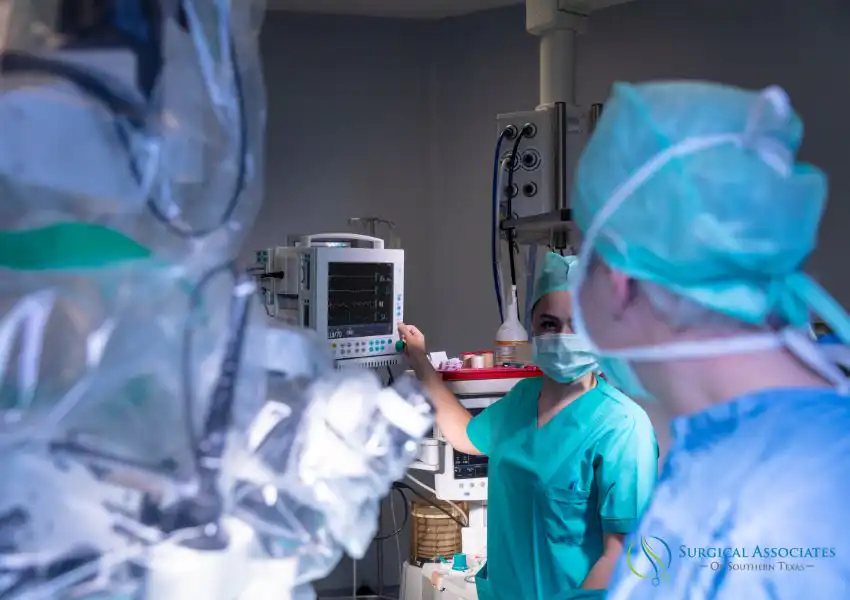
Told you may need surgery?
Talk with board-certified general surgeon Dr. Murtaza Shakir in Katy or Sugar Land about your diagnosis and options. Call (713) 955-9191, or send your details and our team will call you back.
THE SHORT ANSWER
A general surgeon diagnoses and operates on problems of the abdomen, digestive tract, breast, skin, endocrine glands and blood vessels, including hernias, gallbladder disease, appendicitis and many tumors. In the United States, general surgeons complete medical school and about five years of surgical residency, and many become board certified by the American Board of Surgery.
What Does a General Surgeon Do?
A general surgeon evaluates, diagnoses and surgically treats a broad range of conditions. The American Board of Medical Specialties describes general surgeons as having principal expertise in diseases of the abdomen, digestive tract, endocrine system, breast, skin and blood vessels, and notes they are trained to care for injured and critically ill patients and skilled in minimally invasive techniques and endoscopy.
The operation itself is only part of the job. A general surgeon also:
- Makes the diagnosis: takes your history, examines you and reviews imaging and lab results to confirm whether surgery is needed at all.
- Explains the options: describes the risks and benefits of each approach, including not operating, and answers your and your family’s questions so you can make an informed decision.
- Plans care around you: considers your other health conditions, medications and goals when recommending treatment.
- Manages care before and after surgery: prepares you for the operation and follows your recovery. See our pre-operative care and post-operative care pages.
Which Conditions Do General Surgeons Treat?
General surgeons treat many of the most common surgical problems in adults. The American College of Surgeons lists appendectomy, gallbladder removal (cholecystectomy), removal of part of the colon (colectomy) and hernia repairs among common general surgery procedures. Typical conditions include:
| Area | Examples |
|---|---|
| Abdominal wall | Inguinal, umbilical, ventral and incisional hernias |
| Gallbladder | Gallstones, gallbladder attacks, inflamed gallbladder |
| Appendix | Appendicitis |
| Colon and intestine | Colon tumors and other conditions needing part of the bowel removed |
| Breast | Breast lumps and breast cancer surgery |
| Skin and soft tissue | Cysts, lipomas, suspicious skin lesions and masses |
| Endocrine glands | Some thyroid and parathyroid conditions |
At Surgical Associates of Southern Texas this includes hernia repair, gallbladder surgery, appendicitis surgery and removal of skin lesions, masses and cysts. Surgeons with added cancer training, called surgical oncologists, also remove tumors of organs such as the liver, pancreas, colon and breast.
Do General Surgeons Use Open or Minimally Invasive Surgery?
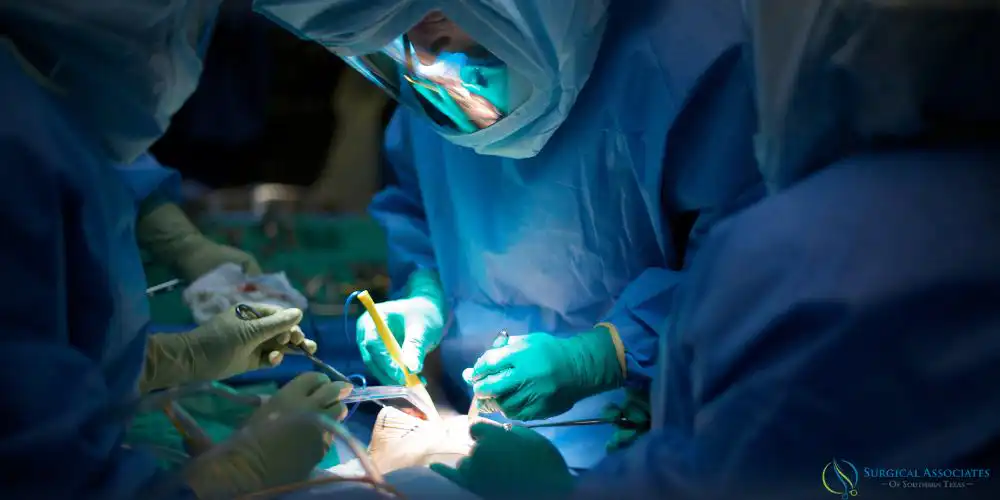
General surgeons use both, and the right choice depends on your condition, your anatomy and your health. Each approach has a place:
- Laparoscopic surgery: the surgeon works through a few small incisions with a camera and specially designed instruments. It is minimally invasive and often means less pain and a quicker recovery.
- Robotic surgery: a form of minimally invasive surgery in which the surgeon controls the instruments from a console. Dr. Shakir performs robotic hernia repair and robotic gallbladder surgery as well as laparoscopic and open operations.
- Open surgery: a longer incision gives direct access. It is still the better option for some large, complex or emergency problems.
Whatever the method, safety comes first. Surgeons follow strict standards for sterile technique and infection prevention, and a surgeon comfortable with several approaches can match the operation to you rather than to the one method they know.
Not Sure if You Need a Surgeon?
Dr. Murtaza Shakir sees patients in Katy and Sugar Land to evaluate hernias, gallbladder problems, lumps and other surgical conditions, and to explain whether surgery is needed.
How Do General Surgeons Work With Your Other Doctors?
General surgeons work closely with your primary care doctor and with specialists such as radiologists and oncologists to choose the most suitable treatment. In practice this usually looks like:
- Your primary care doctor or an ER physician refers you after an exam or a scan
- A radiologist’s report on your ultrasound, CT or MRI helps the surgeon plan
- For cancer, the surgeon coordinates with medical and radiation oncologists so surgery fits into the overall treatment plan
- After surgery, the surgeon follows your recovery and updates your other doctors
This shared approach means decisions take your whole health picture into account, not just the operation.

How Do General Surgeons Train and Become Board Certified?
Becoming a general surgeon in the United States takes many years of education and supervised surgical training. The usual path is:
- Bachelor’s degree: often in biology or another science, as a foundation for medical school.
- Medical school: about four years, leading to a Doctor of Medicine (MD) or Doctor of Osteopathic Medicine (DO) degree, with training in anatomy, physiology and hands-on clinical care.
- General surgery residency: about five years of hospital-based training in surgical techniques and the care of surgical patients.
- State medical license: required in every state, including passing national licensing exams. Requirements vary by state.
- Board certification: not legally required, but a general surgeon can become certified by the American Board of Surgery after residency by passing its examinations.
- Fellowship (optional): extra training in a subspecialty such as surgical oncology. The U.S. Bureau of Labor Statistics notes fellowships typically last one to three years.
Experience builds on that training. Over years of practice, surgeons gain precision with procedures, a detailed working knowledge of anatomy, the judgment to handle the unexpected calmly, and a better sense of each patient’s needs. That is why it is reasonable to ask a surgeon how often they perform your operation. Our guide on how to choose the right general surgeon covers this in more depth.
When Should You See a General Surgeon?
You should see a general surgeon when you have a problem that may need an operation, or when a test has found something a surgeon should assess. Common reasons for a referral include:
- A bulge in the groin, near the belly button or at an old incision that may be a hernia
- Gallstones on an ultrasound, or episodes of upper right belly pain after meals
- A lump in the breast, or a skin lesion, cyst or mass that is growing or changing
- A cancer diagnosis, such as colon, breast, liver or pancreatic cancer, where surgery may be part of treatment
- An incidental finding on a CT or ultrasound done for another reason
You do not always need surgery after seeing a surgeon. Many visits end with a plan to watch, test further or treat without an operation.
When Is a Surgical Problem an Emergency?
A surgical problem is an emergency when there are signs of trapped bowel, severe infection or a blocked organ. Go to the emergency room or call 911 for:
- A hernia that becomes firm, painful or discolored and cannot be pushed back in, especially with nausea or vomiting
- Lower right abdominal pain that keeps getting worse, with fever or vomiting
- Severe upper right abdominal pain with fever, or yellowing of the skin or eyes
- Severe abdominal pain with a swollen belly, vomiting, or inability to pass gas or stool
- Vomiting blood or passing large amounts of blood
These situations are usually handled through the hospital, where a general surgeon on call evaluates and operates when needed.
How Do Patients in Katy, Sugar Land and Houston Choose a General Surgeon?
Choosing where to have surgery affects both your outcome and your recovery, so compare a few practical factors:
- The surgeon’s qualifications, board certification and experience with your operation
- Accreditation of the hospital or surgery center
- The surgical approaches and technology available for your case
- Feedback from other patients
- Location and convenience for pre-operative, surgery and follow-up visits
- Cost and insurance coverage
Surgical Associates of Southern Texas has offices in Katy and Sugar Land and serves patients from across the Houston area. Dr. Murtaza Shakir is a board-certified general surgeon and is board certified in Complex General Surgical Oncology. Learn more about general surgery at the practice, meet Dr. Shakir, or call (713) 955-9191 and request a consultation.
Questions to Ask a General Surgeon at Your First Visit
- Is surgery the right treatment for my condition, or are there other options?
- How often do you perform this operation?
- Would you use an open, laparoscopic or robotic approach for me, and why?
- What are the main risks in my situation?
- Where would the surgery be done, and will I go home the same day?
- How long will recovery take, and when can I return to work?
- How will you share results and plans with my other doctors?
Frequently Asked Questions
Is a general surgeon the same as a general practitioner?
No. A general practitioner or primary care doctor provides everyday medical care. A general surgeon is a specialist who has completed surgical residency and evaluates and performs operations. Your primary care doctor often refers you to one.
Do general surgeons remove gallbladders and fix hernias?
Yes. Gallbladder removal and hernia repair are among the most common operations general surgeons perform, along with appendix removal. Learn more about gallbladder surgery.
Can a general surgeon treat cancer?
General surgeons remove many tumors, including some breast, colon and skin cancers. Surgeons with fellowship training and certification in Complex General Surgical Oncology focus on more complex cancer operations, such as those on the liver or pancreas.
How long does it take to become a general surgeon?
Usually about 13 years after high school: a four-year bachelor’s degree, four years of medical school and about five years of general surgery residency. A fellowship adds more time.
Do I need a referral to see a general surgeon?
It depends on your insurance plan. Many patients are referred by a primary care doctor or the ER, but some plans allow you to book directly. The office can help you check before your visit.
Key Takeaway
General surgeons diagnose and operate on a wide range of conditions, from hernias, gallbladder disease and appendicitis to breast and skin lumps and some cancers. They complete medical school and about five years of residency, and many are board certified. See one when a problem may need surgery, and go to the ER for signs of a surgical emergency.
Sources and Further Reading
- American Board of Surgery: General Surgery, American Board of Medical Specialties
- Surgical Patient Education: Operations and Procedures, American College of Surgeons
- Physicians and Surgeons: How to Become One, U.S. Bureau of Labor Statistics
This article is general education, not personal medical advice. For severe abdominal pain, fever with abdominal pain, heavy bleeding, or yellowing of the skin or eyes, seek emergency care.

Meet the Surgeon
Dr. Murtaza Shakir is a board-certified General Surgeon and is board certified in Complex General Surgical Oncology. He earned his medical degree at Aga Khan University, completed General Surgery residency at Riverside Methodist Hospital in Columbus, Ohio, and a two-year Surgical Oncology fellowship at the University of Pittsburgh Medical Center. He sees patients at Surgical Associates of Southern Texas in Katy and Sugar Land.
Related Reading and Care
Schedule a General Surgery Evaluation
Find out whether your condition needs surgery with a visit to Dr. Shakir in Katy or Sugar Land.
This page provides general information and is not a substitute for medical advice. For severe abdominal pain or other emergencies, call 911 or go to the nearest emergency room. Last updated October 16, 2026.