 EN
 ES
 UR
 HI

New symptoms years after gallbladder surgery?
Have them evaluated by board-certified general surgeon Dr. Murtaza Shakir in Katy or Sugar Land. Call (713) 955-9191, or send your details and our team will call you back.
THE SHORT ANSWER
Yes, problems can appear years after gallbladder removal, though most people never have them. The usual causes are bile acid diarrhea, trouble digesting fat, a stone or narrowing in the bile duct, or an unrelated condition such as reflux, ulcers or irritable bowel syndrome. Testing usually finds the cause, and most are treatable.
Can Problems Really Start Years After Gallbladder Removal?
Yes. Gallbladder removal (cholecystectomy) is one of the most common and successful operations, but a small number of patients develop digestive or abdominal symptoms months or even many years later.
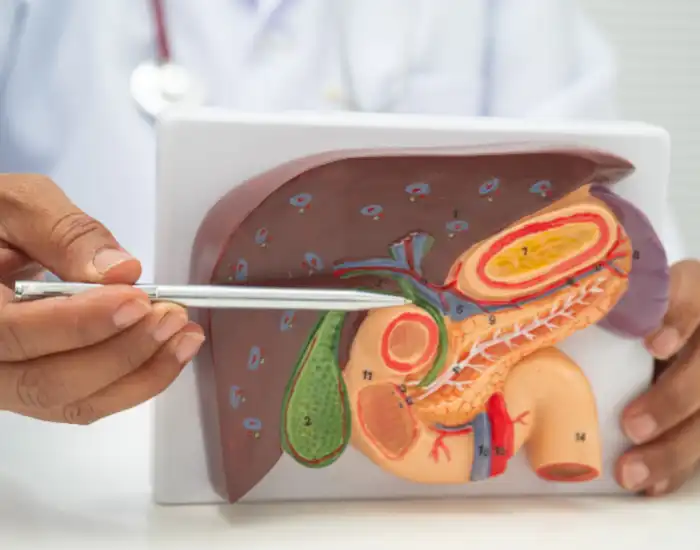
The gallbladder sits beneath the liver and stores bile, a digestive fluid that helps break down fats, releasing it into the small intestine at meals. After removal, bile flows directly from the liver into the intestine instead. Surgery is commonly recommended for:
- Gallstones causing pain or blockage
- Inflammation of the gallbladder (cholecystitis)
- Gallbladder infection
- Bile duct obstruction
- Gallstone-related pancreatitis
Most patients recover well and return to normal life without major dietary limits. When late symptoms do appear, the usual reasons are:
- Changes in bile flow and digestion
- Bile duct complications, including scar tissue or narrowing
- Gallstones left in, or later found in, the bile ducts
- Functional gastrointestinal disorders
- Digestive conditions unrelated to the surgery that are mistakenly blamed on it
A careful evaluation is the way to tell these apart. For the broader picture, see long-term effects of gallbladder removal.
What Symptoms Can Appear Years After Gallbladder Surgery?
The most common late symptoms are upper abdominal pain, bloating, diarrhea and indigestion, ranging from mild to disruptive. Watch for:
- Persistent abdominal pain, especially in the upper right abdomen
- Bloating after meals
- Chronic diarrhea
- Nausea or occasional vomiting
- Indigestion or heartburn
- Fatty food intolerance
- Unexplained weight changes
- Yellowing of the skin or eyes, in rare cases
Surgeons pay close attention to the pattern. Pain with jaundice, fever or dark urine points toward the bile ducts. Diarrhea soon after meals points toward bile acids. Burning pain that is worse lying down points toward reflux. When symptoms persist or worsen, talk to your primary care physician or a surgeon about the next step.
Which Digestive Changes Can Develop Over Time?
The digestive system adapts after gallbladder removal, but in some people that adjustment leads to noticeable symptoms, sometimes years later.
Bile acid diarrhea
Without a gallbladder, bile enters the intestine continuously. Excess bile acids can irritate the colon and cause chronic diarrhea, with:
- Frequent loose stools
- Urgent bowel movements after eating
- Abdominal cramping
Medications that bind bile acids can often help.
Trouble digesting fat
Some people notice that fatty foods are harder to handle years after surgery, with bloating, greasy stools, or gas and discomfort after meals. Diet changes usually reduce these symptoms; see foods to eat after gallbladder removal.
Small intestinal bacterial overgrowth (SIBO)
Changes in bile flow may affect gut bacteria in some people, which can cause bloating, gas and problems absorbing nutrients. Cleveland Clinic notes that SIBO symptoms resemble many other digestive conditions, that prior abdominal surgery is one recognized risk factor, and that a breath test is the usual first test. A medical evaluation helps determine whether it is contributing.
What Bile Duct Problems Can Appear Years Later?
Bile duct problems years after surgery are uncommon but important, because a blocked duct can lead to infection. Possible problems include:
- Narrowing of the bile ducts from scar tissue
- Stones that remained after surgery or later moved into the ducts; Cleveland Clinic notes new stones can also form in the ducts
- Other blockages affecting bile flow
Symptoms of a bile duct problem include:
- Upper abdominal pain
- Fever or chills
- Jaundice (yellowing of the skin or eyes)
- Dark urine or pale stools
These symptoms need prompt medical attention.
Is this post-cholecystectomy syndrome?
Post-cholecystectomy syndrome is the umbrella term for ongoing or new symptoms after gallbladder surgery, whether they start soon after or years later. Possible causes include retained bile duct stones, bile duct injury or narrowing, sphincter of Oddi dysfunction (a problem with the muscle that controls bile flow), peptic ulcer disease, pancreatic disorders, and acid reflux or gastritis. Read more about post-cholecystectomy syndrome.
Could Something Other Than the Surgery Be Causing My Symptoms?
Often, yes. Not every digestive symptom after gallbladder surgery is related to the operation, and several common conditions cause similar symptoms:
- Gastroesophageal reflux disease (GERD)
- Irritable bowel syndrome (IBS)
- Peptic ulcer disease
- Pancreatitis
- Liver disease
- Functional digestive disorders
Because these conditions can develop years after surgery, they are easily mistaken for a late surgical problem. A StatPearls review (National Library of Medicine) notes that non-biliary causes such as reflux, ulcers, IBS and pancreatitis are often overlooked in patients with symptoms after gallbladder removal. If heartburn is a main symptom, see stomach acid backing up into the esophagus.
Symptoms Long After Gallbladder Surgery?
A surgical evaluation can tell a bile duct problem from other digestive conditions. Request a consultation with Dr. Murtaza Shakir in Katy or Sugar Land.
When Should I See a Doctor, and When Is It an Emergency?
See a doctor when symptoms last several weeks, interfere with daily life, or come with fever, jaundice or severe pain. Get evaluated promptly for:
- Persistent abdominal pain lasting several days
- Repeated nausea or vomiting
- Chronic diarrhea that affects daily life
- Fever or chills with abdominal pain
- Yellowing of the skin or eyes
- Sudden, unexplained weight loss
Go to the emergency room or call 911 for severe abdominal pain with fever or chills, new jaundice, or vomiting that keeps you from holding down fluids. Together, these can signal a blocked and infected bile duct or pancreatitis, which need urgent treatment.
Occasional digestive discomfort happens for many reasons, but early diagnosis of persistent symptoms usually means simpler treatment and better results.
How Do Doctors Diagnose Problems Years After Gallbladder Removal?
Doctors start with your medical history, surgical history and current symptoms, then choose tests to separate bile duct problems from other digestive conditions. Testing may include:
- Blood tests to evaluate liver and pancreas function
- Abdominal ultrasound to examine the bile ducts
- CT or MRI for a more detailed look at the ducts and pancreas
- Endoscopic procedures such as ERCP to evaluate, and often treat, the bile ducts
- Stool tests for digestive disorders
Who should evaluate these symptoms?
- Primary care physician: evaluates general symptoms, orders initial testing and decides whether a specialist is needed.
- Gastroenterologist: evaluates chronic digestive symptoms, bile acid diarrhea and functional gastrointestinal disorders.
- General surgeon: often the right specialist when a structural problem related to the surgery is suspected.
How Are Late Problems After Gallbladder Removal Treated?
Treatment depends on the cause, and most late problems are managed without another operation.
- Medication: bile acid binders for diarrhea, acid reducers for reflux and antispasmodic medications for abdominal discomfort.
- Diet changes: smaller meals, less high-fat food, fiber increased gradually and avoiding foods that trigger symptoms.
- Endoscopic treatment: if bile duct stones or narrowing are found, minimally invasive endoscopic procedures can often correct the problem.
- Surgical evaluation: in rare cases, surgery is needed for a structural problem.
Everyday habits also support digestion after gallbladder removal:
- A balanced diet with moderate fat
- Regular meals rather than large, heavy ones
- Staying physically active
- Drinking enough water
- Managing stress, which can affect digestion
How Can Patients in Katy, Sugar Land and Houston Get Late Symptoms Evaluated?
Request a consultation and bring whatever records you can find from your gallbladder surgery, even if it was done years ago at another hospital. Those details often point to the cause faster.
- The year and place of your surgery, and the operative report if available
- Any recent blood tests, ultrasound, CT or MRI
- A short symptom diary covering pain, stool changes and food triggers
- Medications you take or have tried for reflux or diarrhea
Dr. Shakir evaluates persistent abdominal discomfort after gallbladder surgery for patients from across the Houston area at offices in Katy and Sugar Land. Learn more about gallbladder surgery, call (713) 955-9191 or request an appointment.
Questions to Ask Your Doctor About Problems Years After Gallbladder Removal
- Are my symptoms likely related to my gallbladder surgery or to something else?
- Could I have a stone or narrowing in my bile duct?
- Which tests do you recommend first?
- Could bile acid diarrhea or SIBO explain my symptoms?
- Would medication or diet changes help, or do I need a procedure?
- Should I also see a gastroenterologist?
- Which symptoms should send me to the emergency room?
Frequently Asked Questions
Can gallstones form years after gallbladder removal?
Stones cannot form in the gallbladder once it is gone, but stones can be left in, or form in, the bile ducts. They can cause pain, jaundice or fever and are usually treated with an endoscopic procedure.
Why do I suddenly have diarrhea years after gallbladder surgery?
Bile acid diarrhea is one possible cause, because bile now flows into the intestine continuously. Infections, IBS and other conditions can cause similar symptoms, so persistent diarrhea should be evaluated. Bile acid binding medication often helps when bile acids are the cause.
Can you get pancreatitis years after gallbladder removal?
Yes. Pancreatitis can develop from a bile duct stone or from causes unrelated to the gallbladder. Severe upper abdominal pain that spreads to the back, with vomiting, needs emergency care.
Is post-cholecystectomy syndrome the same as problems years later?
It is the medical umbrella term for symptoms after gallbladder removal, whether early or late. It describes symptoms, not a single cause. See post-cholecystectomy syndrome.
Which doctor should I see for problems after gallbladder removal?
A primary care physician is a good first step for mild symptoms. A gastroenterologist evaluates chronic digestive problems, and a general surgeon is often the right specialist when a structural bile duct problem is suspected.
Key Takeaway
Problems years after gallbladder removal are uncommon but real, and most have a specific, treatable cause. Bile acid diarrhea, fat intolerance, bile duct stones or narrowing, and unrelated conditions such as reflux or IBS are the main possibilities. Persistent symptoms deserve evaluation, and fever, jaundice or severe pain need prompt care.
Sources and Further Reading
- Postcholecystectomy Syndrome, StatPearls (National Library of Medicine)
- Cholecystectomy (Gallbladder Removal): Surgery & Recovery, Cleveland Clinic
- SIBO (Small Intestinal Bacterial Overgrowth), Cleveland Clinic
- Treatment for Gallstones, National Institute of Diabetes and Digestive and Kidney Diseases (NIDDK)
This article is general education, not personal medical advice. For severe abdominal pain, fever with abdominal pain, heavy bleeding, or yellowing of the skin or eyes, seek emergency care.

Meet the Surgeon
Dr. Murtaza Shakir is a board-certified General Surgeon and is board certified in Complex General Surgical Oncology. He earned his medical degree at Aga Khan University, completed General Surgery residency at Riverside Methodist Hospital in Columbus, Ohio, and a two-year Surgical Oncology fellowship at the University of Pittsburgh Medical Center. He sees patients at Surgical Associates of Southern Texas in Katy and Sugar Land.
Related Reading and Care
Schedule a Gallbladder Evaluation
Have symptoms that started years after gallbladder removal evaluated by Dr. Shakir in Katy or Sugar Land.
This page provides general information and is not a substitute for medical advice. For severe abdominal pain or other emergencies, call 911 or go to the nearest emergency room. Last updated October 16, 2026.