 EN
 ES
 UR
 HI

Thyroid Cancer Care
Thyroid/Parathyroid Cancer
Thyroid and Parathyroid Cancer Evaluation and Surgical Care
A lump in the neck, a thyroid nodule found on a scan, an abnormal biopsy, or a blood test showing high calcium can be worrying. Most thyroid nodules are not cancer, and parathyroid cancer is very rare. When cancer is found, thyroid cancer is usually very treatable, and surgery is often the main treatment for both cancers.
At Surgical Associates of Southern Texas, Dr. Murtaza Shakir, a board-certified general surgeon and surgical oncologist, reviews your ultrasound, biopsy, and blood test results, explains what they mean in plain language, and helps you understand the role of surgery in your care. He sees patients at offices in Katy and Sugar Land, serving Richmond, Fulshear, Stafford, Fort Bend County, and Greater Houston.
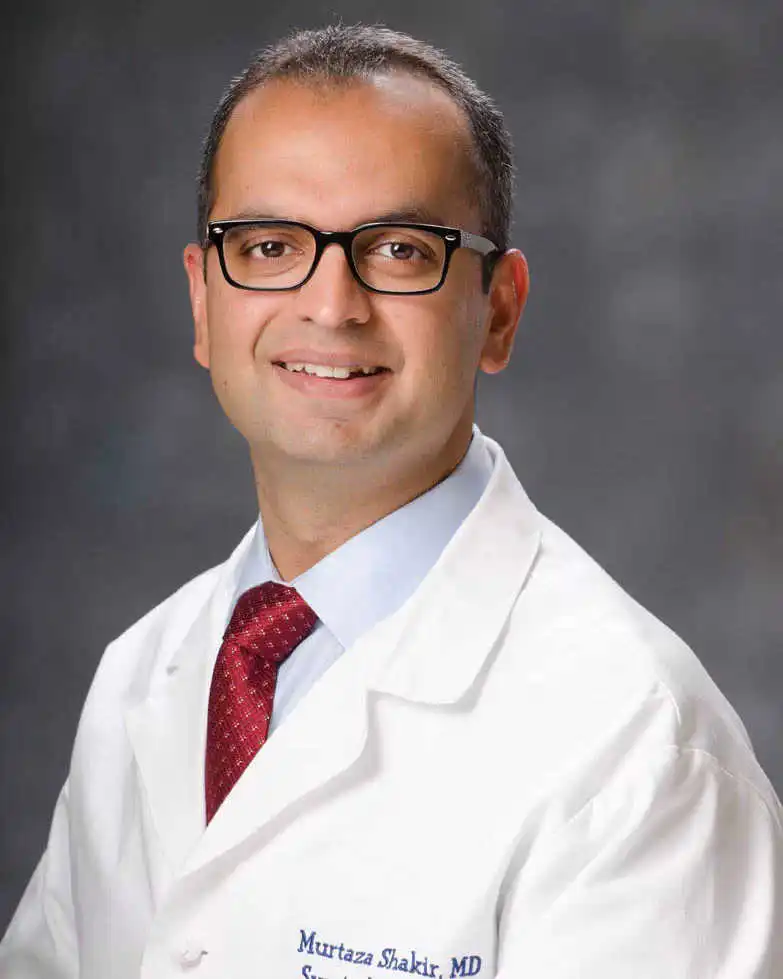
Meet the Surgeon
Dr. Murtaza Shakir, MD, general surgeon and surgical oncologist caring for thyroid and parathyroid cancer in Katy and Sugar Land, TX
- Dual board certified in General Surgery and Complex General Surgical Oncology
- Named a Houstonia Top Doctor in General Surgery, 2026 (see listing)
- Highly reviewed: rated 4.9 stars on Google
- Specialized in thyroid and parathyroid cancer care, breast, colon, liver, and pancreatic cancer surgery, hernia repair, and gallbladder surgery
Patient Reviews
What Patients Say About Dr. Shakir
Rated 4.9 stars on Google. Real experiences from patients treated in Katy and Sugar Land.
Jump to a section
- At a glance
- What are these cancers?
- Types of thyroid cancer
- Who is at risk?
- Symptoms and when to see a doctor
- How they are diagnosed
- Stages
- Is surgery always needed?
- Meet your surgeon
- How treatment is chosen
- Types of surgery
- Treatments beyond surgery
- Before surgery
- Recovery and follow-up
- Risks and side effects
- Patient reviews
- Why choose us
- Insurance
- Locations
- FAQs
- Schedule a consultation
At a Glance
Thyroid and Parathyroid Cancer at a Glance
- What they are
- Thyroid cancer starts in the butterfly-shaped thyroid gland in the front of the neck. Parathyroid cancer starts in one of the four tiny parathyroid glands behind the thyroid, which control blood calcium.
- How common
- Thyroid cancer is relatively uncommon and usually very treatable. Parathyroid cancer is very rare; most overactive parathyroid glands are caused by a benign growth (adenoma).
- Common signs
- Thyroid cancer often causes no symptoms and is found as a neck lump or nodule. Parathyroid cancer usually shows up as high blood calcium, which can cause tiredness, thirst, frequent urination, nausea, constipation, and bone pain.
- How they are found
- Thyroid cancer: neck exam, ultrasound, and a fine needle aspiration (FNA) biopsy. Parathyroid cancer: blood calcium and parathyroid hormone (PTH) levels plus neck imaging; the diagnosis is often confirmed only after surgery.
- Main treatments
- Surgery is the main treatment for most of these cancers. Thyroid cancer care may also include radioactive iodine and thyroid hormone pills. Parathyroid cancer care focuses on removing the tumor and controlling calcium.
- Who treats them
- A care team that may include an endocrinologist, a surgeon, a radiologist, and a pathologist. Dr. Shakir is board certified in General Surgery and Complex General Surgical Oncology.
- Get urgent care for
- Trouble breathing, a neck lump that grows quickly, or, with known high calcium, confusion, severe vomiting, or extreme weakness.
- Where
- Offices in Katy and Sugar Land, TX. Call 713-955-9191.
Cancer Basics
What Are Thyroid and Parathyroid Cancers?
Thyroid and parathyroid cancers are two different cancers that start in neighboring glands in the neck. They are often discussed together because the glands sit side by side and are treated with similar neck surgery. They behave very differently, though, so it helps to understand each gland.
The Thyroid Gland
The thyroid is a butterfly-shaped gland low in the front of the neck, below the voice box. It has a right lobe and a left lobe joined by a thin bridge called the isthmus. The thyroid uses iodine to make hormones that help control metabolism, heart rate, and body temperature.
The Parathyroid Glands
The parathyroids are four tiny glands behind, and attached to, the thyroid. They make parathyroid hormone (PTH), which helps the body use and store calcium. Calcium is a vital mineral for healthy muscles, nerves, and bones. Despite their names and location, the parathyroid glands do a completely different job from the thyroid.
What Is Thyroid Cancer?
Thyroid cancer is cancer that starts in the tissues of the thyroid. It is relatively uncommon, and most types grow slowly. Thyroid cancer is usually very treatable and is often cured with surgery, with or without other treatment.
What Is Parathyroid Cancer?
Parathyroid cancer is a rare disease in which cancer cells form in the tissue of a parathyroid gland. The cancer usually makes too much PTH. Excess PTH pulls calcium into the blood, a condition called hypercalcemia, and most symptoms come from this high calcium rather than from the tumor itself.
Overactive parathyroid glands (hyperparathyroidism) are fairly common, but cancer is a very rare cause. Most cases are caused by a benign growth called a parathyroid adenoma. Parathyroid cancer is usually slow-growing.
Thyroid Cancer Types
What Are the Types of Thyroid Cancer?
Thyroid cancer is grouped by the type of cell it starts in and how the cells look under a microscope. The type is one of the most important factors in planning treatment.
Papillary Thyroid Cancer
The most common type; about 8 in 10 thyroid cancers are papillary. It usually grows slowly and may spread to lymph nodes in the neck. Even so, the outlook is generally excellent.
Follicular Thyroid Cancer
About 1 in 10 thyroid cancers. It is also usually slow-growing. Instead of the lymph nodes, it can sometimes spread through the bloodstream to the lungs or bones.
Oncocytic (Hürthle Cell) Cancer
A less common type, previously called Hürthle cell cancer. Together with papillary and follicular cancer, it belongs to the group called differentiated thyroid cancers.
Medullary Thyroid Cancer
Starts in the thyroid’s C cells, which make a hormone called calcitonin. It makes up less than 5% of thyroid cancers. Some cases are inherited through a change in the RET gene, so genetic testing is usually recommended.
Anaplastic Thyroid Cancer
A rare type, about 2% of thyroid cancers. It grows and spreads quickly and needs urgent evaluation and treatment by an experienced team, often with tumor gene testing to guide medicines.
Papillary, follicular, and oncocytic cancers are called differentiated thyroid cancers because their cells still look and act somewhat like normal thyroid cells. Most people with thyroid cancer have one of these types.
Risk Factors
Who Is at Risk for Thyroid and Parathyroid Cancer?
Anyone can develop these cancers, and many people who do have no known risk factor. Having a risk factor does not mean you will get cancer. The exact cause of parathyroid cancer is not known.
Thyroid Cancer Risk Factors
- Being between ages 25 and 65
- Being female
- Radiation to the head or neck as an infant or child, or exposure to radioactive fallout
- A history of goiter (an enlarged thyroid)
- A family history of thyroid disease or thyroid cancer
- Inherited conditions such as familial medullary thyroid cancer (FMTC), MEN2A, or MEN2B
- Being of Asian descent
Parathyroid Cancer Risk Factors
- Multiple endocrine neoplasia type 1 (MEN1), an inherited condition linked to tumors of hormone-making glands
- Familial isolated hyperparathyroidism (FIHP), a rare inherited condition
- Radiation to the neck, such as from earlier radiation treatment, which may raise the risk of parathyroid tumors
If thyroid cancer, parathyroid disease, or MEN syndromes run in your family, tell your doctor. Genetic counseling may be recommended.
Signs and Symptoms
What Are the Symptoms of Thyroid and Parathyroid Cancer?
Early thyroid cancer often causes no symptoms and is found as a lump in the neck or a nodule on an imaging test. Parathyroid cancer usually causes symptoms of high blood calcium. Many of these symptoms have other, more common causes, so see your doctor if they do not go away.
When to See a Doctor
Most neck lumps and thyroid nodules are not cancer, and there is no need to panic before you are examined. Make an appointment with your primary care doctor or an endocrinologist if you notice:
- A new lump or swelling in the front or side of the neck
- Hoarseness or a change in your voice lasting more than a few weeks
- Trouble swallowing that does not go away
- Ongoing tiredness, thirst, frequent urination, or bone pain, especially if a blood test showed high calcium
If an ultrasound shows a suspicious nodule, a biopsy is abnormal, or blood tests show high calcium with a high PTH level, a surgical consultation is often the next step.
Possible Signs of Thyroid Cancer
- A lump or nodule in the front of the neck
- Swollen lymph nodes in the neck
- Hoarseness or voice changes that do not go away
- Trouble swallowing or pain when swallowing
- Trouble breathing
- Pain in the front of the neck, sometimes reaching the jaw or ears
Thyroid blood tests, such as TSH, are usually normal even when cancer is present.
Possible Signs of Parathyroid Cancer
- Weakness or feeling very tired
- Urinating more than usual and feeling very thirsty
- Nausea and vomiting
- Poor appetite and weight loss without trying
- Constipation
- Stomach, side, or back pain that does not go away
- Bone pain or a broken bone
- Kidney stones
- Confusion or trouble thinking
- A lump in the neck (less common)
- Hoarseness or trouble swallowing
When to Get Emergency Care
Seek emergency care right away for trouble breathing or noisy, high-pitched breathing, a neck lump that grows quickly and makes breathing or swallowing hard, inability to keep fluids down, or confusion, severe vomiting, extreme weakness or fainting, especially if you know your calcium is high. For a medical emergency, call 911 or go to the nearest emergency department.
Diagnosis
How Are Thyroid and Parathyroid Cancers Diagnosed?
Thyroid cancer is usually diagnosed with a neck ultrasound and a fine needle aspiration biopsy of a nodule. Parathyroid cancer is first suspected from blood tests showing high calcium and PTH, and it is usually confirmed after the gland is removed. At your consultation, Dr. Shakir asks about your symptoms and family history, examines your neck, and reviews the tests you already have.
Neck Ultrasound
Ultrasound uses sound waves to show the size and features of a thyroid nodule and to check the lymph nodes in the neck. Certain features make a nodule more or less likely to be cancer and help decide whether it needs a biopsy.
Fine Needle Aspiration (FNA) Biopsy
A thin needle, usually guided by ultrasound, removes a small sample of cells from a nodule. A pathologist examines the cells under a microscope. Fewer than 1 in 10 thyroid nodules are cancer. Some biopsy results are unclear (indeterminate), and molecular tests on the sample or surgery to remove part of the thyroid may be needed to reach a diagnosis.
Blood Tests
Blood tests may include thyroid-stimulating hormone (TSH), calcium, and PTH. Calcitonin is checked when medullary thyroid cancer is suspected. For parathyroid disease, the calcium and PTH levels are the key first clue; very high levels can raise concern for cancer.
Imaging for Parathyroid Disease
Tests such as a sestamibi scan, ultrasound, CT, or SPECT scans help find which parathyroid gland is overactive and whether it has grown into nearby tissue. Under the microscope, a benign adenoma and parathyroid cancer can look alike, so doctors consider symptoms, calcium and PTH levels, and how the tumor looks during surgery together.
Vocal Cord Check and Genetic Testing
A laryngoscopy uses a small lighted scope to check how the vocal cords move, which is useful before neck surgery or when the voice has changed. People with medullary thyroid cancer are usually offered testing for RET gene changes, and close relatives may be tested too.
Please bring your ultrasound and other imaging reports, biopsy and pathology reports, recent calcium, PTH, and thyroid blood test results, a list of your medications, and your family history to your visit.
Staging
How Are Thyroid and Parathyroid Cancers Staged?
Staging describes how large a cancer is and whether it has spread, and it helps guide treatment. Thyroid cancer and parathyroid cancer are staged in different ways.
Thyroid Cancer Staging
Thyroid cancer staging depends on the type of cancer, the size of the tumor, whether it has spread to lymph nodes or nearby tissues, and whether it has spread to distant organs such as the lungs or bones.
- Papillary and follicular cancer: age matters. In people younger than 55, these cancers are staged only as stage I or II, reflecting their generally favorable outlook. In people 55 and older, stages run from I to IV.
- Medullary cancer: staged from I to IV based on tumor size and spread.
- Anaplastic cancer: always considered stage IV because it grows quickly.
Your final stage may not be known until after surgery, when the removed tissue and lymph nodes are examined.
Parathyroid Cancer Staging
There is no standard staging system for parathyroid cancer. It is usually described as:
- Localized: found in a parathyroid gland, with or without spread into nearby tissue
- Metastatic: spread to distant sites such as the lungs, liver, or bone
Whether the cancer can be removed completely and whether calcium can be controlled are among the most important factors in the outlook.
Role of Surgery
Do Thyroid and Parathyroid Cancers Always Need Surgery?
Surgery is the main treatment for most thyroid cancers and for parathyroid cancer. It removes the cancer, provides tissue for a final diagnosis, and guides decisions about any further treatment. There are some exceptions.
- Small, low-risk thyroid cancers: some very small papillary cancers that have not spread may be watched closely with regular ultrasounds instead of removed right away. This is called active surveillance or watchful waiting.
- Advanced thyroid cancers: when cancer has spread widely or cannot be removed safely, treatment may center on radioactive iodine, radiation, or targeted medicines.
- Parathyroid cancer: surgery offers the best chance of controlling the disease. Medicines are used to lower calcium before surgery, or long term for people who cannot have surgery.
Why the First Operation Matters for Parathyroid Cancer
For parathyroid cancer, the goal of the first operation is to remove the tumor completely, along with any nearby tissue it has grown into. Planning the operation carefully from the start, based on calcium and PTH levels and imaging, is an important part of care.
Why a Surgical Consultation Helps
Seeing a surgeon after a suspicious biopsy or a high calcium result helps you understand your options, including whether surgery is needed now, how much of the gland should be removed, and what recovery involves.
Your Surgeon
Meet Your Thyroid and Parathyroid Cancer Surgeon
Murtaza Shakir, MD
Board-Certified General Surgeon & Surgical Oncologist
Thyroid and parathyroid cancer care at Surgical Associates of Southern Texas is led by Dr. Murtaza Shakir, who is board certified in General Surgery and Complex General Surgical Oncology.
Board certification
American Board of Surgery: General Surgery and Complex General Surgical Oncology
Medical degree
Aga Khan University
Residency
General Surgery, Riverside Methodist Hospital, Columbus, Ohio
Fellowship
Two-year Surgical Oncology fellowship, University of Pittsburgh Medical Center
Surgical practice includes
- Hernia repair
- Robotic surgery
- Laparoscopic surgery
- Complex abdominal surgery
- Gallbladder surgery
- Surgical oncology
Named a Houstonia Top Doctor in General Surgery (2026). Learn more about our general surgery services.
Treatment Planning
How Your Treatment Plan Is Chosen
Treatment is planned around your specific cancer, your health, and your priorities. Care is often shared with an endocrinologist and, when needed, specialists in radioactive iodine, radiation, or cancer medicines. Dr. Shakir reviews these factors with you before recommending surgery.
Cancer Type
Differentiated, medullary, and anaplastic thyroid cancers, and parathyroid cancer, are each treated differently.
Tumor Size and Spread
The size of the tumor, whether it has grown outside the gland, and whether lymph nodes are involved help decide how much tissue to remove.
Biopsy and Gene Results
Indeterminate biopsy results, molecular test results, or an inherited RET gene change can change the surgical plan.
Calcium Level
For parathyroid cancer, very high calcium may need to be lowered with fluids and medicines before surgery can be done safely.
Your Health and Voice
Other medical conditions, earlier neck surgery or radiation, and how important your voice is for your work all matter.
Your Preferences
For some small, low-risk thyroid cancers, there is a real choice between surgery and active surveillance, or between removing half or all of the thyroid.
Surgery Options
Types of Thyroid and Parathyroid Cancer Surgery
The operation depends on the type of cancer, its size, and whether it has spread. The procedures below are the main operations used for these cancers. Dr. Shakir explains which operation, if any, he recommends for you and why.
Surgery for Cancer That Comes Back or Spreads
When thyroid or parathyroid cancer returns in the neck, another operation to remove it may be an option. When parathyroid cancer cannot be removed completely, removing as much as possible (debulking) can help control calcium. Cancer that has spread to distant organs is sometimes removed surgically (metastasectomy) in selected cases.
Lobectomy (Hemithyroidectomy)
- What is removed: the thyroid lobe that contains the cancer, usually with the isthmus
- May be used for: small differentiated cancers that have not spread beyond the thyroid
- After surgery: the remaining lobe often makes enough hormone, so thyroid pills may not be needed
- Trade-off: remaining thyroid tissue can make some follow-up tests harder to interpret, and a second operation is occasionally recommended
Total or Near-Total Thyroidectomy
- What is removed: all of the thyroid, or all but a very small part
- May be used for: larger or higher-risk cancers, cancer in both lobes, or cancer that has spread
- After surgery: thyroid hormone pills are needed for life
- Also allows: radioactive iodine treatment and thyroglobulin blood tests for follow-up
Lymph Node Removal (Neck Dissection)
- Central neck dissection: removes lymph nodes in the middle of the neck, near the thyroid
- Lateral or modified radical neck dissection: removes more nodes, including those along the side of the neck
- When used: when cancer has spread to the nodes, or in some higher-risk situations
En Bloc Resection for Parathyroid Cancer
- What is removed: the parathyroid tumor and its outer covering (capsule) in one piece
- May also include: the thyroid lobe on the same side, nearby lymph nodes, and surrounding tissue the tumor has grown into
- Goal: remove all of the cancer at the first operation
- After surgery: calcium and PTH are checked closely
The right operation depends on the patient and is decided together with you. Ask about pain management and Enhanced Recovery After Surgery (ERAS) at your consultation. For a broader look at when thyroid surgery is recommended, see Is thyroid surgery necessary?
Beyond Surgery
Treatments That May Be Combined With Surgery
Many people need only surgery and follow-up, while others benefit from more than one treatment. These treatments are usually given by an endocrinologist, a nuclear medicine specialist, a radiation oncologist, or a medical oncologist, before or after surgery.
- Thyroid hormone therapy: levothyroxine pills replace the hormone the thyroid made. The dose may be set to keep TSH lower, which can help reduce the chance of some thyroid cancers growing back.
- Radioactive iodine (RAI): a capsule or liquid taken by mouth after thyroidectomy that destroys remaining thyroid tissue and cancer cells that absorb iodine. It is used for larger cancers, cancer that has spread, or a higher risk of recurrence. It is not used for medullary or anaplastic cancer, and it is not given during pregnancy or breastfeeding.
- External beam radiation: may be used for cancer that cannot be fully removed or that has come back or spread.
- Targeted therapy: medicines aimed at specific changes in cancer cells, used mainly for advanced or radioactive iodine-resistant thyroid cancer and for some medullary and anaplastic cancers.
- Chemotherapy: used for some advanced thyroid cancers and for parathyroid cancer that has spread or come back.
- Calcium-lowering treatment: for parathyroid cancer, IV fluids and medicines that lower calcium or PTH are used before surgery, and long term when the cancer cannot be removed.
Clinical trials of new treatments may also be an option. Ask your care team whether one is right for you.
Preparing for Surgery
Before Thyroid or Parathyroid Surgery
Preparation is reviewed at your consultation and depends on the operation planned. A cancer diagnosis is stressful; the surgical team answers your questions before, during, and after surgery.
Questions to Ask Before Surgery
- Do I need half or all of my thyroid removed?
- Will lymph nodes be removed?
- Will I need thyroid hormone or calcium pills afterward, and for how long?
- Will I need radioactive iodine or other treatment after surgery?
- What are the risks to my voice and calcium levels?
- Should I have genetic testing?
- When can I return to work, driving, and exercise?
What Preparation May Include
- Consultation and neck examination
- Review of ultrasound, biopsy, and blood test results
- Any additional imaging or tests your team recommends
- A check of vocal cord movement, when needed
- Calcium and PTH levels, and treatment to lower high calcium before parathyroid surgery
- Review of medical history and medications
- Anesthesia evaluation
- Instructions on eating, drinking, and the day of surgery
- A ride home after anesthesia
See our pre-operative care guidance.
What to Tell the Surgical Team
- Blood thinners and aspirin
- All prescription and over-the-counter medicines
- Supplements, including calcium, vitamin D, and biotin
- Bleeding problems
- Diabetes, heart, lung, or kidney conditions
- Pregnancy or possible pregnancy
- Previous neck surgery or radiation
- Any voice problems, or if you rely on your voice for work
- Known gene changes or family history of thyroid or parathyroid disease
- Allergies
Do not stop prescription medication unless instructed by the appropriate healthcare professional.
After Surgery
Recovery and Follow-Up After Surgery
Most people recover from thyroid or parathyroid surgery fairly quickly, and many are ready to leave the hospital within about a day. Your surgeon gives you instructions for your specific operation.
- Neck discomfort: soreness, a mild sore throat from the breathing tube, and stiffness are common for the first days.
- Voice: a hoarse or weak voice is common at first and usually improves. Tell your team if it does not.
- Calcium: calcium levels are checked after surgery. Some people need calcium and vitamin D pills for a while.
- Thyroid hormone: after a total thyroidectomy, you take thyroid hormone pills every day for life, with blood tests to adjust the dose. After a lobectomy, pills may not be needed.
- Activity: walking is encouraged. Follow your surgeon’s advice on driving, lifting, and returning to work.
- Pathology results: the final report is reviewed at your follow-up visit and guides next steps, such as whether radioactive iodine is recommended.
For more detail, see our post-operative care instructions and pain management pages.
Long-Term Follow-Up
Follow-up continues for years because these cancers can come back, sometimes long after treatment. Thyroid cancer follow-up usually includes neck exams, neck ultrasound, and thyroglobulin blood tests; a rising thyroglobulin level can be an early sign of recurrence. Parathyroid cancer follow-up includes regular calcium and PTH checks, since rising calcium is often the first sign that the cancer has returned.
When to Call the Office
Call the office if you have numbness or tingling around the mouth or in the fingers, muscle cramps, a fever, increasing redness or drainage from the incision, voice changes that are getting worse, or pain not controlled by your medication.
When to Get Emergency Care After Surgery
After surgery, seek care right away for trouble breathing or noisy breathing, rapid neck swelling or a neck that feels tight, muscle spasms, severe tingling or seizures that can signal very low calcium, chest pain or sudden shortness of breath, or heavy bleeding from the incision. For a medical emergency, call 911 or go to the nearest emergency department.
Surgery Risks
Risks and Possible Side Effects of Thyroid and Parathyroid Surgery
Thyroid and parathyroid surgery is common and generally safe, but it carries some risk, such as bleeding in the neck, temporary hoarseness, low calcium or low thyroid hormone. Schedule a consultation and Dr. Shakir will explain the risks that apply to you.
Why Choose Us
Why Choose Surgical Associates of Southern Texas for Thyroid and Parathyroid Cancer Care?
Dr. Murtaza Shakir is board certified in General Surgery and Complex General Surgical Oncology and treats thyroid and parathyroid cancer at offices in Katy and Sugar Land.
- Two-year Surgical Oncology fellowship at University of Pittsburgh Medical Center
- Ultrasound, biopsy and blood results explained in plain language
- Plans based on cancer type, stage, calcium and health
- Care coordinated with the rest of your care team
- Consultations in Katy and Sugar Land
Insurance Coverage
Insurance for Thyroid and Parathyroid Cancer Care
Surgical Associates of Southern Texas accepts many major insurance plans for thyroid and parathyroid cancer evaluation and surgery, including participating Aetna, Cigna, UnitedHealthcare, and Blue Cross Blue Shield plans. Our office can confirm whether your specific plan participates and whether a referral or prior authorization is needed before your visit.
Coverage, network participation, authorization requirements, and your share of the cost vary by plan. You can also review the insurance accepted for surgical care at our practice.
Aetna, Cigna, UnitedHealthcare, and Blue Cross Blue Shield are only some of the plans we accept. Plan-specific details are on our Aetna, Cigna, UnitedHealthcare, and Blue Cross Blue Shield pages. If your plan is not listed, contact our office and our team will help verify it.
Insurance participation and benefits vary by individual plan. Verification does not guarantee coverage, authorization or payment. Please contact our office and your insurer to verify benefits before treatment.
Our Locations
Two Convenient Fort Bend County Offices
Learn more about our Katy and Sugar Land practices, or view all locations.
Katy Office
410 W Grand Pkwy S, Suite 4D
Katy, TX 77494
Serves: Katy, Fulshear, Richmond, Cinco Ranch and West Houston
Sugar Land Office
17510 W Grand Pkwy S, Suite 320
Sugar Land, TX 77479
Serves: Sugar Land, Richmond, Stafford, Missouri City, Fort Bend County and Southwest Houston
Approximate Drive Times
From West Houston (Energy Corridor): about 15 minutes to Katy, or 25 to 30 minutes to Sugar Land.
From North Houston: about 40 to 50 minutes to either office, depending on traffic.
Common Questions
Frequently Asked Questions About Thyroid and Parathyroid Cancer
Is every thyroid nodule cancer?
No. Thyroid nodules are common, and fewer than 1 in 10 are cancer. An ultrasound, and sometimes a fine needle aspiration biopsy, shows whether a nodule needs treatment or can simply be watched.
What is the difference between thyroid cancer and parathyroid cancer?
Thyroid cancer starts in the thyroid gland, which makes hormones that control metabolism. Parathyroid cancer starts in one of the four tiny parathyroid glands behind the thyroid, which control blood calcium. Thyroid cancer is much more common; parathyroid cancer is very rare.
What are the first signs of thyroid cancer?
Often there are none. Thyroid cancer is usually found as a painless lump in the neck or a nodule on an imaging test. Less often, it causes hoarseness, trouble swallowing or breathing, or neck pain.
What are the symptoms of parathyroid cancer?
Most symptoms come from high calcium: weakness, tiredness, thirst, frequent urination, nausea, vomiting, poor appetite, weight loss, constipation, and stomach, back, or bone pain. A neck lump, hoarseness, or trouble swallowing are less common. These symptoms have many other causes, so see your doctor if they persist.
Do all thyroid cancers need surgery?
Most do. Some very small, low-risk papillary thyroid cancers may be watched closely with regular ultrasounds instead of being removed right away. Your surgeon can explain whether this is a reasonable option for you.
Will my whole thyroid be removed?
Not always. A small cancer that has not spread may be treated with a lobectomy, which removes half of the thyroid. Larger or higher-risk cancers are usually treated with a total or near-total thyroidectomy.
Will I need to take thyroid hormone pills after surgery?
After a total thyroidectomy, yes; you will take thyroid hormone pills every day for life. After a lobectomy, the remaining half of the thyroid often makes enough hormone, but some people still need pills.
Will I need radioactive iodine?
Not everyone does. Radioactive iodine may be recommended after a total thyroidectomy for larger cancers, cancer that has spread, or a higher risk of recurrence. It is not used for medullary or anaplastic thyroid cancer.
Will thyroid surgery change my voice?
A hoarse or weak voice is common for a short time after surgery and usually improves. Permanent voice changes from injury to the nerves of the vocal cords are less common. Tell your surgeon if you rely on your voice for work.
How long is recovery after thyroid or parathyroid surgery?
Many people leave the hospital within about a day and return to light activities within days. Your surgeon gives you specific guidance on work, driving, and exercise based on your operation.
Sources and references
- Thyroid Cancer Treatment (PDQ): Patient Version, National Cancer Institute (NCI)
- Parathyroid Cancer Treatment (PDQ): Patient Version, National Cancer Institute (NCI)
- Thyroid Cancer (Papillary and Follicular), American Thyroid Association (ATA)
- Surgery for Thyroid Cancer, American Cancer Society (ACS)
- Thyroid Cancer, MedlinePlus, U.S. National Library of Medicine
Reviewed by the Review Team at Surgical Associates of Southern Texas.
Medical Disclaimer: This page provides general information and is not a substitute for medical advice. For trouble breathing, rapid neck swelling, confusion, or other emergencies, call 911 or go to the nearest emergency room. Last updated October 16, 2026.
Schedule a Thyroid or Parathyroid Cancer Consultation
Have a suspicious thyroid nodule, an abnormal biopsy, high calcium with a high PTH level, or a new thyroid or parathyroid cancer diagnosis? Schedule a consultation with Dr. Murtaza Shakir to understand your results and learn whether surgery or monitoring fits you. Offices in Katy and Sugar Land serve Richmond, Fulshear and Greater Houston.

Contact us now