 EN
 ES
 UR
 HI

Gallbladder pain keeps coming back?
Have your symptoms and imaging reviewed by board-certified general surgeon Dr. Murtaza Shakir in Katy or Sugar Land. Call (713) 955-9191, or send your details and our team will call you back.
THE SHORT ANSWER
The main symptom of acute cholecystitis is steady, severe pain in the upper right or upper middle abdomen that lasts for hours, often with fever or chills, nausea, vomiting and tenderness when the area is pressed. The pain may spread to the right shoulder or back. These symptoms need same-day medical care, because an inflamed gallbladder can become infected or rupture.
What Is Acute Cholecystitis?
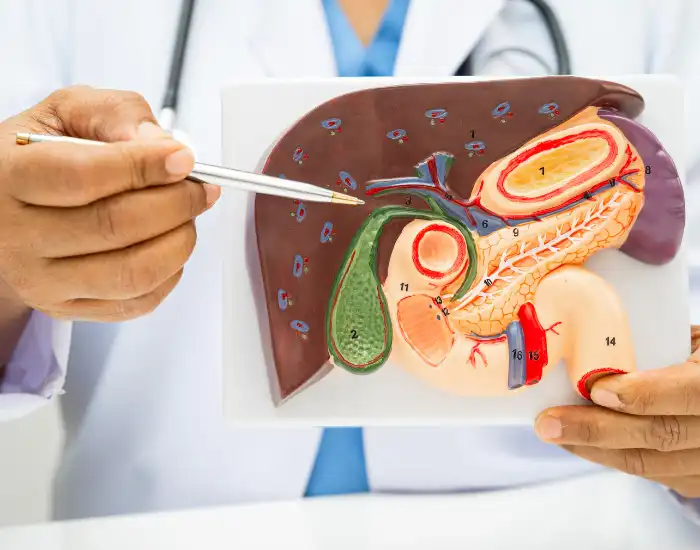
Acute cholecystitis is sudden inflammation of the gallbladder, most often because a gallstone blocks the duct that drains it. The gallbladder is a small organ beneath the liver on the right side of the abdomen. It stores bile, a fluid that helps digest fat.
When a stone lodges in the cystic duct, the gallbladder’s outlet, bile is trapped. Pressure builds inside the gallbladder, the wall becomes inflamed and painful, and the trapped bile can become infected. Left untreated, acute cholecystitis can lead to serious complications, including rupture and infection that spreads through the body.
It differs from an ordinary gallbladder attack, or biliary colic, in one important way: an attack usually eases once the stone shifts, while cholecystitis persists and gets worse. Read more about gallbladder attack symptoms.
What Causes Acute Cholecystitis, and Who Is at Higher Risk?
Gallstones cause most cases of acute cholecystitis by blocking the normal flow of bile. Less common causes include other bile duct problems such as sludge or scarring, tumors, infections, serious illness that reduces blood flow to the gallbladder, and certain medical procedures.
People at higher risk include:
- People with gallstones or a history of gallbladder disease
- People who are overweight or obese, or who have lost weight rapidly
- Women, especially during pregnancy or while taking hormone therapy
- Older adults
- People with diabetes or certain digestive disorders
- People with a family history of gallstones
If any of these apply to you, take new upper right belly pain seriously, especially if it lasts longer than your usual discomfort.
What Are the Common Symptoms of Acute Cholecystitis?
The most common symptoms of acute cholecystitis are sudden, intense pain in the upper right abdomen together with nausea, vomiting and fever. Symptoms often begin after a meal, especially a large or fatty one, and their severity varies from person to person. Common symptoms include:
- Sudden, intense pain in the upper right or upper middle abdomen
- Pain that spreads to the right shoulder, the right shoulder blade or the back
- Tenderness when the belly is pressed
- Nausea and vomiting
- Fever or chills
- Loss of appetite
Some signs are subtle or easily mistaken for heartburn, a stomach bug or other digestive problems. Recognizing the pattern early helps you get care before complications develop. See how surgeons tell these apart in gallbladder infection vs acid reflux.
What Does Cholecystitis Pain Feel Like?
Cholecystitis pain usually starts suddenly in the upper right abdomen, just below the ribcage, and stays constant for hours rather than coming and going like a cramp. It is often the first and most noticeable symptom.
- Trigger: many patients notice it after fatty or greasy foods, when the gallbladder squeezes to release bile.
- Character: steady, severe and hard to get comfortable with, rather than brief waves of cramping.
- Spread: it may radiate to the right shoulder, the back or even the chest.
- Tenderness: pressing on the upper right abdomen hurts, and taking a deep breath while it is pressed may catch the pain.
Because the pain can reach the chest, it is sometimes mistaken for a heart problem. Treat new chest pain as a possible heart emergency and call 911. Severe or escalating belly pain should also be treated as an emergency, since it can signal infection of the gallbladder or inflammation of the surrounding tissue. Learn why gallstones can cause back or shoulder pain.
Had a Gallbladder Attack Before?
Repeated attacks are a common path to cholecystitis. Talk with Dr. Murtaza Shakir in Katy or Sugar Land about planned treatment before the next one.
What Other Digestive and Whole-Body Symptoms Can Occur?
Besides pain, acute cholecystitis often causes nausea, vomiting, bloating and a lasting loss of appetite. These happen because the inflamed gallbladder disrupts the normal flow of bile, which the body needs to break down fat.
Other symptoms reflect the body’s response to inflammation or infection:
- Fever, even a low-grade one, or chills
- Fatigue, weakness and a general sense of being unwell
- Jaundice, a yellowing of the skin or the whites of the eyes
- Dark, tea-colored urine or light, clay-colored stools
Jaundice and color changes in urine or stool suggest that bile is backing up into the bloodstream, which can happen when a stone also blocks the main bile duct. These clues mean you need prompt evaluation by a healthcare professional.
When Is Gallbladder Pain an Emergency?
Gallbladder pain is an emergency when it is severe, lasts several hours or comes with fever, vomiting or jaundice. Go to the emergency room if you have:
- Sudden or severe abdominal pain, especially pain so intense you cannot sit still or get comfortable
- Pain that lasts several hours or keeps getting worse
- Persistent nausea or vomiting
- Fever, even a low-grade one, or chills
- Jaundice, tea-colored urine or light-colored stools
Prompt evaluation lets acute cholecystitis be diagnosed and treated before complications occur. Pain that comes and goes after meals but settles within a few hours still deserves a non-urgent visit, because repeated attacks can lead to cholecystitis. If you were already told in the ER that you have gallstones, see what happens next after the ER finds gallstones.
How Do Doctors Diagnose Acute Cholecystitis?
Doctors diagnose acute cholecystitis by combining the exam, blood tests and imaging, with ultrasound usually the first scan. Each piece answers a different question.
- Physical exam: tenderness under the right ribs, especially when you breathe in while the area is pressed, points to an inflamed gallbladder.
- Blood work: a complete blood count looks for signs of infection, and liver tests, bilirubin and pancreatic enzymes (amylase and lipase) check whether a stone has also blocked the bile duct or irritated the pancreas.
- Ultrasound: shows gallstones, a thickened gallbladder wall and fluid around the gallbladder.
- CT, MRI or a gallbladder (HIDA) scan: used when the picture is unclear or to look at the bile ducts.
What changes the surgeon’s plan most is how sick you are, whether the bile duct is also blocked, and whether there are signs of a complication such as gangrene or perforation.
How Is Acute Cholecystitis Treated, and What Happens If It Is Not?
Acute cholecystitis is usually treated in the hospital with IV fluids, antibiotics and pain control, followed by removal of the gallbladder when gallstones are the cause. Surgery is done urgently if there are complications; otherwise it is usually performed once you have recovered from the acute episode. For patients who are too ill for an operation, a tube may be placed through the skin to drain the gallbladder first.
Gallbladder removal (cholecystectomy) is commonly done with minimally invasive techniques. Learn more about laparoscopic gallbladder removal.
If acute cholecystitis is not treated, it can lead to:
- Gallbladder rupture (perforation): which can cause severe infection in the abdominal cavity
- Gangrene: death of gallbladder tissue, more likely in older adults, people with diabetes and people who delay treatment
- Abscess or pus in or around the gallbladder
- Sepsis: spread of infection through the bloodstream
- Chronic gallbladder inflammation and ongoing digestive problems
Early recognition and treatment greatly reduce the risk of these complications.
Where Can Patients in Katy, Sugar Land and Houston Get Gallbladder Care?
Patients across the Houston area can see Dr. Murtaza Shakir, a board-certified general surgeon, at the Katy or Sugar Land office to evaluate gallbladder pain, gallstones or a recent episode of cholecystitis. Severe, constant pain with fever or vomiting belongs in the emergency room first.
- Bring any ultrasound or CT reports and recent lab results
- Note when attacks happen, how long they last and what foods seem to trigger them
- List your medications and any prior abdominal surgeries
Learn more about gallbladder surgery and gallbladder care in Katy, or call (713) 955-9191 if you have severe or recurring abdominal pain.
Questions to Ask Your Surgeon About Acute Cholecystitis
- Do my symptoms and ultrasound point to cholecystitis or a simple gallbladder attack?
- Is the main bile duct also blocked, and do I need another test for that?
- Should my gallbladder come out during this hospital stay or after I recover?
- Will the surgery be laparoscopic or robotic, and what could change that plan?
- What should I eat while I wait for surgery?
- Which symptoms mean I should go back to the emergency room?
Frequently Asked Questions
How long does acute cholecystitis pain last?
Unlike a brief gallbladder attack, cholecystitis pain usually stays constant for several hours or longer and does not settle on its own. Pain lasting several hours, especially with fever or vomiting, needs same-day medical care.
Can acute cholecystitis go away without surgery?
The inflammation often settles with antibiotics, fluids and rest, but when gallstones are the cause, symptoms tend to return. That is why gallbladder removal is usually recommended, either during the same hospital stay or soon after recovery.
Does cholecystitis always cause a fever?
No. Fever is common but not universal, and it may be low-grade or absent, especially early on. Severe, constant upper right belly pain is reason enough to seek care.
Is acute cholecystitis the same as gallstones?
No. Gallstones are the stones themselves, and many people have them without symptoms. Acute cholecystitis is inflammation of the gallbladder, usually triggered when a stone blocks its outlet. Read more about gallstones symptoms and treatment.
Can acute cholecystitis feel like a heart attack?
It can, because the pain may spread to the chest, shoulder or back. Never assume chest pain is your gallbladder; call 911 so a heart problem can be ruled out first.
Key Takeaway
Acute cholecystitis usually causes constant, severe upper right belly pain lasting hours, with tenderness, nausea, vomiting and often fever. It needs prompt care, usually in the hospital, and gallbladder removal is typically recommended when gallstones are the cause. Fever, jaundice or pain you cannot get comfortable with means go to the ER.
Sources and Further Reading
- Acute Cholecystitis, MedlinePlus Medical Encyclopedia (U.S. National Library of Medicine)
- Cholecystitis: Symptoms and Causes, Mayo Clinic
- Symptoms and Causes of Gallstones, National Institute of Diabetes and Digestive and Kidney Diseases (NIDDK)
This article is general education, not personal medical advice. For severe abdominal pain, fever with abdominal pain, heavy bleeding, or yellowing of the skin or eyes, seek emergency care.

Meet the Surgeon
Dr. Murtaza Shakir is a board-certified General Surgeon and is board certified in Complex General Surgical Oncology. He earned his medical degree at Aga Khan University, completed General Surgery residency at Riverside Methodist Hospital in Columbus, Ohio, and a two-year Surgical Oncology fellowship at the University of Pittsburgh Medical Center. He sees patients at Surgical Associates of Southern Texas in Katy and Sugar Land.
Related Reading and Care
Schedule a Gallbladder Evaluation
Have recurring gallbladder pain or a recent cholecystitis episode evaluated by Dr. Shakir in Katy or Sugar Land.
This page provides general information and is not a substitute for medical advice. For severe abdominal pain or other emergencies, call 911 or go to the nearest emergency room. Last updated October 16, 2026.