 EN
 ES
 UR
 HI


Bulge near an old scar?
Have it examined by board-certified general surgeon Dr. Murtaza Shakir in Katy or Sugar Land. Call (713) 955-9191, or send your details and our team will call you back.
THE SHORT ANSWER
An incisional hernia is a bulge at or near a previous surgical scar, where fat or part of the intestine pushes through an area of the abdominal wall that did not heal fully. It does not go away on its own, and surgery is the only definitive treatment. Small, painless hernias can sometimes be watched, but painful, growing or trapped hernias need repair.
What Is an Incisional Hernia?
An incisional hernia is a hernia that forms at or near the scar of a previous operation, where the abdominal wall did not fully heal and left a weak spot. Fatty tissue, and sometimes part of the intestine, can push through that weak spot and create a bulge under the skin.
Unlike hernias that appear without any prior surgery, this type is tied to an earlier incision. It can follow a major abdominal operation such as an appendectomy, bowel resection or hysterectomy, and it can also follow a C-section or other gynecologic surgery. Incisional hernias are a type of ventral hernia, meaning a hernia in the front of the abdominal wall.
They are a common complication of abdominal surgery. The American College of Surgeons reports that incisional hernias occur in about 5 to 17 percent of patients after abdominal surgery, less often after laparoscopic procedures, and that most appear within the first 5 years. Some show up within months, while others take years to become noticeable.
Why Do Hernias Form at an Old Surgical Scar?
Hernias form at a scar when the layers that were closed at the end of surgery heal with a weak area that gives way under pressure. Several things make that more likely:
- The original operation: major abdominal surgery, a C-section or a gynecologic procedure, especially through a larger open incision.
- Surgical closure: a closure that was inadequate or under too much tension raises the risk.
- Wound complications: infection after surgery, fluid collecting under the incision or delayed healing can weaken the repair site.
- Poor healing: diabetes, smoking and corticosteroid use can interfere with how well tissue heals.
- Extra pressure on the abdomen: obesity or significant weight gain, and repeated straining from a chronic cough, heavy lifting or constipation.
- Repeated surgery in the same area: each additional operation through the same site raises the risk.
Knowing these factors matters twice: they help explain why the hernia formed, and they are the same factors surgeons try to improve before and after repair to lower the chance of the hernia coming back.
What Are the Symptoms of an Incisional Hernia?
The most common symptom is a bulge at or near a surgical scar that becomes more noticeable when you stand, cough or strain. Symptoms vary from none at all to steady discomfort. Patients often notice:
- A visible bulge or swelling at or near the scar, especially when standing or straining
- Aching or discomfort along the incision
- Pressure or heaviness in the abdomen
- Digestive changes, such as bloating, mild nausea or changes in bowel habits
- Tenderness, redness or warmth over the bulge, which can mean a complication such as incarceration
Some incisional hernias are small and painless. Even so, a new bulge near a scar deserves an exam, because hernias tend to enlarge over time and a small one is usually simpler to deal with than a large one.
When Is an Incisional Hernia an Emergency?
An incisional hernia is an emergency when tissue becomes trapped in the hernia and cannot slide back in, because its blood supply can be cut off. Many incisional hernias can be repaired on a planned schedule, but go to the emergency room or call 911 if you have:
- Sudden, severe pain at the bulge or surgical site
- A bulge that cannot be gently pushed back in
- Redness, warmth or swelling over the hernia that worsens quickly, or skin that turns dark
- Nausea, vomiting, or inability to pass gas or have a bowel movement
These signs can point to an incarcerated (trapped) or strangulated (trapped with lost blood supply) hernia. Both need emergency surgical care, and prompt evaluation by a surgeon is critical to avoid complications. Read more about when to worry about hernia pain.
Noticed a Bulge Along Your Scar?
Have it evaluated by board-certified general surgeon Dr. Murtaza Shakir in Katy or Sugar Land, and leave with a clear plan to watch or repair it.
How Do Surgeons Diagnose an Incisional Hernia?
Most incisional hernias are diagnosed with a careful physical exam, and imaging is added when the exam alone does not answer the question. During the exam, the surgeon looks at:
- The size and location of the bulge in relation to the scar
- Tenderness, redness or other signs of infection
- Whether the hernia is reducible, meaning it can be pushed back in
- How the abdominal wall changes when you stand, cough or strain
An ultrasound or CT scan is often used to confirm the hernia, especially in patients with obesity or a complex surgical history. A CT scan also helps with planning: it shows the true size of the opening, whether there is more than one defect along the scar and what the hernia contains. Guidelines from the Society of American Gastrointestinal and Endoscopic Surgeons note that imaging can reveal defects that were not found on physical exam. If a hernia was already seen on a scan, see what to do when a CT scan shows a hernia.
Does an Incisional Hernia Always Need Surgery?
Not always right away, but surgery is the only treatment that actually fixes an incisional hernia. The decision depends on the size of the hernia, your symptoms and your overall health.
For some patients, non-surgical management is reasonable for a time:
- Watchful waiting: small hernias without symptoms may be monitored, especially in patients whose health makes surgery riskier.
- Lifestyle changes: reaching a healthy weight, avoiding heavy lifting and treating a chronic cough reduce strain on the abdominal wall.
- Supportive devices: a hernia belt or abdominal binder can relieve discomfort, but it does not repair the hernia.
Non-surgical management is generally a temporary approach. It does not close the opening, prevent the hernia from enlarging or rule out complications later. Surgery is usually recommended when the hernia causes symptoms, is getting bigger or has features that raise the risk of trapping tissue. Some patients, such as those who smoke or have poorly controlled diabetes, may be advised to address those issues before a planned repair, because they affect healing.
How Is an Incisional Hernia Repaired?
Incisional hernias are repaired by returning the tissue to the abdomen and closing or reinforcing the weak area, usually with mesh. There are three main approaches:
| Approach | How it works |
|---|---|
| Open repair | An incision is made over the hernia, the tissue is returned to the abdominal cavity and the wall is reinforced with sutures or mesh. |
| Laparoscopic repair | Several small incisions and a camera are used to repair the hernia from inside the abdomen. |
| Robotic-assisted repair | A minimally invasive approach in which the surgeon controls robotic instruments, giving a magnified view and precise movement through small incisions. |
Surgeons choose the approach based on the size and complexity of the hernia, previous operations, scar tissue inside the abdomen and your overall health. According to the American College of Surgeons, laparoscopic and robotic repairs have lower wound infection rates and shorter hospital stays than open repair, with similar recurrence rates in the first year. Mesh lowers the chance of the hernia coming back, so it is used in most repairs except some very small defects. Learn more about ventral and incisional hernia repair and robotic hernia surgery.
What Is Recovery Like After Incisional Hernia Repair?
Most patients return to light activities within a few days, but the repair needs several weeks before it can handle heavy strain. Recovery depends on the size of the hernia and the type of repair. General guidance includes:
- Walking and light activities within a few days
- Avoiding heavy lifting or straining for about 4 to 6 weeks, or longer if your surgeon advises it
- Following your surgeon’s specific post-operative instructions to lower the risk of infection or recurrence
- Watching for swelling, increasing pain or a new bulge, and reporting them
The American College of Surgeons advises avoiding lifting more than 10 pounds for at least 6 weeks after ventral hernia repair, and lifting limits can last longer after complex or recurrent repairs. Patients who have laparoscopic or robotic repair often have smaller scars and a shorter hospital stay.
How can I lower the chance of the hernia coming back?
- Maintain a healthy weight to reduce pressure on the abdominal wall
- Do core-strengthening exercises only once your surgeon clears you, and build up gradually
- Avoid sudden heavy lifting or straining
- Manage a chronic cough or other breathing conditions
- Treat constipation promptly so you do not strain
These habits support the surgical repair and improve long-term results. If a hernia does return, see what to do when a hernia comes back.
How Do Patients in Katy, Sugar Land and Houston Get an Incisional Hernia Evaluated?
The first step is a consultation with a general surgeon who regularly repairs abdominal wall hernias. Incisional hernias are best managed by a general surgeon experienced in abdominal wall repair. When choosing a surgeon, look for:
- Board certification and experience with abdominal wall repair
- Experience with open, laparoscopic and robotic hernia techniques, so the approach fits your hernia
- An individualized plan explained clearly, including whether mesh is advised
- Planned follow-up after surgery
To prepare, bring the operative report or dates of your earlier surgeries if you have them, any CT or ultrasound reports, and a list of your medications. Note when you first saw the bulge and whether it has grown.
Dr. Murtaza Shakir is a board-certified general surgeon who sees patients at offices in Katy and Sugar Land. Learn more about hernia repair at the practice, call (713) 955-9191 or request an appointment.
Questions to Ask Your Surgeon About an Incisional Hernia
- How large is the opening, and is there more than one defect along my scar?
- Do I need a CT scan before we decide on a plan?
- Is it safe to watch my hernia for now, or do you recommend repair?
- Would you use an open, laparoscopic or robotic approach for my hernia, and why?
- Will you use mesh, and what kind of recovery should I expect with it?
- Is there anything I should change before surgery, such as quitting smoking or improving blood sugar control?
- How long should I avoid lifting and straining after the repair?
Frequently Asked Questions
Is a bulge near my surgical scar normal swelling or a hernia?
Some swelling right after surgery is normal and fades as you heal. A bulge that appears weeks, months or years later, or that gets bigger when you stand or cough, is more likely an incisional hernia and should be examined.
Can you get a hernia after a C-section?
Yes. A C-section is an abdominal operation, so a hernia can form at the scar if the abdominal wall does not heal fully. A bulge or ache at a C-section scar deserves the same evaluation as any other incisional hernia.
Will an incisional hernia go away on its own?
No. The opening in the abdominal wall does not close by itself, and many incisional hernias slowly enlarge. A binder can ease discomfort but does not repair the hernia. Read more about whether hernias go away on their own.
Can an incisional hernia come back after repair?
Yes, recurrence is possible. The risk is higher with obesity, smoking, wound infection and complex repairs. Mesh, a healthy weight and following lifting limits during recovery all help lower it.
How long after surgery can an incisional hernia appear?
It can appear within months or many years later. According to the American College of Surgeons, most incisional hernias appear within the first 5 years after surgery.
Key Takeaway
An incisional hernia is a bulge at a previous surgical scar where the abdominal wall did not heal fully, and it will not go away on its own. Small, painless hernias can sometimes be watched, but surgery is the definitive treatment for hernias that hurt or grow. A bulge that becomes painful, firm and cannot be pushed back in, especially with vomiting, needs emergency care.
Sources and Further Reading
- Incisional Hernia: What It Is, Symptoms & Treatment, Cleveland Clinic
- Ventral Hernia Repair, American College of Surgeons
- Guidelines for Laparoscopic Ventral Hernia Repair, Society of American Gastrointestinal and Endoscopic Surgeons (SAGES)
- Hernia, MedlinePlus (U.S. National Library of Medicine)
This article is general education, not personal medical advice. For a hernia that becomes hard, very painful or discolored and will not go back in, or for severe abdominal pain with vomiting, call 911 or go to the nearest emergency room.
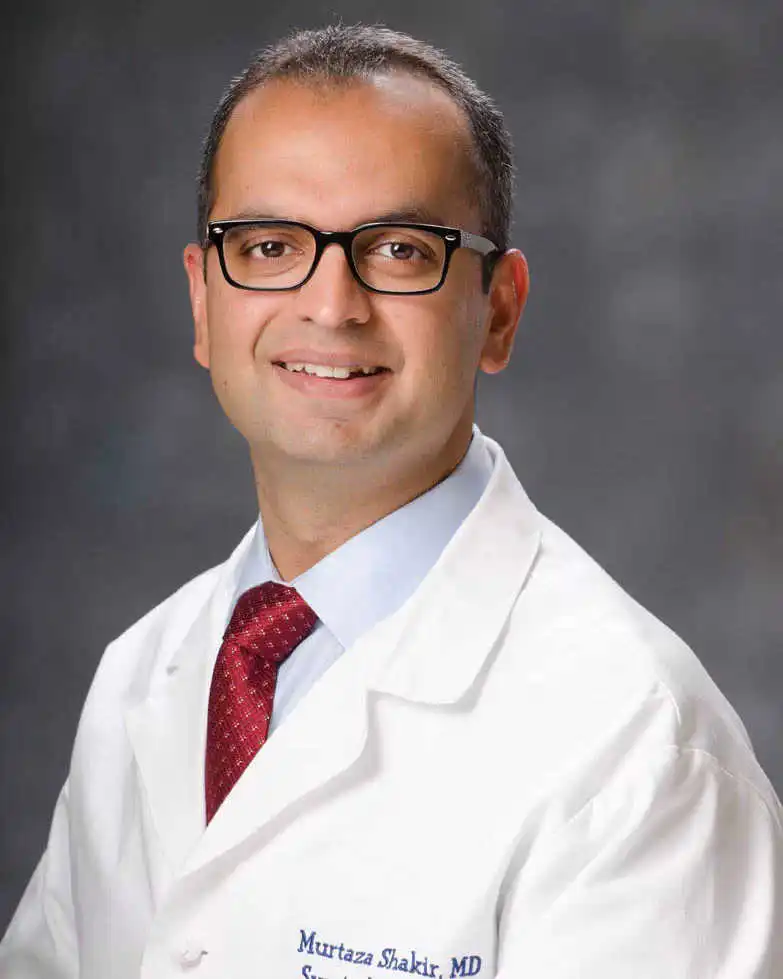
Meet the Surgeon
Dr. Murtaza Shakir is a board-certified General Surgeon and is board certified in Complex General Surgical Oncology. He earned his medical degree at Aga Khan University, completed General Surgery residency at Riverside Methodist Hospital in Columbus, Ohio, and a two-year Surgical Oncology fellowship at the University of Pittsburgh Medical Center. He sees patients at Surgical Associates of Southern Texas in Katy and Sugar Land.
Related Reading and Care
Schedule an Incisional Hernia Evaluation
Have a bulge at an old surgical scar examined in Katy or Sugar Land and find out whether watching or repair makes sense for you.
This page provides general information and is not a substitute for medical advice. For severe abdominal pain or other emergencies, call 911 or go to the nearest emergency room. Last updated October 16, 2026.