 EN
 ES
 UR
 HI

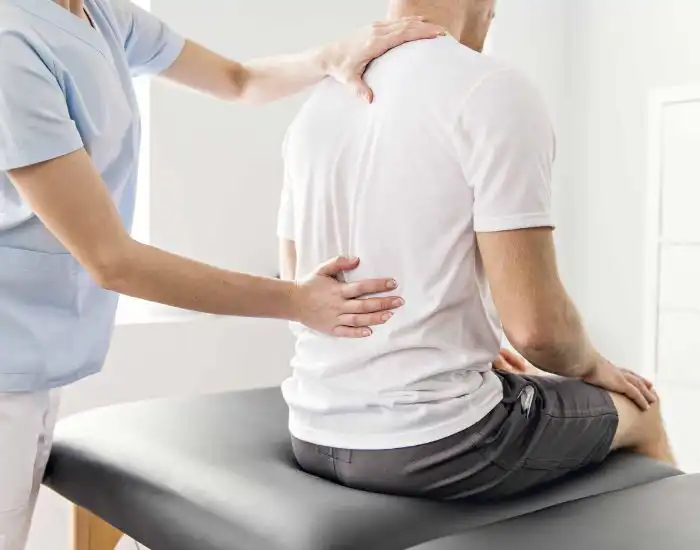
Groin pain that keeps returning?
Have it evaluated by board-certified general surgeon Dr. Murtaza Shakir in Katy or Sugar Land. Call (713) 955-9191, or send your details and our team will call you back.
THE SHORT ANSWER
Groin pain from a muscle strain usually improves with rest, ice and over-the-counter pain relievers over days to weeks. Groin pain from a hernia tends to return once you resume normal activity, because the weak spot in the muscle remains, so lasting relief usually requires repair. Pain that worsens with standing, lifting or coughing, or comes with a bulge, should be checked by a surgeon.
What Causes Groin Pain?
The most common cause of groin pain is a muscle strain, usually a pulled inner-thigh or hip flexor muscle during exercise. Hernias are another frequent cause, and groin pain is often one of the earliest symptoms of a hernia, even though it is easily mistaken for a strain or minor injury. Other causes include:
- Hip problems: such as bursitis, a labral tear or arthritis
- Nerve irritation or compression in the groin
- Urinary, reproductive or digestive conditions, including appendicitis
The pattern of the pain is the main clue. A strain usually starts with a specific movement and steadily improves with rest. Hernia pain often comes and goes, worsens with activity and returns when you get back to normal life.
How Does a Hernia Cause Groin Pain?
A hernia causes groin pain when tissue, often fatty tissue or part of the intestine, pushes through a weak area in the abdominal or groin muscles and stretches the area around it. In the groin, this is most commonly an inguinal hernia, which can affect men and women differently.
The pain comes from three sources:
- Muscle tissue that is stretched or weakened
- Nerves in the groin that become irritated
- Pressure that rises when you stand, lift, cough or strain
Unlike muscle pain, hernia-related groin pain often comes and goes and tends to worsen with physical activity. Learn more about inguinal hernia symptoms and treatment.

What Does Hernia-Related Groin Pain Feel Like?
Hernia-related groin pain usually feels like a heavy, dragging or pressure-like ache on one side of the groin that eases when you lie down. You may notice:
- A lump or bulge in the groin that becomes more visible when standing or straining
- Pain while lifting, coughing, sneezing or during bowel movements
- A heavy, dragging or pressure-like sensation
- Discomfort that improves when lying down
- Burning, aching or sharp pain on one side of the groin
In women, hernia-related groin pain may occur without an obvious bulge, which makes diagnosis harder without a proper exam. See inguinal hernia symptoms in women.
Why activity matters
Groin pain that appears or worsens with standing or walking, builds through the day, improves with rest or lying flat and feels like pressure rather than soreness is highly suggestive of a hernia and should be assessed by a healthcare professional. Read whether burning groin pain is a hernia symptom.
Why Doesn't Rest Fix Hernia Groin Pain?
Rest does not fix hernia groin pain because it does not close the weak spot in the muscle that causes the hernia. Many people try rest, stretching, ice or over-the-counter pain relievers. These can ease discomfort for a while, but they do not correct the underlying defect.
The key distinction:
- Muscle strain: often heals with rest, ice and time
- Hernia: persists, because the muscle weakness remains
That is why groin pain from a hernia frequently returns once normal activities resume. If you have rested a groin injury and the pain comes back each time you go back to work, lifting or exercise, a hernia should be ruled out.
What Gives Temporary Relief From Hernia Groin Pain?
Several simple steps can reduce hernia discomfort in the short term, although surgery is usually needed for a permanent fix. These include:
- Avoiding heavy lifting and straining
- Lying down when pain increases, which can reduce pressure and bulging
- Using proper lifting technique, with your legs rather than your back
- Managing constipation and a chronic cough, which both raise pressure in the abdomen
- Wearing a hernia belt or truss, but only if a physician recommends it and checks the fit
For a simple muscle strain, rest, ice and over-the-counter pain relievers are the usual first steps. For a hernia, these measures relieve symptoms only. They should not replace a medical evaluation or a surgical consultation, and you should never force a hard, painful bulge back in.
Rested, Iced, Still Hurting?
If groin pain keeps returning, board-certified general surgeon Dr. Murtaza Shakir can check for a hernia. Request a consultation in Katy or Sugar Land.
How Do Surgeons Find the Cause of Groin Pain?
Surgeons find the cause of groin pain mostly through a careful history and physical exam, adding imaging when the exam is not conclusive. The evaluation usually covers:
- Your story: how the pain started, whether a specific movement triggered it, and what makes it better or worse.
- The exam: checking the groin while you stand and while you cough or strain, to feel for a bulge or a weak spot.
- Imaging if needed: an ultrasound, CT scan or MRI when a hernia is suspected but cannot be felt.
- Other causes: the hip, muscles and nearby organs, so a strain or hip problem is not mistaken for a hernia.
Getting the right diagnosis early avoids unnecessary treatment and months of frustration. If a hernia is not the cause, the surgeon can point you toward the right specialist.
When Is Groin Pain an Emergency?
Groin pain is an emergency when a hernia may be trapped or losing its blood supply. Seek immediate medical attention or call 911 if groin pain comes with:
- Sudden or severe pain
- A bulge that becomes hard, red, purple, dark or tender
- Nausea or vomiting
- Fever
- Inability to pass gas or have a bowel movement
These symptoms may mean incarceration or strangulation, both of which need urgent surgery. Sudden, severe pain or swelling in one testicle is also an emergency. See when to worry about hernia pain.
Why See a Surgeon Early for Groin Pain?
Seeing a general surgeon early matters because hernias do not fix themselves, even when the pain is mild or comes and goes. Early evaluation is not about rushing into surgery. It is about understanding what is happening, protecting your options and preventing avoidable complications. It allows:
- A clear diagnosis: confirming whether a hernia or another condition is causing the pain
- Safe monitoring: a small hernia that causes few problems can often be watched with regular checks
- Better timing: smaller, uncomplicated hernias are often easier to repair and may qualify for laparoscopic or robotic surgery, which usually means smaller incisions, less pain and a quicker return to activity
- Fewer emergencies: a hernia can suddenly become trapped, and emergency surgery carries more risk than a planned repair
Surgery is generally recommended for hernias that are painful or getting bigger. Waiting too long can let a hernia grow larger and harder to repair. Learn more about inguinal hernia repair.
Where Can I Get Groin Pain Evaluated in Katy, Sugar Land or Houston?
If you have persistent groin pain, especially pain related to lifting, coughing or standing, or a feeling of heaviness, a hernia may be the cause. Surgical Associates of Southern Texas evaluates groin pain for patients from across the Houston area at offices in Katy and Sugar Land.
- Note when the pain started and which activities trigger it
- Check for a bulge when standing or coughing
- List what you have tried for relief and how well it worked
Dr. Murtaza Shakir is a board-certified general surgeon who performs open, laparoscopic and robotic hernia repair. Learn about hernia repair, call (713) 955-9191 or request a call back.
Questions to Ask Your Surgeon About Groin Pain
- Is my groin pain caused by a hernia, a muscle strain or something else?
- Do I need an ultrasound or other imaging?
- What can I do to ease the pain while I wait for a decision?
- Would a hernia belt or truss help in my case?
- Is my hernia safe to watch, or do you recommend repair?
- If I need surgery, which approach do you recommend and how long is recovery?
Frequently Asked Questions
How do I know if my groin pain is a hernia or a pulled muscle?
A pulled muscle usually follows a specific movement and steadily improves with rest. Hernia pain tends to worsen with standing, lifting or coughing, ease when lying down and come back with activity, sometimes with a bulge.
Can a hernia belt relieve groin pain?
A hernia belt or truss can ease symptoms for some people, but it does not repair the hernia. Use one only if a physician recommends it and checks that it fits correctly.
Will hernia groin pain go away on its own?
The pain may come and go, but the hernia itself does not heal. Most hernias grow over time, and surgery is generally recommended for hernias that are painful or getting bigger.
Is it safe to exercise with groin pain from a hernia?
Light activity is usually fine, but heavy lifting and straining can worsen symptoms. Ask your surgeon which activities are safe for your hernia.
When should I go to the ER for groin pain?
Go right away for sudden, severe pain, a bulge that turns hard, red or dark, nausea, vomiting, fever, inability to pass gas or stool, or sudden severe pain in a testicle.
Key Takeaway
Groin pain from a muscle strain usually improves with rest, but pain from a hernia keeps returning because the weak spot remains. Temporary measures can ease symptoms, while surgical repair brings lasting relief. A hard, painful bulge, vomiting, fever or inability to pass gas needs emergency care.
Sources and Further Reading
- Groin Pain: Causes & How To Find Relief, Cleveland Clinic
- Inguinal Hernia: Diagnosis and Treatment, Mayo Clinic
- Inguinal Hernia: Symptoms and Causes, Mayo Clinic
- Inguinal Hernia, National Institute of Diabetes and Digestive and Kidney Diseases (NIDDK)
This article is general education, not personal medical advice. For a hernia that becomes hard, very painful or discolored and will not go back in, or for severe abdominal pain with vomiting, call 911 or go to the nearest emergency room.

Meet the Surgeon
Dr. Murtaza Shakir is a board-certified General Surgeon and is board certified in Complex General Surgical Oncology. He earned his medical degree at Aga Khan University, completed General Surgery residency at Riverside Methodist Hospital in Columbus, Ohio, and a two-year Surgical Oncology fellowship at the University of Pittsburgh Medical Center. He sees patients at Surgical Associates of Southern Texas in Katy and Sugar Land.
Related Reading and Care
Schedule a Groin Pain Evaluation
Find out whether a hernia is behind your groin pain at our Katy or Sugar Land office.
This page provides general information and is not a substitute for medical advice. For severe abdominal pain or other emergencies, call 911 or go to the nearest emergency room. Last updated October 16, 2026.