
Gallbladder • Patient Education
Why Right Side Hurts After Eating and the Gallbladder Connection
Right-sided abdominal pain is one of the most common reasons people search online for answers, especially when discomfort appears after meals, comes and goes, or worsens after eating fatty foods. Many people initially assume gas, acidity, muscle strain, or stress. However, when pain occurs repeatedly on the upper right side of the abdomen, it often points to an underlying digestive or gallbladder-related issue that should not be ignored. Understanding why right side hurts can help identify when symptoms are harmless and when medical evaluation becomes necessary.
By Surgical Associates of Southern Texas · Katy and Sugar Land, TX · February 2026
On This Page
- Why Right Side Hurts
- Why Pain Under Ribs Happens
- Why Upper Right Pain Worsens After Eating
- Why Pain After Meals Is a Warning Sign
- Why Pain After Fatty Foods Is Common
- Why Pain Comes and Goes
- When a Specialist Should Be Seen
- When Surgery May Be Required
- Expert Surgical Care in Katy and Sugar Land
- Medical Disclaimer
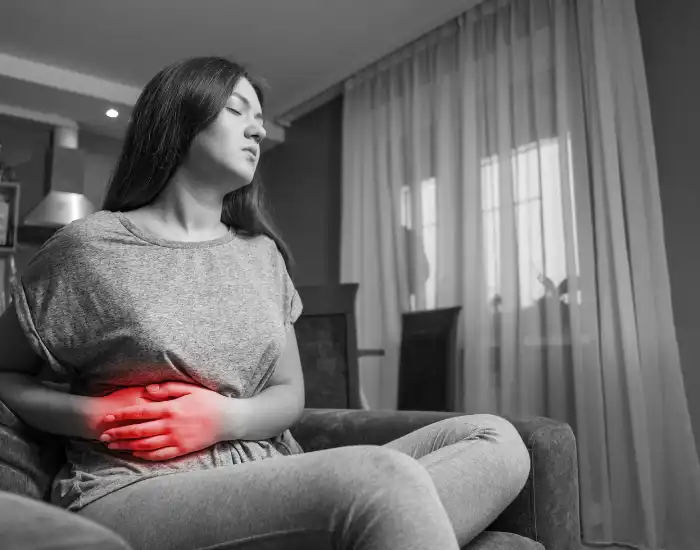
Pain after meals that keeps coming back? Get it checked.
Consult with Dr. Murtaza Shakir, board-certified general surgeon. Call now, or send us your details and our team will call you back.
What You’ll Learn
- Why Right Side Hurts
- Why Pain Under Ribs Happens
- Why Upper Right Pain Worsens After Eating
- Why Pain After Meals Is a Warning Sign
- Why Pain After Fatty Foods Is Common
Why Right Side Hurts
Many patients ask why right side hurts, especially when the pain is not constant but returns repeatedly. The upper right abdomen contains the gallbladder, liver, bile ducts, and part of the small intestine. Conditions affecting these organs can cause discomfort.
Clinically, why right side hurts is often linked to gallbladder dysfunction, gallstones, or impaired bile flow. Patients may feel pressure, aching, or sharp pain that intensifies after meals. When pain repeatedly occurs in this location, asking why right side hurts becomes medically significant rather than incidental. Delaying evaluation because the pain temporarily subsides can allow the condition to progress, which is why why right side hurts should never be ignored when it keeps recurring.
Why Pain Under Ribs Happens
People frequently search why pain under ribs when discomfort sits just beneath the right rib cage. This area directly overlies the gallbladder. One of the most common reasons why pain under ribs occurs is intermittent blockage of bile flow by gallstones.
Patients often wonder why pain under ribs radiates to the back or right shoulder. This is referred pain, a classic feature of gallbladder disease. If you repeatedly question why pain under ribs appears after meals, especially heavy or greasy meals, gallbladder evaluation is strongly advised.
Why Upper Right Pain Worsens After Eating
A key diagnostic clue is why upper right pain begins shortly after eating. Eating triggers the gallbladder to contract and release bile to digest fats. When gallstones or inflammation are present, this process becomes painful.
This explains why upper right pain often starts 30 to 120 minutes after meals. Patients may also feel nausea, bloating, or fullness. When people repeatedly ask why upper right pain disrupts sleep or daily activities, it is usually no longer a simple digestive complaint.
Why Pain After Meals Is a Warning Sign
Searching why pain after meals is extremely common in patients with gallbladder disease. Unlike acid reflux, this pain does not improve with antacids. Physicians become concerned when patients describe why pain after meals that is persistent, recurrent, and triggered by certain foods.
Another reason why pain after meals matters is the risk of complications. Repeated attacks increase the likelihood of gallbladder inflammation, infection, or bile duct blockage. If why pain after meals continues to appear in searches, medical imaging such as an ultrasound is usually necessary.
Why Pain After Fatty Foods Is Common
Many patients recognize why pain after fatty meals such as fried foods, pizza, or creamy dishes feels worse. Fat digestion requires more bile, causing the gallbladder to contract more forcefully.
This increased pressure explains why pain after fatty foods can be sharper and longer lasting. Clinicians often use this symptom pattern, including why pain after fatty meals, as a classic indicator of gallstones. If avoiding greasy foods helps temporarily but why pain after fatty meals returns later, the underlying problem has likely not resolved.
Key Takeaway So Far
So far we have covered why right side hurts, why pain under ribs happens, why upper right pain worsens after eating, and more. Next, we look at why pain comes and goes, when a specialist should be seen, when surgery may be required.
Why Pain Comes and Goes
One of the most confusing aspects of gallbladder disease is why pain comes and goes. Many patients delay care because symptoms disappear for days or weeks. The reason why pain comes and goes is that gallstones may temporarily block bile flow and then shift position.
This cycle explains why pain comes and goes until a more severe or prolonged attack occurs. Repeated episodes indicate progression rather than improvement. If you keep asking why pain comes and goes, it is time for a professional evaluation.
When a Specialist Should Be Seen
You should seek specialist care if you experience:
-
Recurrent right-sided pain after meals
-
Pain lasting longer than one to two hours
-
Symptoms triggered by fatty foods
-
Pain radiating to the back or right shoulder
-
Nausea or vomiting with abdominal pain
A gastroenterologist may be involved initially, but confirmed gallbladder disease usually requires assessment by a general surgeon.
When Surgery May Be Required
Gallbladder removal surgery, known as cholecystectomy, is often recommended when:
-
Gallbladder attacks recur and affect daily life
-
Acute cholecystitis is diagnosed
-
Gallstones block bile ducts
-
Gallstone pancreatitis develops
-
Infection or high-risk gallbladder conditions are present
In these cases, delaying surgery increases the risk of complications. Gallbladder removal is one of the most common and safest abdominal surgeries performed today.
Expert Surgical Care in Katy and Sugar Land
At Surgical Associates of Southern Texas, patients receive advanced and compassionate care for gallbladder conditions across Katy, Sugar Land, and Greater Houston. Surgical care is led by Dr. Murtaza Shakir, a board-certified General Surgeon and Surgical Oncologist with extensive experience in minimally invasive gallbladder surgery. His approach focuses on precise diagnosis, patient education, and safe recovery tailored to each individual.
Medical Disclaimer
This content is for educational and informational purposes only and does not replace professional medical advice, diagnosis, or treatment. Symptoms described may overlap with other medical conditions. Always consult a qualified healthcare provider or surgeon for personalized care. Seek immediate medical attention for severe pain, fever, jaundice, or persistent vomiting.
Having Recurring Gallbladder Pain?
If your symptoms are persistent, worsening, or affecting daily life, a surgical evaluation can help determine the cause and whether treatment may be appropriate. Dr. Murtaza Shakir sees patients at the Katy and Sugar Land offices.
Medical Disclaimer
This article is intended for general educational purposes only and is not a substitute for professional medical advice, diagnosis, or treatment. Symptoms can have many possible causes, and treatment decisions should be based on an individual medical evaluation. If you are experiencing severe or rapidly worsening symptoms, seek prompt medical attention. For a medical emergency, call 911 or go to the nearest emergency department.
References
- National Institute of Diabetes and Digestive and Kidney Diseases (NIDDK). Gallstones: Symptoms and Causes. niddk.nih.gov.
- Mayo Clinic. Gallstones: Symptoms and causes. mayoclinic.org.
- American College of Surgeons. Cholecystectomy: Surgical Removal of the Gallbladder (Patient Education Brochure). facs.org.
- Cleveland Clinic. Laparoscopic Cholecystectomy (Gallbladder Removal). my.clevelandclinic.org.
- Ibrahim M, Sarvepalli S, Morris-Stiff G, et al.. Gallstones: Watch and wait, or intervene?. Cleveland Clinic Journal of Medicine. 2018;85(4):323–331.
Your Surgeon
About the Physician
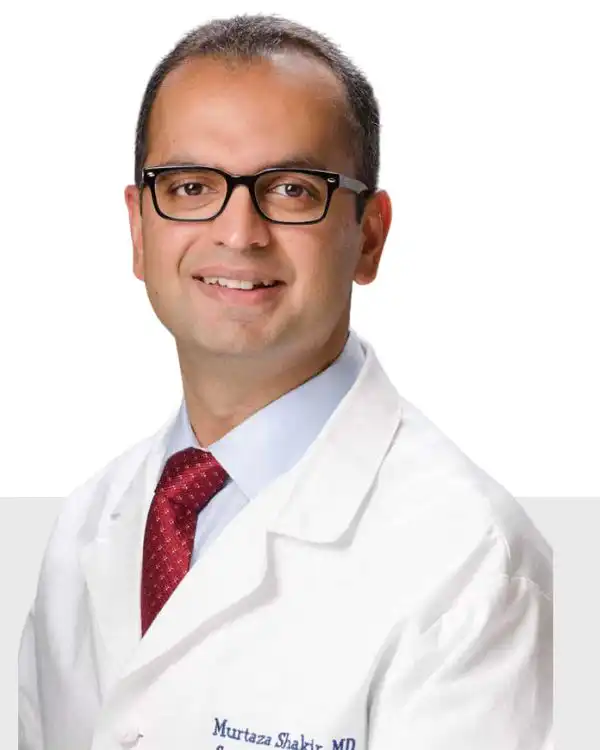
Murtaza Shakir, MD
Dr. Murtaza Shakir is a board-certified General Surgeon and is board certified in Complex General Surgical Oncology. He earned his medical degree at Aga Khan University, completed General Surgery residency at Riverside Methodist Hospital in Columbus, Ohio, and a two-year Surgical Oncology fellowship at the University of Pittsburgh Medical Center.
He evaluates and treats patients at Surgical Associates of Southern Texas in Katy and Sugar Land.
Board certified by the American Board of Surgery in:
- General Surgery
- Complex General Surgical Oncology
Surgical focus:
- Hernia repair: open, laparoscopic, and robotic
- Gallbladder surgery: laparoscopic and robotic
- General surgery
- Surgical oncology
Recognized by Houstonia Magazine among Houston’s top general surgeons. Learn more about gallbladder surgery.