 EN
 ES
 UR
 HI

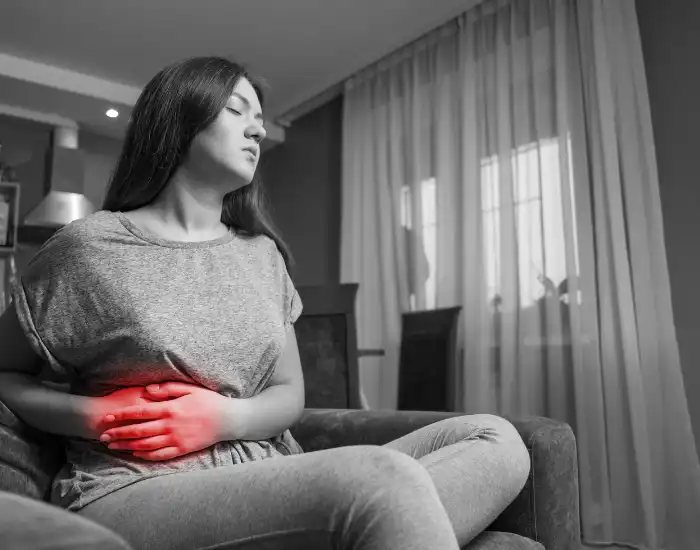
Pain after meals that keeps coming back?
Have board-certified general surgeon Dr. Murtaza Shakir evaluate your symptoms in Katy or Sugar Land. Call (713) 955-9191, or send your details and our team will call you back.
THE SHORT ANSWER
Upper abdominal pain after eating is most often caused by gallstones or gallbladder inflammation, acid reflux, gastritis or a peptic ulcer. Pain in the upper right or upper middle abdomen that follows fatty or heavy meals and lasts from minutes to hours points toward the gallbladder. Recurring pain deserves an evaluation; severe pain with fever or yellow skin needs emergency care.
What Does Upper Abdominal Pain After Eating Usually Mean?
Upper abdominal pain that follows meals usually comes from one of the organs that handle digestion, most often the gallbladder or the stomach. Patients describe it as pressure, burning, fullness or sharp discomfort that develops within one to two hours of eating. The upper abdomen contains the stomach, gallbladder, liver, pancreas and upper small intestine, and all of them become active when you eat.
Pain after eating is commonly linked to gallbladder problems, gastritis, acid reflux or problems with bile flow. One episode after a heavy meal may mean little. When the pain is recurrent and follows a predictable pattern after meals, it becomes an important symptom rather than a minor digestive issue, and repeated episodes should be evaluated, especially if they are getting worse. For pain centered just below the breastbone, see pain in the upper middle stomach.
Why Does the Pain Start After Meals and Get Worse With Fatty Food?
Pain starts after meals because eating switches on digestion: the stomach makes acid, and the gallbladder squeezes to release bile into the intestine. If bile flow is restricted or the gallbladder is inflamed, that squeeze becomes painful. This explains why gallbladder pain tends to begin after a meal rather than on an empty stomach, sometimes with nausea, bloating or discomfort that lasts for several hours.
Fat is the strongest trigger. Digesting fat takes a lot of bile, so a fatty or greasy meal makes the gallbladder contract harder. When gallstones or inflammation block the outflow, pressure inside the gallbladder rises. That is why pain is often more intense after fried foods, fast food or large meals, and why patients often report sharper pain or nausea that does not improve with antacids. The National Institute of Diabetes and Digestive and Kidney Diseases (NIDDK) notes that gallbladder attacks often follow heavy meals and usually happen in the evening or at night. Read more about gallbladder attack symptoms.
Why Does the Pain Come and Go?
Gallbladder pain often comes and goes because a gallstone can block the outlet of the gallbladder for a while and then fall back, giving temporary relief. Inflammation can also flare and settle. Mayo Clinic notes that gallstone pain may last from several minutes to a few hours.
Many people delay care because the pain disappears for days or weeks between episodes. A pain-free stretch does not mean the problem is resolving. Once gallstones have started causing attacks, the attacks tend to return, and the next one may come with complications such as infection or a blocked bile duct.
What Are the Common Causes of Upper Abdominal Pain After Eating?
The most common causes are gallbladder disease, acid reflux and gastritis, peptic ulcers, pancreatic irritation and functional digestive disorders. These can overlap, and clues from the pain pattern help narrow them down:
| Cause | Typical clues |
|---|---|
| Gallstones or gallbladder inflammation | Pain in the upper right or upper middle abdomen after fatty or heavy meals, lasting minutes to hours; may spread to the back between the shoulder blades or the right shoulder |
| Acid reflux or gastritis | Burning behind the breastbone or in the upper middle abdomen, often with a sour taste or after spicy foods or lying down |
| Peptic ulcer | Dull or burning pain between the belly button and breastbone, sometimes when the stomach is empty or at night; eating may briefly help or make it worse |
| Pancreatic irritation (pancreatitis) | Intense, constant upper abdominal pain, often needing hospital care |
| Functional digestive disorders | Recurring fullness or discomfort without a structural cause found on testing |
Gallbladder disease is easy to mistake for indigestion, especially when the pain is right-sided or triggered by fatty foods. Mayo Clinic describes back pain between the shoulder blades and right shoulder pain with gallstone attacks; see can gallstones cause back or shoulder pain. If you are unsure whether it is reflux or your gallbladder, read gallbladder infection vs acid reflux.
Gallstones on Your Ultrasound?
Board-certified general surgeon Dr. Murtaza Shakir can review your imaging and symptoms and explain whether surgery makes sense. Request a consultation in Katy or Sugar Land.
When Is Upper Abdominal Pain After Eating an Emergency?
Upper abdominal pain is an emergency when it is severe and constant, or when it comes with fever, chills, yellowing of the skin or eyes, or persistent vomiting. Take pain seriously and seek prompt medical attention if it comes with:
- Pain lasting longer than two hours
- Recurrent pain after most meals
- Nausea or vomiting
- Pain spreading to the back or right shoulder
- Fever or chills
- Yellowing of the eyes or skin (jaundice)
Go to the emergency room right away for pain so intense you cannot sit still or get comfortable, jaundice, high fever with chills, tea-colored urine with pale stools, or vomit that is bloody or looks like coffee grounds, black or bloody stools, or fainting. These can signal acute cholecystitis, a blocked bile duct, pancreatitis or a bleeding ulcer. Upper abdominal pain with chest pressure, shortness of breath or sweating can also be a heart problem, so call 911. Learn the symptoms of acute cholecystitis.
When Should I See a Specialist, and How Is the Cause Found?
See a specialist when pain repeatedly follows meals, does not improve with diet changes, disrupts sleep or daily activities, or when imaging has already shown gallstones or inflammation. A gastroenterologist may evaluate stomach and digestive causes first, but confirmed gallbladder disease usually calls for a general surgeon.
To find the cause, doctors combine your history and exam with targeted tests. According to NIDDK:
- Physical exam: checking where the abdomen is tender
- Blood tests: looking for signs of infection or inflammation in the bile ducts, gallbladder, pancreas or liver
- Abdominal ultrasound: the best imaging test for finding gallstones
- HIDA scan: shows how well the gallbladder empties and whether a bile duct is blocked
- CT or MRI: can show complications or stones in the bile ducts
Surgeons pay close attention to whether the pain pattern matches what the tests show. Gallstones are common and often cause no symptoms, so finding stones does not prove they are the cause of your pain; the decision rests on stones plus a matching story.
When Is Gallbladder Surgery Recommended for Pain After Eating?
Surgery to remove the gallbladder is commonly recommended when pain after eating is caused by:
- Gallstones that cause symptoms
- Acute or chronic cholecystitis (gallbladder inflammation)
- Bile duct obstruction
- Gallstone-related pancreatitis
- Recurrent attacks that affect your quality of life
Gallbladder removal is a definitive, effective treatment in these situations and often brings significant symptom relief. When a stone is stuck in the common bile duct, it may need to be cleared first, often with a procedure called ERCP, before or around the time of gallbladder surgery. Most operations are done with minimally invasive techniques; learn about laparoscopic gallbladder removal and gallbladder surgery at the practice. Gallstones that never cause symptoms generally do not need treatment.
Where Can I Get Upper Abdominal Pain After Eating Evaluated in Katy, Sugar Land or Houston?
Surgical Associates of Southern Texas evaluates gallbladder and digestive conditions at offices in Katy and Sugar Land for patients across the Greater Houston area. Dr. Murtaza Shakir is a board-certified General Surgeon and is board certified in Complex General Surgical Oncology, and he performs minimally invasive gallbladder surgery.
- Keep a short log of what you ate, when the pain started and how long it lasted
- Note where the pain is and whether it spreads to your back or shoulder
- Bring any ultrasound, CT or lab results from your doctor or an ER visit
Call (713) 955-9191 or request an appointment.
Questions to Ask Your Surgeon About Pain After Eating
- Does my pain pattern fit gallbladder disease or something else?
- Which tests do I need: ultrasound, blood work or a HIDA scan?
- If I have gallstones, are they the cause of my pain?
- Would removing my gallbladder likely relieve my symptoms?
- What diet changes can help while I wait for treatment?
- Which symptoms mean I should go to the ER?
Frequently Asked Questions
How do I know if upper abdominal pain after eating is my gallbladder?
Gallbladder pain is usually in the upper right or upper middle abdomen, follows fatty or heavy meals, lasts minutes to hours and may spread to the back or right shoulder. An ultrasound and exam can confirm it. See what causes gallbladder pain after eating.
Can antacids tell me whether it is reflux or gallbladder pain?
Not reliably. Reflux and gastritis pain often eases with antacids, while gallbladder pain often does not, but the overlap is large. Recurrent pain should be evaluated rather than self-treated.
Is it normal for upper abdominal pain to go away between attacks?
Yes, gallbladder pain often comes and goes as a stone blocks and then releases the gallbladder outlet. Pain-free periods do not mean the problem has resolved.
Do gallstones always need surgery?
No. Gallstones that cause no symptoms generally do not need treatment. Surgery is usually recommended when gallstones cause pain or complications such as inflammation, a blocked duct or pancreatitis.
Can an ulcer cause pain after eating?
Yes. Peptic ulcer pain is often dull or burning between the belly button and breastbone. Eating may relieve it briefly for some people and worsen it for others.
Key Takeaway
Upper abdominal pain after eating often comes from the gallbladder, especially when it is right-sided, follows fatty meals and comes and goes, but reflux, gastritis and ulcers can look similar. Recurring pain deserves an evaluation, and gallbladder removal is an effective treatment when gallstones are the cause. Severe pain with fever, jaundice or persistent vomiting needs emergency care.
Sources and Further Reading
- Symptoms and Causes of Gallstones, National Institute of Diabetes and Digestive and Kidney Diseases (NIDDK)
- Diagnosis of Gallstones, National Institute of Diabetes and Digestive and Kidney Diseases (NIDDK)
- Gallstones: Symptoms and Causes, Mayo Clinic
- Symptoms and Causes of Peptic Ulcers (Stomach or Duodenal Ulcers), National Institute of Diabetes and Digestive and Kidney Diseases (NIDDK)
This article is general education, not personal medical advice. For severe abdominal pain, fever with abdominal pain, heavy bleeding, or yellowing of the skin or eyes, seek emergency care.
Meet the Surgeon
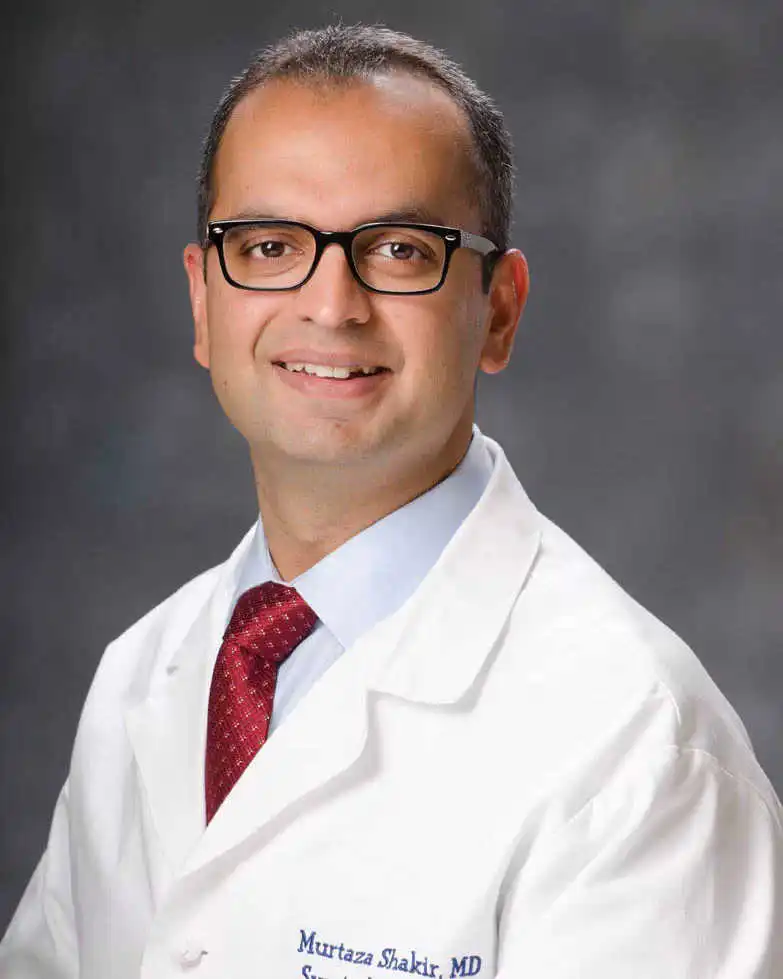
Dr. Murtaza Shakir is a board-certified General Surgeon and is board certified in Complex General Surgical Oncology. He earned his medical degree at Aga Khan University, completed General Surgery residency at Riverside Methodist Hospital in Columbus, Ohio, and a two-year Surgical Oncology fellowship at the University of Pittsburgh Medical Center. He sees patients at Surgical Associates of Southern Texas in Katy and Sugar Land.
Related Reading and Care
Schedule a Gallbladder Evaluation
Find out whether your pain after meals is coming from your gallbladder at our Katy or Sugar Land office.
This page provides general information and is not a substitute for medical advice. For severe abdominal pain or other emergencies, call 911 or go to the nearest emergency room. Last updated October 16, 2026.