
General surgeon • Patient Education
How to Choose the Right General Surgeon for Your Surgery
Being told you need an operation usually comes with a second, quieter question: who should do it? For most people it is the first time they have had to choose a surgeon, and the decision is often made quickly, on a referral, without knowing what actually matters. Credentials, experience with your specific operation, how the surgeon communicates, and where the surgery will be done all affect your outcome and your experience.
This guide explains what to check, what to ask, and how to tell a good fit from a merely convenient one, whether you are facing hernia repair, gallbladder removal, or a cancer operation.
By Surgical Associates of Southern Texas · Katy and Sugar Land, TX · February 2023
On This Page
- Start With Board Certification
- Look for Experience With Your Operation, Not Just Surgery in General
- Fellowship Training: What It Adds
- Where the Operation Will Be Performed
- How the Surgeon Communicates
- Questions to Ask at Your Consultation
- Second Opinions Are Normal
- Practical Considerations: Insurance, Timing, and Location
- Final Takeaway
- Frequently asked questions

Symptoms that won’t settle? Get a clear answer.
Consult with Dr. Murtaza Shakir, board-certified general surgeon. Call now, or send us your details and our team will call you back.
What You’ll Learn
- Start With Board Certification
- Look for Experience With Your Operation, Not Just Surgery in General
- Fellowship Training: What It Adds
- Where the Operation Will Be Performed
- How the Surgeon Communicates
Start With Board Certification
Board certification is the single most useful credential to verify. A surgeon certified by the American Board of Surgery has completed at least five years of accredited residency training after medical school, performed a required volume of operations, been vouched for by their training program, and passed both a written and an oral examination. Certification is voluntary, which is exactly why it matters: not every surgeon in practice has it.
You can check any surgeon's status in seconds on the American Board of Surgery website. For cancer surgery, look for a second, subspecialty certification in Complex General Surgical Oncology, which requires additional fellowship training after general surgery and is held by a much smaller group of surgeons.
The letters FACS after a surgeon's name indicate Fellowship in the American College of Surgeons, a separate credential that involves a review of the surgeon's case log, references from colleagues, and an ethics commitment. It is a meaningful additional signal, though board certification remains the foundation.
Look for Experience With Your Operation, Not Just Surgery in General
General surgery is a broad specialty. A surgeon may be excellent at hernia repair and rarely operate on the liver, or the reverse. What you want is a surgeon who performs your operation regularly.
Ask directly: “How often do you perform this operation?” and “What approaches do you use?” For common operations such as hernia repair and gallbladder removal, a surgeon comfortable with open, laparoscopic, and robotic techniques can match the approach to your anatomy rather than to the one method they know. For cancer operations, fellowship training in surgical oncology and experience with the specific organ, whether liver, pancreas, colon, or breast, are the credentials that count.
Fellowship Training: What It Adds
Residency makes a general surgeon. A fellowship is one to two additional years of focused training in a subspecialty, undertaken by surgeons who want to concentrate on a particular field. For complex abdominal operations, cancer surgery, and reoperations, a fellowship-trained surgeon has spent those extra years managing exactly the difficult situations that occasionally arise in any operation.
Dr. Murtaza Shakir, for example, completed a two-year Surgical Oncology fellowship at the University of Pittsburgh Medical Center after General Surgery residency at Riverside Methodist Hospital, and holds board certification in both General Surgery and Complex General Surgical Oncology. That training is relevant not only to cancer patients but to anyone whose operation may be more complex than average.
Where the Operation Will Be Performed
Surgeons operate at hospitals and surgical centers where they hold privileges. Ask where your operation would take place and why. Consider:
- Whether the facility is accredited and equipped for your procedure, including robotic systems if a robotic approach is planned
- Whether it is an outpatient surgery center (appropriate for most hernia and gallbladder operations) or a hospital with intensive care (appropriate for major cancer surgery)
- Distance from home, which matters for pre-operative visits, the surgery itself, and follow-up
- Whether the facility is in your insurance network
A surgeon with privileges at more than one facility can often choose the setting that fits your case and your coverage.
How the Surgeon Communicates
A consultation is also an interview. Pay attention to whether the surgeon:
- Explains the diagnosis in language you understand
- Describes the options, including the option of not operating, and the reasons for the recommendation
- Discusses risks honestly rather than dismissing them
- Answers your questions without hurry
- Tells you what recovery will realistically involve, including time off work and lifting limits
- Makes clear how to reach the office with questions after surgery
You will depend on this person during the most vulnerable stretch of your recovery. Choose someone you can talk to.
Key Takeaway So Far
So far we have covered start with board certification, look for experience with your operation, not just surgery in general, fellowship training: what it adds, and more. Next, we look at questions to ask at your consultation, second opinions are normal, practical considerations: insurance, timing, and location, followed by answers to common questions.
Questions to Ask at Your Consultation
Bring these to your first visit:
- Are you board certified, and in what?
- How many of these operations do you perform, and with which techniques?
- Why are you recommending this approach for me?
- What are the risks specific to my situation?
- What would happen if I waited or chose not to have surgery?
- Where will the surgery be performed, and is it in my network?
- What will recovery involve, and when can I work, drive, and lift?
- Who do I call with a problem after hours?
- Will you be the one performing the operation?
A good surgeon welcomes these questions. Our article on questions to ask your hernia surgeon goes deeper for that specific operation.
Second Opinions Are Normal
Seeking a second opinion before a major operation is common and reasonable, and surgeons expect it. It is particularly worthwhile when the diagnosis is cancer, when a large or complex operation is proposed, when a previous operation has failed, or when you simply do not feel confident in the plan. A second surgeon may confirm the recommendation, which is reassuring, or offer a different approach worth considering. Bring your imaging, pathology, and any operative reports so the visit is productive.
Practical Considerations: Insurance, Timing, and Location
Confirm that both the surgeon and the facility are in your insurance network, and ask the office to verify benefits before scheduling. Understand the timeline: an elective hernia repair can usually be scheduled at your convenience, while a cancer diagnosis or an acutely inflamed gallbladder calls for prompt scheduling. Finally, weigh location realistically. Surgery involves several visits, and an office close to home in Katy or Sugar Land makes the process considerably easier for patients in Fort Bend County and West Houston than repeated trips into central Houston.
Surgical Associates of Southern Texas offers consultations at two Fort Bend County offices, and Dr. Shakir performs surgery at hospitals and surgical centers on the west and southwest sides of Houston. You can read about his training and the conditions he treats before your visit.
Final Takeaway
The right surgeon is board certified, performs your operation regularly, explains things clearly, operates at a facility that fits your case and your coverage, and is reachable when you need them. Verify the credentials, ask the questions above, and trust your judgment about communication. If you are facing surgery in Katy, Sugar Land, or the surrounding communities, you can request a consultation with Dr. Murtaza Shakir at either office.
Frequently Asked Questions
How do I verify that a surgeon is board certified?
Search the surgeon's name on the American Board of Surgery website, which provides primary-source verification of certification status.
What is the difference between a general surgeon and a surgical oncologist?
A surgical oncologist is a general surgeon who has completed additional fellowship training in cancer surgery and, in most cases, holds a second board certification in Complex General Surgical Oncology. Read more about what a surgical oncologist does.
Does it matter whether my surgeon does robotic surgery?
It matters that your surgeon can offer the approach that best fits your case. Robotic surgery is a useful tool for some operations and unnecessary for others; a surgeon fluent in open, laparoscopic, and robotic techniques can choose rather than default.
Should I choose the surgeon my primary care doctor referred me to?
A referral is a good starting point, and often the right choice. It is still reasonable to verify the surgeon's credentials, confirm they perform your operation regularly, and make sure you are comfortable with them at the consultation.
Is it rude to ask a surgeon how many operations they have done?
No. It is one of the most useful questions you can ask, and experienced surgeons answer it readily.
How far in advance should I choose a surgeon?
For elective surgery, allow time for a consultation, any needed tests, and insurance verification, typically two to six weeks. Urgent conditions are scheduled faster.
Can I get a second opinion without offending my surgeon?
Yes. Second opinions are a normal part of surgical care, especially for cancer and complex operations.
Need Help With These Symptoms?
If your symptoms are persistent, worsening, or affecting daily life, a surgical evaluation can help determine the cause and whether treatment may be appropriate. Dr. Murtaza Shakir sees patients at the Katy and Sugar Land offices.
Medical Disclaimer
This article is intended for general educational purposes only and is not a substitute for professional medical advice, diagnosis, or treatment. Symptoms can have many possible causes, and treatment decisions should be based on an individual medical evaluation. If you are experiencing severe or rapidly worsening symptoms, seek prompt medical attention. For a medical emergency, call 911 or go to the nearest emergency department.
References
- American College of Surgeons. Qualifications: What to look for in a surgeon (board certification and FACS). facs.org.
- American Board of Surgery. About the ABS and verifying a surgeon's certification. absurgery.org.
- American Board of Surgery. Frequently Asked Questions: Information for the Public. absurgery.org.
- American College of Surgeons. Surgical Patient Education: Operations and Procedures. facs.org.
Your Surgeon
About the Physician
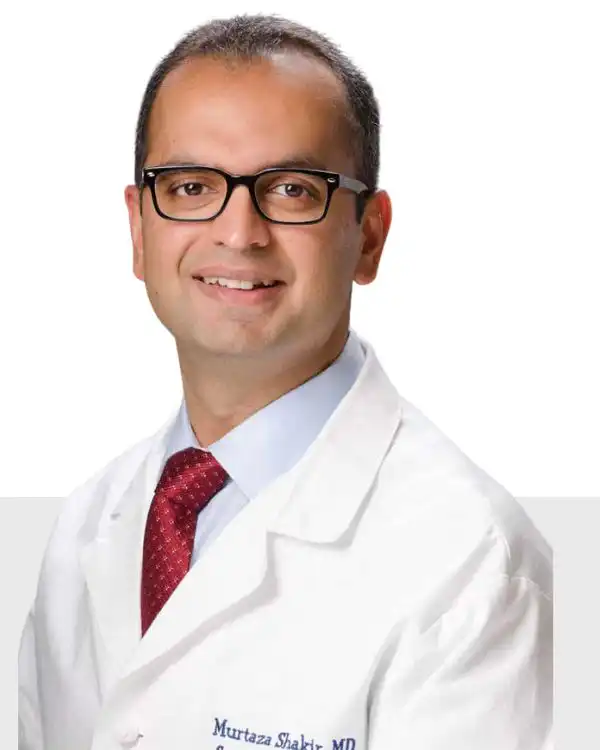
Murtaza Shakir, MD
Dr. Murtaza Shakir is a board-certified General Surgeon and is board certified in Complex General Surgical Oncology. He earned his medical degree at Aga Khan University, completed General Surgery residency at Riverside Methodist Hospital in Columbus, Ohio, and a two-year Surgical Oncology fellowship at the University of Pittsburgh Medical Center.
He evaluates and treats patients at Surgical Associates of Southern Texas in Katy and Sugar Land.
Board certified by the American Board of Surgery in:
- General Surgery
- Complex General Surgical Oncology
Surgical focus:
- Hernia repair: open, laparoscopic, and robotic
- Gallbladder surgery: laparoscopic and robotic
- General surgery
- Surgical oncology
Recognized by Houstonia Magazine among Houston’s top general surgeons. Learn more about general surgery.