
Hernia Repair • Katy • Sugar Land • Greater Houston
Hernia Surgeon in Katy & Sugar Land, TX
Advanced Open, Laparoscopic & Robotic Hernia Repair
A hernia may begin as a small bulge or occasional discomfort, but symptoms can become more noticeable with standing, lifting, coughing, exercise, or everyday activity.
At Surgical Associates of Southern Texas, Dr. Murtaza Shakir provides comprehensive evaluation and hernia repair for patients in Katy, Sugar Land, Richmond, Fulshear, West Houston, and surrounding Greater Houston communities.
Dr. Shakir is board certified in General Surgery and Complex General Surgical Oncology and performs open, laparoscopic, and robotic hernia repair based on the type of hernia, its size and location, previous surgery, symptoms, and each patient’s overall health.
The goal is not simply to repair a bulge. The goal is to understand why the hernia developed, determine the most appropriate repair approach, reduce recurrence risk where possible, and help patients return safely to normal activity.
Board-Certified
General Surgeon and Surgical Oncologist
⭐ Rated 5 Stars
by Patients on Google
2 Convenient Locations
Katy & Sugar Land, TX
Open, Laparoscopic & Robotic
Hernia Repair — Request a Consultation

Your Surgeon
Meet Your Hernia Surgeon
Murtaza Shakir, MD
Hernia care at Surgical Associates of Southern Texas is led by Dr. Murtaza Shakir, who is board certified in General Surgery and Complex General Surgical Oncology.
Dr. Shakir earned his medical degree from Aga Khan University. He completed his General Surgery residency at Riverside Methodist Hospital in Columbus, Ohio, followed by a two-year Surgical Oncology fellowship at the University of Pittsburgh Medical Center.
Board certified by the American Board of Surgery in:
- General Surgery
- Complex General Surgical Oncology
His surgical practice includes:
- Hernia repair
- Robotic surgery
- Laparoscopic surgery
- Complex abdominal surgery
- Gallbladder surgery
- Surgical oncology
Dr. Shakir has also been recognized by Houstonia among leading general surgeons in the Houston area. Learn more about our general surgery services.
Patient Reviews
What Patients Say About Hernia Repair
⭐⭐⭐⭐⭐ Rated 5 Stars by Patients on Google. Real experiences from patients treated in Katy and Sugar Land.

Jide Eboh
Houston · Hernia Repair
Surgical associates of Southern Texas is a great practice with amazing medical assistants, staff, and a great surgeon. Dr.Murtaza did a routine and successful Hernia repair with no complications. The staff was very kind and accompanying of my schedule as I am constantly out of town. I would recommend him to anyone searching for a general surgeon.
Lisa Hadley
Google Review · Local Guide
Dr. Shakir is a wonderful surgeon who patiently listens to you and answers your questions. His office staff is equally warm and caring. Should I ever need care of this type, I will contact his office again without hesitation.
See what more patients are saying about their experience with Dr. Shakir.
Understanding Hernia Symptoms
Do You Need to See a Hernia Surgeon?
Adult hernias generally do not close on their own, but not every hernia requires immediate surgery.
The timing of hernia repair depends on the hernia type, symptoms, size, anatomy, overall health, and individual risk factors. Read more about whether hernias go away on their own and when hernia surgery becomes necessary.
A surgical consultation may be appropriate if you notice:
- A bulge in the groin, abdomen, or belly button
- Pain or pressure while standing
- Discomfort when lifting or exercising
- Burning or aching in the groin
- Pain with coughing or straining
- A bulge that is becoming larger
- A hernia that is becoming harder to push back in
- Pain around a previous surgical incision
- A previously repaired hernia that has returned
- Symptoms that interfere with work, exercise, or daily activity
Recognizing the Signs
What Does a Hernia Feel Like?
Hernia symptoms can vary depending on the type and location. Learn about burning groin pain, hernias with little or no pain, and when to worry about hernia pain.
A visible or noticeable bulge
Pressure
Pulling
Burning
Aching
Heaviness
Sharp pain with movement
Discomfort after standing for long periods
Pain with coughing, sneezing, or lifting
Symptoms that improve when lying down
Some hernias are obvious but cause little pain, while others may be uncomfortable even when the bulge is small. A proper surgical examination helps determine whether symptoms are actually caused by a hernia or another abdominal, groin, or musculoskeletal condition.
When Hernia Symptoms Need Urgent Medical Attention
Some hernias can become trapped and may interfere with blood flow or bowel function. Seek prompt medical evaluation for:
- Sudden severe pain
- A firm or very tender bulge
- A hernia that cannot be pushed back in
- Vomiting
- Increasing abdominal swelling
- Fever
- Inability to pass stool or gas
- Rapidly worsening symptoms
These symptoms may indicate incarceration, bowel obstruction, or strangulation.
For a medical emergency, call 911 or go to the nearest emergency department.
A Careful Surgical Evaluation
How Dr. Shakir Chooses the Right Hernia Repair
There is no single best hernia operation. Dr. Shakir selects open, laparoscopic, or robotic repair based on anatomy, hernia type, previous surgery, and individual patient factors. These are the questions that shape the recommendation.
01
Hernia Type
Inguinal, femoral, umbilical, epigastric, ventral, incisional, or recurrent. Each behaves differently and favors different techniques. An inguinal hernia and a large incisional hernia are not repaired the same way.
02
Size and Location
A small first-time groin hernia may be well served by a simple open repair. A wide midline defect or a hernia at the edge of previous mesh usually calls for a minimally invasive repair with mesh placed within the abdominal wall.
03
First-Time or Recurrent
A hernia that has come back is approached from a different plane than the first repair whenever possible. Prior technique, prior mesh, and scar tissue all change the plan. See recurrent hernia repair.
04
Previous Operations and Mesh
Earlier abdominal surgery leaves scar tissue that can make one approach safer than another. Existing mesh may be left in place or removed depending on its condition and position.
05
Your Anatomy
Body habitus, the thickness of the abdominal wall, the quality of the tissue around the defect, and whether both groins are affected influence whether an open, laparoscopic, or robotic approach is the better fit.
06
Symptoms
How often the hernia hurts, whether it enlarges, whether it reduces on lying down, whether it has ever become stuck, and whether it limits work or exercise all affect the urgency and type of repair.
07
Work and Activity Demands
A patient who lifts for a living, an athlete, and a retiree with a sedentary routine may reasonably receive different recommendations for the same hernia, because return-to-activity goals differ.
08
Overall Health
Age, weight, smoking, diabetes, heart and lung conditions, blood thinners, and the ability to tolerate general anesthesia are weighed against the benefits of each approach. Some patients are better served by open repair under regional anesthesia.
Hernia Types
Types of Hernias We Treat
From first-time groin hernias to recurrent and complex abdominal wall hernias, Dr. Shakir evaluates and repairs the full range of adult hernias. Not sure what you are feeling? Review the early symptoms of an inguinal hernia or the warning signs of a hernia.
Inguinal Hernia
An inguinal hernia develops in the groin and is one of the most common hernias in adults. Patients may notice a groin bulge, heaviness, pressure, burning, or pain with lifting, standing, coughing, or exercise.
Treatment may involve open, laparoscopic, or robotic repair depending on the individual case. Inguinal hernia repair.
Umbilical Hernia
An umbilical hernia develops at or around the belly button. Adults may notice a bulge, pressure, pain with lifting, or increasing size over time.
Larger or symptomatic adult umbilical hernias may require surgical repair. Umbilical hernia repair.
Ventral Hernia
A ventral hernia develops through the front abdominal wall. The bulge may become more noticeable during activity, standing, lifting, or straining.
Treatment depends on the size, location, tissue quality, and overall strength of the abdominal wall. Ventral hernia repair.
Incisional Hernia
An incisional hernia occurs at or near a previous abdominal surgery site. Scar tissue can create a weakened area in the abdominal wall.
Incisional hernias can range from small defects to complex abdominal wall problems. Incisional hernia repair.
Recurrent Hernia
A recurrent hernia is a hernia that returns after a previous repair.
These cases may require more detailed planning because previous surgery or mesh can alter anatomy. Recurrent hernia repair.
Femoral Hernia
Femoral hernias occur lower in the groin and can sometimes be less obvious than inguinal hernias.
They may carry a greater risk of becoming trapped and should be evaluated promptly when suspected.
Noticed a Bulge or Recurring Hernia Pain?
If you have a groin or abdominal bulge, discomfort when lifting, or a hernia that is getting larger, a surgical consultation can help determine whether repair is appropriate and which approach fits your anatomy.

A Strength of the Practice
Robotic Hernia Repair With Dr. Murtaza Shakir
Robotic hernia repair is a minimally invasive operation performed through a few small incisions. Dr. Shakir controls every movement of the instruments from a console in the operating room; the robotic system steadies the instruments, removes tremor, and provides a magnified three-dimensional view of the abdominal wall. Nothing is automated. It is one of the approaches he uses most, and one he applies to a wide range of hernias when it offers a real advantage for the patient.
Why the robotic approach matters for hernias
Hernia repair is, at its core, precise work in a tight space: freeing the hernia sac, closing the defect, and positioning mesh flat within the layers of the abdominal wall. The wristed instruments and 3D view of the robotic platform are well suited to that work, particularly when suturing a defect closed from inside or placing mesh behind the muscle rather than against the intestine.
For a straightforward one-sided groin hernia, results with laparoscopic repair are comparable, and open repair remains a sound choice for many patients. The robotic approach earns its place in bilateral, ventral, incisional, and recurrent hernias, and in patients whose prior surgery makes a fresh approach from inside the abdomen safer than reopening an old scar.
What robotic repair looks like for the patient
- Three or four incisions of roughly 8 to 12 mm, placed away from the hernia itself
- General anesthesia; the operation typically takes one to two hours
- Mesh positioned within the abdominal wall and secured with sutures rather than tacks, where appropriate
- Both groins repaired through the same incisions when a hernia is present on each side
- Same-day discharge for most patients; an overnight stay for larger abdominal wall repairs
- Follow-up at the Katy or Sugar Land office
Details of the procedure, candidacy, and recovery are on the robotic hernia repair page.
Robotic Inguinal Hernia Repair
Mesh is placed behind the abdominal wall in the groin, covering the sites of direct, indirect, and femoral hernias in one repair. Often chosen for recurrent groin hernias after a previous open operation. Inguinal hernia repair.
Robotic Bilateral Inguinal Repair
When both groins have a hernia, both can be repaired through the same three or four incisions in a single operation, without a second set of incisions or a second recovery.
Robotic Ventral Hernia Repair
For hernias of the front abdominal wall, the defect is sutured closed from inside and mesh is placed within the wall layers, away from the intestine. One of the strongest use cases for the robotic platform. Ventral and incisional repair.
Robotic Umbilical Hernia Repair
Suited to larger belly button hernias, heavier patients, and umbilical hernias combined with a separation of the rectus muscles (diastasis), where closure and mesh reinforcement are done together. Umbilical hernia repair.
Robotic Incisional Hernia Repair
Hernias at old surgical scars often involve several defects along the incision and dense scar tissue. The robotic view helps map and close each defect and place a wide mesh overlap through small incisions.
Robotic Recurrent Hernia Repair
A hernia that returned after open surgery is usually best approached from inside, avoiding the scarred plane of the first repair. Previous mesh is identified and worked around or removed. Recurrent hernia repair.
Previous Open or Laparoscopic Surgery
After a previous open repair, the robotic approach reaches the hernia from a plane the first operation never touched, which is often the safest way to repair a recurrence. After a previous laparoscopic or robotic repair that has failed, an open repair from the front is frequently the better choice. Prior operative reports and, for abdominal wall hernias, a CT scan are reviewed before any recommendation is made.
Patient Selection and Limitations
Robotic repair requires general anesthesia and inflation of the abdomen, so it is not suitable for every patient. It offers little advantage over a simple open repair for a small, first-time, one-sided hernia, and it is not the approach for a strangulated hernia needing emergency surgery. Very large defects with loss of abdominal wall domain may need a staged open reconstruction. Dr. Shakir will say plainly when a simpler operation would serve you as well.
Recovery and return to work after robotic hernia repair
Most patients go home the same day, walk that evening, and manage discomfort with over-the-counter medication within a few days. Desk work is often possible within about a week and physical work in two to four weeks; heavy lifting and core exercise are usually restricted for four to six weeks so the repair can heal. Larger abdominal wall reconstructions take longer. Recovery varies with the hernia, the repair, and the individual, and some patients recover more quickly than others regardless of the technique used. Our hernia recovery guide and post-operative care page give week-by-week detail.
Comparing Techniques
Open vs. Laparoscopic vs. Robotic Hernia Repair
All three techniques repair the hernia and, in most adults, reinforce it with mesh. They differ in where the surgeon works from, how the mesh is placed, and which situations they suit. No method is universally superior; Dr. Shakir performs all three and matches the technique to the hernia.
Open Hernia Repair
Incision approach
One incision directly over the hernia, typically 2 to 4 inches
Visualization
Direct view of the hernia from the front
Typical use cases
First-time one-sided inguinal hernias, small umbilical hernias, emergency repairs, patients who cannot have general anesthesia
Bilateral hernias
Requires an incision on each side
Recurrent hernias
Preferred after a failed laparoscopic or robotic repair
Mesh placement
In front of or within the abdominal wall; tacks or sutures
Previous abdominal surgery
Unaffected by scar tissue inside the abdomen
Recovery considerations
Regional anesthesia possible; some patients report more early incision discomfort
Surgeon decision-making
Chosen when simplicity, anesthesia limits, or contamination favor a direct approach
Laparoscopic Hernia Repair
Incision approach
Three small incisions; camera and straight instruments
Visualization
Magnified two-dimensional camera view from inside
Typical use cases
Inguinal hernias, bilateral groin hernias, small to medium ventral hernias
Bilateral hernias
Both sides through the same incisions
Recurrent hernias
Well suited after a previous open repair
Mesh placement
Behind the abdominal wall; often fixed with tacks
Previous abdominal surgery
Dense scar tissue can make access harder
Recovery considerations
Small incisions; general anesthesia required; recovery often similar to robotic
Surgeon decision-making
Chosen for groin hernias and selected ventral hernias where a minimally invasive approach fits
Robotic Hernia Repair
Incision approach
Three or four small incisions; wristed instruments
Visualization
Magnified three-dimensional view from inside
Typical use cases
Ventral, incisional, bilateral, recurrent, and complex hernias; selected inguinal and umbilical hernias
Bilateral hernias
Both sides through the same incisions
Recurrent hernias
Preferred after a previous open repair; useful for working around old mesh
Mesh placement
Within the abdominal wall layers; defect can be sutured closed and mesh sutured rather than tacked
Previous abdominal surgery
Wristed instruments help in scarred fields, though very dense scarring may still favor open repair
Recovery considerations
Small incisions; general anesthesia required; recovery varies by hernia and patient
Surgeon decision-making
Chosen when precise defect closure and mesh positioning offer a real advantage
Wondering which applies to you? A consultation covers your hernia, prior surgery, and health, and ends with a specific recommendation. Read our full robotic vs. open hernia repair comparison, read more on the robotic hernia repair page, or compare laparoscopic vs. open repair.
Planning Your Repair
Mesh, Recurrent & Complex Hernias
What About Hernia Mesh?
Many patients have questions about mesh before hernia surgery. Mesh is a surgical material that may be used to reinforce weakened tissue and reduce tension on the repair.
Whether mesh is appropriate depends on:
- Hernia type
- Hernia size
- Location
- Tissue quality
- Previous repair
- Infection or contamination risk
- Surgical technique
A surgical consultation is the appropriate time to discuss:
- Whether mesh is recommended
- What type may be used
- Where it may be placed
- Potential benefits
- Potential risks
- Alternative approaches
Recurrent & Complex Hernia Repair
A hernia that returns after previous surgery can be more complex than a first-time repair. Dr. Shakir may evaluate:
- Previous mesh
- Scar tissue
- Previous incision
- Previous repair technique
- Size of the recurrent defect
- Strength of the abdominal wall
- Current anatomy
Recurrent and complex hernias often require individualized planning rather than a one-size-fits-all approach.
Watchful Waiting vs. Repair
What Happens if a Hernia Is Not Repaired?
Some hernias remain relatively stable for a period of time, while others enlarge or become more symptomatic.
Whether a hernia can be observed or should be repaired depends on the hernia type, symptoms, patient age, lifestyle, and individual risk factors. Read more on whether a hernia will go away or when to see a surgeon for hernia pain.
Potential problems may include:
- Increasing pain
- Larger bulge
- Greater limitation during activity
- Difficulty lifting
- Incarceration
- Bowel obstruction
- Strangulation
Preparing for Surgery
Before Hernia Surgery
What to Expect Before Hernia Surgery
Before surgery, patients may undergo:
- Surgical evaluation
- Physical examination
- Review of previous imaging
- Review of previous surgical records
- Medication review
- Medical clearance when appropriate
- Preoperative testing
- Anesthesia evaluation
- Discussion of repair technique
See our pre-operative care guidance.
What to Tell the Surgical Team
Patients should inform the surgical team about:
- Blood thinners
- Diabetes medications
- Supplements
- Previous hernia surgery
- Previous abdominal operations
- Allergies
- Heart or lung conditions
Do not stop prescription medication unless instructed by the appropriate healthcare professional.
After Surgery
Hernia Surgery Recovery
Recovery varies depending on:
- Type of hernia
- Hernia size
- Surgical approach
- Whether the repair is recurrent
- Type of work
- Overall health
- Individual healing
Some patients undergoing minimally invasive repair can return to light activity relatively quickly, while larger or more complex repairs may require more recovery time. Read our recovery timeline after hernia surgery and general post-operative care instructions.
Patients receive individualized guidance regarding:
Walking
Showering
Incision care
Lifting
Driving
Exercise
Return to work
Pain medication
Follow-up visits
How Soon Can I Lift After Hernia Surgery?
The timing of lifting after hernia repair depends on:
- Repair type
- Hernia location
- Hernia size
- Open vs minimally invasive approach
- Complexity
- Patient health
- Type of lifting required
Patients should follow the individualized lifting restrictions provided by their surgeon. See how long after hernia surgery you can work out.
Why Patients Choose Us
Why Choose Surgical Associates of Southern Texas for Hernia Repair?
Board-Certified Surgical Expertise
Dr. Murtaza Shakir is board certified in General Surgery and Complex General Surgical Oncology.
Open, Laparoscopic & Robotic Options
Patients are evaluated for the repair technique that best matches their hernia and anatomy.
Routine & Complex Hernia Experience
The practice evaluates common groin and abdominal wall hernias as well as recurrent and more complex hernias.
Individualized Treatment Planning
Treatment is based on hernia type, size, symptoms, previous surgery, anatomy, and patient health.
Clear Communication
Patients receive information about diagnosis, treatment options, possible risks, and recovery before proceeding.
Katy & Sugar Land Locations
Consultations are available in both Katy and Sugar Land.
Locations
Two Convenient Fort Bend County Offices
Learn more about our Katy and Sugar Land practices, or view all locations.
Hernia Surgeon in Katy, TX
Patients looking for a hernia surgeon in Katy can schedule a consultation with Dr. Murtaza Shakir at:
Surgical Associates of Southern Texas
410 W Grand Pkwy S
Suite 4D
Katy, TX 77494
Convenient for patients from Katy, Fulshear, Richmond, Cinco Ranch, West Houston, and surrounding communities.
Patients can be evaluated for:
- Inguinal hernia repair
- Umbilical hernia repair
- Ventral hernia repair
- Incisional hernia repair
- Recurrent hernia repair
- Robotic hernia repair
- Laparoscopic hernia repair
Hernia Surgeon in Sugar Land, TX
Dr. Murtaza Shakir also provides hernia consultations in Sugar Land at:
Surgical Associates of Southern Texas
17510 W Grand Pkwy S
Suite 320
Sugar Land, TX 77479
Serving patients from Sugar Land, Richmond, Stafford, Missouri City, Fort Bend County, and Southwest Houston.
Hernia Care for Richmond & Fulshear Patients
Patients from Richmond and Fulshear can access hernia evaluation, surgical planning, and follow-up through the Katy and Sugar Land offices.
These locations provide convenient access for patients seeking open, laparoscopic, or robotic hernia repair throughout western Fort Bend County and Greater Houston.
FAQ
Frequently Asked Questions About Hernia Repair
What kind of doctor repairs a hernia?
Most abdominal wall and groin hernias are evaluated and treated by a general surgeon. A surgeon with experience in open, laparoscopic, and robotic techniques can help determine the most appropriate repair.
Does a hernia always need surgery?
Not always immediately. Some minimally symptomatic hernias can be monitored depending on the type and individual risk. Adult hernias generally do not close on their own.
Can a hernia heal without surgery?
Adult abdominal wall hernias usually do not repair themselves because the underlying weakness or opening remains.
When is hernia surgery recommended?
Surgery may be recommended when a hernia causes pain, enlarges, limits activity, becomes difficult to reduce, or creates a meaningful risk of complications.
What type of hernia surgery is best?
There is no single best technique. Open, laparoscopic, and robotic repairs each have advantages for certain patients.
Is robotic hernia repair better than laparoscopic repair?
Robotic repair can be useful in selected cases, but it is not automatically superior for every hernia.
Is mesh always required?
No. Mesh is commonly used in adult hernia repair, but the decision depends on the type, size, location, tissue quality, and clinical situation.
Can a hernia return after surgery?
Yes. Recurrence can occur after any hernia repair, although risk varies depending on anatomy, technique, tissue quality, previous surgery, smoking, weight, and other factors.
What is a recurrent hernia?
A recurrent hernia is a hernia that returns at or near the site of a previous repair.
What is an incarcerated hernia?
An incarcerated hernia occurs when tissue becomes trapped and cannot easily return to its normal position.
What is a strangulated hernia?
A strangulated hernia occurs when blood flow to trapped tissue becomes compromised. This is a surgical emergency.
Can I go home the same day?
Many uncomplicated hernia repairs are performed as outpatient procedures, while some larger or more complex repairs may require observation.
How long is recovery after hernia repair?
Recovery varies depending on the type of hernia, repair technique, complexity, patient health, and job requirements.
How soon can I drive?
Driving depends on pain control, mobility, medication use, and surgeon instructions.
Can I exercise after hernia surgery?
Light walking is often encouraged during recovery. Return to strenuous exercise and heavy lifting should follow individualized surgeon recommendations.
Where can I see a hernia surgeon in Katy?
Dr. Murtaza Shakir provides hernia consultations at:
410 W Grand Pkwy S, Suite 4D
Katy, TX 77494
Call 713-955-9191.
Where can I see a hernia surgeon in Sugar Land?
Hernia consultations are available at:
17510 W Grand Pkwy S, Suite 320
Sugar Land, TX 77479
Call 713-955-9191.
Schedule a Hernia Consultation
If you have noticed a groin or abdominal bulge, recurring hernia pain, discomfort while lifting, or a hernia that is becoming larger or more symptomatic, schedule an evaluation with Dr. Murtaza Shakir.
A consultation can help determine:
- Whether symptoms are due to a hernia
- What type of hernia is present
- Whether surgery is recommended
- Whether open, laparoscopic, or robotic repair may be appropriate
- Whether mesh may be recommended
- What recovery may look like
Serving patients throughout: Katy • Sugar Land • Richmond • Fulshear • West Houston • Greater Houston
Our Blogs
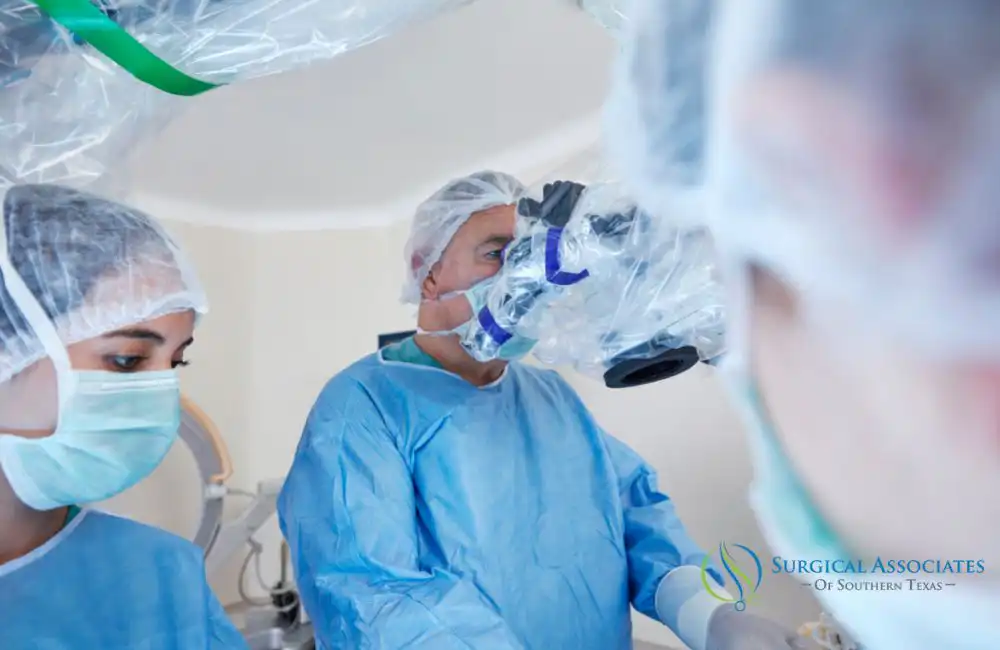
Robotic vs Open Hernia Repair: What’s the Difference?
Hernia • Patient Education Robotic vs Open Hernia Repair: What's the Difference? Open hernia repair has been performed for more than a century and still works well. Robotic hernia repair is...
Making the most of surgical outputs
Having one-on-one interaction with our experienced surgeon helps understand the disease process and surgical procedure well. Whether it is for general surgery or surgical oncology, we always do our best to ensure the best possible surgical outcomes for both local and overseas patients .
Accepting Patients From Greater Houston, Katy, Sugar Land, Richmond, Fulshear Areas.
Patients visiting from the greater Houston and other areas of Texas are requested to call us for a confirming appointment. Overseas patients request us to contact us in advance for a detailed consultation.
Read More
Comprehensive Wound Care with In-Clinic & Mobile Services Across Houston
We provide advanced, personalized treatment for all types of wounds, including diabetic ulcers, chronic wounds, and post-surgical injuries. Our services are available both in-clinic and through mobile visits across Greater Houston. Healing is now easier—wherever you are.
Learn More