 EN
 ES
 UR
 HI

Worried about a groin bulge?
Have it examined by board-certified general surgeon Dr. Murtaza Shakir in Katy or Sugar Land. Call (713) 955-9191, or send your details and our team will call you back.
THE SHORT ANSWER
An inguinal hernia usually shows up as a bulge in the groin, or in the scrotum in men, that gets bigger when you stand, cough or lift and may ache, burn or feel heavy. It does not heal on its own, and surgery is the definitive treatment. Small hernias with few symptoms can sometimes be watched, but a painful bulge that will not go back in is an emergency.
What Is an Inguinal Hernia?
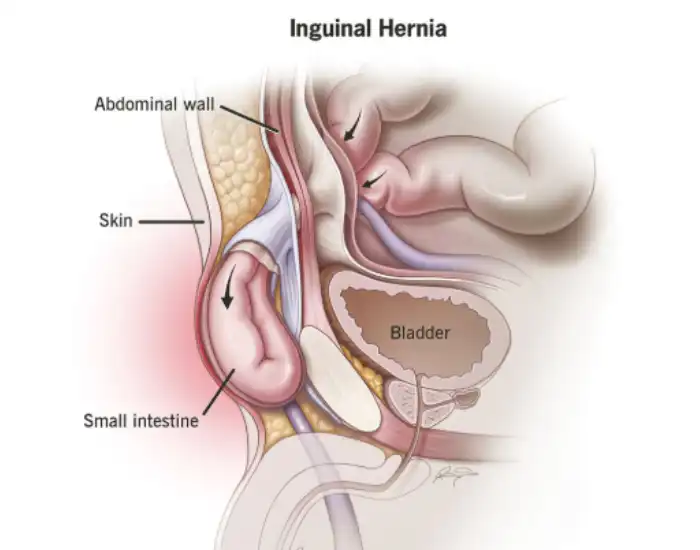
An inguinal hernia occurs when tissue, often fat or part of the intestine, pushes through a weak spot in the lower abdominal wall near the groin. It is the most common type of hernia, particularly in men, though women can develop one as well. The protrusion may appear as a noticeable bulge and can cause discomfort or pain, especially when standing, lifting or coughing.
According to the National Institute of Diabetes and Digestive and Kidney Diseases (NIDDK), about 27 percent of men and 3 percent of women will develop an inguinal hernia at some point in their lives, and men are 8 to 10 times more likely than women to have one. The risk rises with age. For women, read more about inguinal hernia symptoms in women.
What Causes an Inguinal Hernia?
Inguinal hernias usually develop gradually, when pressure inside the abdomen pushes against an area of the groin wall that is weak, sometimes from birth. Some hernias have no clear cause. Factors that increase the risk include:
- Heavy lifting or strenuous physical activity, and long hours of standing or walking at work
- Chronic coughing or sneezing, including a smoking-related cough
- Chronic constipation and straining during bowel movements or urination
- Obesity or excess body weight
- Weakness in the abdominal wall from aging or prior surgery, including prostate surgery
- A family history of hernias
- A previous inguinal hernia or hernia repair, and connective tissue conditions
Several of these come from the NIDDK and Mayo Clinic, which also list being male and older age as risk factors. Knowing your risk factors helps explain why the hernia formed and which habits to address before and after repair.
What Are the Symptoms of an Inguinal Hernia?
The most common symptom is a bulge in the groin or lower abdomen that becomes more noticeable when you stand, cough or strain and often shrinks when you lie down. Symptoms vary widely; some hernias are painless, while others cause significant discomfort. Common signs include:
- A visible bulge in the groin or lower abdomen, more apparent when standing, coughing or straining
- Groin discomfort or aching that worsens with activity
- A feeling of heaviness or pressure in the groin
- Burning or sharp pain around the bulge
- Swelling in the scrotum in men, when part of the intestine descends into the scrotal sac
Some people have no obvious symptoms, or only subtle discomfort or a dragging sensation that comes and goes. Because of this variability, any new groin bulge or persistent groin pain warrants a medical evaluation. See also whether burning groin pain can be a hernia and early signs of an inguinal hernia.
When Is an Inguinal Hernia an Emergency?
An inguinal hernia is an emergency when the tissue becomes trapped (incarcerated) and can no longer be pushed back in, or when its blood supply is cut off (strangulated). Many inguinal hernias develop slowly and can be scheduled for planned repair, but go to the emergency room or call 911 if you have:
- Severe groin pain that comes on suddenly or quickly worsens
- Redness or tenderness over the bulge, or a bulge that turns red, purple or dark
- Nausea or vomiting
- A hernia you can no longer push back in, or swelling that does not go down
- Fever, a bloated belly, or inability to pass gas or have a bowel movement
A strangulated hernia cuts off blood supply to the trapped tissue and is a life-threatening emergency. Prompt surgery can prevent serious complications. Read more about when to worry about hernia pain.
Groin Bulge That Will Not Go Away?
Board-certified general surgeon Dr. Murtaza Shakir evaluates inguinal hernias in Katy and Sugar Land and will explain whether watching or repair makes sense for you.
How Do Surgeons Diagnose an Inguinal Hernia?
Most inguinal hernias are diagnosed with a physical exam. The surgeon examines the groin while you stand and asks you to cough or strain, looking for:
- A bulge in the groin area
- Changes in size or position when standing or coughing
- Tenderness or pain at the hernia site
- Whether the bulge pushes back in easily
When the hernia is not easily seen or felt, or the symptoms could have another cause, an ultrasound, CT scan or MRI can confirm the diagnosis. The exam also helps tell an inguinal hernia apart from a femoral hernia, which sits slightly lower in the groin. That distinction matters: the American College of Surgeons advises that femoral hernias should always be repaired because of their risk of strangulation. If you are not sure what your groin lump is, see why you may have a bulge in your groin.
What Happens If an Inguinal Hernia Is Not Treated?
An untreated inguinal hernia does not go away, and most slowly enlarge over time. Leaving it untreated can lead to complications, including:
- Incarceration: the hernia becomes trapped and cannot be pushed back into the abdomen
- Strangulation: blood supply to the trapped tissue is cut off, requiring emergency surgery
- Bowel obstruction: in severe cases the intestine is blocked, causing nausea, vomiting and abdominal pain
These complications are uncommon in hernias that cause few symptoms, which is why watchful waiting can be reasonable for some people. The American College of Surgeons reports that incarceration occurred in less than 1 percent of men who waited longer than 2 years for repair. Most people who wait still end up having surgery, though: the NIDDK notes that about 70 percent of men who delay surgery develop new or worsening symptoms and need repair within 5 years. Timely evaluation by a surgeon matters even when symptoms are mild.
How Is an Inguinal Hernia Treated?
Surgery is the definitive treatment for an inguinal hernia, though small, painless hernias can sometimes be monitored. The choice depends on the hernia’s size, your symptoms and your health.
Non-surgical approaches
- Watchful waiting: suitable for small hernias with few symptoms in adults, particularly older patients
- Lifestyle adjustments: avoiding heavy lifting, maintaining a healthy weight and managing a chronic cough can reduce discomfort
- Supportive garments: hernia belts or trusses may give temporary relief but do not repair the hernia
These approaches do not eliminate the hernia, but they can help manage symptoms until surgery is needed.
Surgical repair
- Open repair: the surgeon makes an incision in the groin, pushes the protruding tissue back into place and reinforces the wall with mesh or sutures. It can often be done under local anesthesia with sedation.
- Laparoscopic repair: small incisions and a camera are used to repair the hernia from inside, usually under general anesthesia. The American College of Surgeons notes it may cause less pain, a lower infection rate and a faster return to normal activity, and it is often preferred for recurrent hernias.
- Robotic repair: a minimally invasive approach in which the surgeon controls robotic instruments for enhanced visualization and control through small incisions.
Most inguinal hernia repairs use mesh to strengthen the weak area, which lowers the chance of recurrence. Your surgeon will recommend an approach based on the hernia’s size and location and your health. Learn more about inguinal hernia repair and robotic hernia surgery.
What Is Recovery Like After Inguinal Hernia Surgery?
Most people return to light activity within a few days to a week and avoid heavy lifting or strenuous exercise for about 4 to 6 weeks. Recovery depends on the procedure and your health. Typical guidelines include:
- Returning to light activity within a few days to a week
- Avoiding heavy lifting or strenuous exercise for 4 to 6 weeks
- Watching for signs of infection, bleeding or a returning bulge
Most patients notice steady improvement in pain and swelling over the first few weeks. The American College of Surgeons notes that many people return to work in 1 to 2 weeks if they avoid heavy lifting, and advises not lifting more than 10 pounds for at least 4 to 6 weeks. A minority of patients have groin pain that lasts longer, so report pain that is not improving.
How can I support healing at home?
- Eat a balanced diet to maintain strength and support tissue repair
- Stay hydrated to aid digestion and prevent constipation
- Take short walks to improve circulation without straining the incision
- Wear supportive clothing or compression garments if your surgeon advises
- Avoid sudden movements or bending that increase pressure on the groin
For a closer look at minimally invasive recovery, see robotic inguinal hernia repair recovery.
Who Should Treat an Inguinal Hernia in Katy, Sugar Land and Houston?
A primary care doctor can identify a hernia, but surgical management is best handled by a general surgeon, preferably one experienced in open and minimally invasive techniques. When choosing a surgeon, look for:
- Board certification in general surgery
- Experience with open, laparoscopic and robotic hernia repair
- An individualized treatment plan with clear explanations
- Post-operative follow-up and support
Before your visit, note when you first noticed the bulge, what makes it worse and whether it goes back in when you lie down. Bring any imaging reports and a list of your medications and prior surgeries.
Dr. Murtaza Shakir is a board-certified general surgeon who sees patients from across the Houston area at offices in Katy and Sugar Land. Learn more about hernia repair, call (713) 955-9191 or request an appointment.
Questions to Ask Your Surgeon About an Inguinal Hernia
- Is this an inguinal hernia, a femoral hernia or something else?
- Is it safe to watch my hernia, or do you recommend repair now?
- Do you recommend an open, laparoscopic or robotic repair for me, and why?
- Will you use mesh, and what are the trade-offs?
- Will I have local or general anesthesia?
- When can I return to work, driving and lifting?
- Which symptoms should send me to the ER while I wait for surgery?
Frequently Asked Questions
Can an inguinal hernia go away on its own?
No. The weak spot in the groin wall does not close by itself, and most inguinal hernias slowly enlarge. A truss or belt can ease discomfort but does not repair the hernia.
Is it safe to wait on inguinal hernia surgery?
For some people with small hernias and few symptoms, watchful waiting is reasonable, and serious complications are uncommon. Most people who wait eventually need surgery, so plan regular follow-up and know the emergency warning signs.
Can women get inguinal hernias?
Yes, although they are much less common than in men; the NIDDK estimates that about 3 percent of women develop one in their lifetime. Any new groin bulge or persistent groin pain in a woman deserves an exam. Read more about inguinal hernia symptoms in women.
How long does it take to recover from inguinal hernia surgery?
Many people return to light activity within a few days and to work in 1 to 2 weeks, depending on their job. Heavy lifting and strenuous exercise are usually avoided for 4 to 6 weeks.
Is laparoscopic or open inguinal hernia repair better?
Both are effective. Laparoscopic repair may mean less pain and a faster return to activity, while open repair can be done under local anesthesia. The right choice depends on your hernia, prior surgeries and health. See laparoscopic vs open hernia repair.
Key Takeaway
An inguinal hernia is a groin bulge, sometimes with aching, burning or heaviness, that does not heal on its own. Small hernias with few symptoms can sometimes be watched, but most people eventually need repair with an open, laparoscopic or robotic approach. A groin bulge that becomes painful, discolored and stuck, especially with vomiting, needs emergency care.
Sources and Further Reading
- Inguinal Hernia, National Institute of Diabetes and Digestive and Kidney Diseases (NIDDK)
- Inguinal Hernia: Symptoms and Causes, Mayo Clinic
- Groin Hernia Repair: Surgical Patient Education, American College of Surgeons
This article is general education, not personal medical advice. For a hernia that becomes hard, very painful or discolored and will not go back in, or for severe abdominal pain with vomiting, call 911 or go to the nearest emergency room.

Meet the Surgeon
Dr. Murtaza Shakir is a board-certified General Surgeon and is board certified in Complex General Surgical Oncology. He earned his medical degree at Aga Khan University, completed General Surgery residency at Riverside Methodist Hospital in Columbus, Ohio, and a two-year Surgical Oncology fellowship at the University of Pittsburgh Medical Center. He sees patients at Surgical Associates of Southern Texas in Katy and Sugar Land.
Related Reading and Care
Schedule an Inguinal Hernia Evaluation
Have a groin bulge or groin pain examined in Katy or Sugar Land and find out whether watching or repair makes sense for you.
This page provides general information and is not a substitute for medical advice. For severe abdominal pain or other emergencies, call 911 or go to the nearest emergency room. Last updated October 16, 2026.