 EN
 ES
 UR
 HI

Told you need your gallbladder out?
Talk with board-certified general surgeon Dr. Murtaza Shakir about which approach fits your case, in Katy or Sugar Land. Call (713) 955-9191, or send your details and our team will call you back.
THE SHORT ANSWER
Laparoscopic and robotic gallbladder surgery are both minimally invasive ways to remove the gallbladder through small incisions, and recovery is similar. Laparoscopic surgery is the long-established standard for most cases, while the robotic approach adds a 3D view and finer instrument control that some surgeons find useful in complex cases. The right choice depends on your condition, your history and your surgeon’s experience.
What Is Gallbladder Surgery?
Gallbladder surgery, called a cholecystectomy, removes the gallbladder. It is most often recommended for gallstones that cause symptoms, inflammation of the gallbladder (cholecystitis) or blockages in the bile ducts. The goals are to relieve pain, prevent complications and improve digestion.
It is one of the most common operations performed on adults in the United States, according to the National Institute of Diabetes and Digestive and Kidney Diseases (NIDDK). Modern gallbladder surgery is usually minimally invasive, which helps reduce pain after surgery, shorten recovery and lower the risk of complications compared with traditional open surgery. People can live normally without a gallbladder; bile simply flows directly from the liver into the intestine. Learn more about what to expect before, during and after gallbladder removal.
What Is Laparoscopic Gallbladder Surgery?
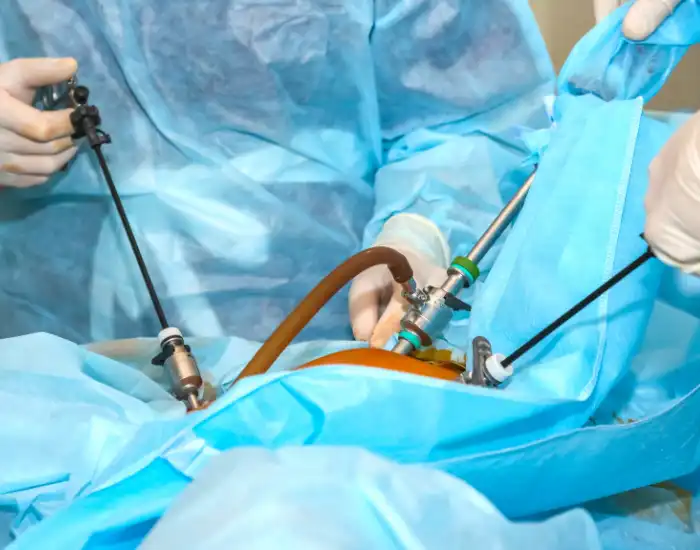
Laparoscopic gallbladder surgery is the standard minimally invasive approach, and NIDDK notes that nearly all surgeons use it. The surgeon makes several small incisions in the abdomen and inserts a laparoscope, a thin instrument with a camera, along with specialized tools. Working from the image on a monitor, the surgeon holds the instruments directly and removes the gallbladder.
Compared with open surgery, most patients have a shorter hospital stay, faster recovery and significantly less pain, and many go home the same day. It is highly effective for most patients and is the preferred method for uncomplicated cases. See more about laparoscopic gallbladder removal.
What Is Robotic Gallbladder Surgery?
Robotic-assisted gallbladder surgery is also minimally invasive, but the surgeon controls the instruments from a console instead of holding them. The system translates the surgeon’s hand movements into precise motions of small wristed instruments, and a high-definition 3D camera gives a magnified view of the surgical area.
The robot does not operate on its own; the surgeon performs every step. Surgeons who use it value the added dexterity, stability and control, and it can be useful in complex situations such as prior abdominal surgery, severe inflammation or unusual anatomy. It requires specialized training and equipment, and it is recommended based on the patient’s individual needs. Read more about robotic gallbladder surgery.
What Are the Key Differences Between Robotic and Laparoscopic Surgery?
The main differences are in how the surgeon controls the instruments and sees the anatomy, not in the size of the scars or the basic steps of the operation. Both approaches remove the same organ through small incisions.
| Factor | Laparoscopic | Robotic-assisted |
|---|---|---|
| Instrument control | Surgeon holds straight instruments directly | Surgeon controls wristed instruments from a console, allowing finer movements |
| View | High-definition camera on a monitor | Magnified high-definition 3D view |
| Incisions | Several small incisions | Several small incisions, sometimes with different port placement |
| Training | Performed by most general surgeons | Requires specialized training on the robotic system |
| Track record | Proven safety and effectiveness over decades | Newer and growing in use |
| Cost | Generally lower | Can be more expensive because of the technology and equipment |
| Recovery | Usually quick | Similar to laparoscopic in most cases |
Not Sure Which Approach Fits You?
Dr. Murtaza Shakir can review your imaging and history in Katy or Sugar Land and explain whether laparoscopic or robotic gallbladder removal makes more sense for you.
What Are the Benefits of Each Approach?
Each approach has real strengths, and for a straightforward gallbladder both are reasonable options in experienced hands.
Potential benefits of robotic surgery
- Enhanced precision and control of the instruments
- A magnified 3D view that can help in difficult dissection
- Possible advantages in complex cases, such as scarring or severe inflammation
- Better ergonomic comfort for the surgeon
Benefits of laparoscopic surgery
- Proven safety and effectiveness over decades
- Short hospital stay and faster recovery than open surgery
- Lower cost than robotic-assisted surgery
- Widely available and performed by most general surgeons
Robotic surgery continues to gain popularity, but newer does not automatically mean safer. A large study of Medicare patients published in JAMA Network Open in 2025 and summarized by the American College of Surgeons found a higher rate of bile duct injury after robotic than after laparoscopic gallbladder removal, while overall complication and readmission rates were similar. For many patients with uncomplicated gallstones, laparoscopic surgery remains an excellent choice.
How Do Surgeons Decide Which Approach to Use?
Surgeons choose the approach by weighing your condition, your history and their own experience with each technique, and then explaining the trade-offs to you. Factors we look at include:
- How inflamed the gallbladder is: an acute attack or long-standing inflammation can make the tissue harder to work with.
- Prior abdominal surgery: scar tissue can change the anatomy and the best way in.
- Anatomy: unusual anatomy can favor the extra view and control a robotic system offers.
- Imaging and lab results: ultrasound, CT or blood tests that suggest stones in the bile duct or other problems.
- Your overall health and goals: including other medical conditions and practical concerns such as cost.
Whatever the plan, safety comes first. With either method, the surgeon may need to change to an open operation if the anatomy cannot be seen clearly or a problem arises. The American College of Surgeons notes this happens in about 7.5 percent of healthy patients having planned surgery, and the chance rises, up to about 30 percent, in patients who are over 50, male and have acute cholecystitis. Converting is a sign of careful judgment, not a failure.
What Are the Risks of Robotic and Laparoscopic Gallbladder Surgery?
Both approaches are generally safe, but like any operation they carry some risk. Possible problems include:
- Bleeding or infection at the incision sites
- Temporary digestive changes such as bloating or diarrhea
- Reactions to anesthesia
- Bile leak, or, rarely, injury to the bile ducts or nearby organs
- A hernia at an incision site
Bile duct injury is the complication surgeons work hardest to avoid, and NIDDK notes it may require additional operations. Discussing your health, medical history and gallbladder condition with your surgeon helps determine the safest approach for you and keeps risk as low as possible.
What Is Recovery Like, and When Should I Call My Surgeon?
Recovery after either procedure is usually quick and similar. Patients can often return to light activities within a few days and to normal routines within 1 to 2 weeks. Pain, tiredness and bloating are common at first and improve over time. Your surgeon will tell you when you can drive, lift and return to work. Follow your post-operative instructions, and see gallbladder removal recovery time for a fuller timeline.
Call your surgeon promptly, or go to the emergency room if you cannot reach them, if after surgery you have:
- Fever over 101°F or chills
- Pain that gets worse instead of better, or strong, continuous belly pain or swelling
- Continuous vomiting or inability to keep fluids down
- Yellowing of the skin or eyes
- Redness, swelling, bleeding or bad-smelling drainage from an incision
Before surgery, a gallbladder attack with pain lasting several hours, fever or chills, or yellowing of the skin or eyes needs same-day medical care, because it can signal infection or a blocked bile duct. Read about symptoms of acute cholecystitis.
Where Can I Discuss Gallbladder Surgery Options in Katy, Sugar Land or Houston?
Patients from the Houston area can meet with Dr. Murtaza Shakir at the Katy or Sugar Land office of Surgical Associates of Southern Texas. Dr. Shakir is a board-certified general surgeon whose gallbladder practice includes both laparoscopic and robotic surgery, so the consultation can focus on which approach fits your case rather than on a single technique.
- Bring any ultrasound, CT or lab reports, including ER records
- List prior abdominal surgeries and current medications
- Write down your questions about the approach, recovery and time off work
Learn more about gallbladder surgery at the practice, see our pages for Katy and Sugar Land, or call (713) 955-9191.
Questions to Ask Your Surgeon About Robotic vs Laparoscopic Gallbladder Surgery
- Which approach do you recommend for my gallbladder, and why?
- Does my history or imaging make my surgery more complex?
- How often do you perform each type of gallbladder surgery?
- What is the chance my operation could change to an open procedure?
- Will I go home the same day, and when can I return to work and lifting?
- Is there a cost difference between the two approaches for me?
- Which symptoms after surgery should make me call you right away?
Frequently Asked Questions
Is robotic gallbladder surgery safer than laparoscopic?
Both are safe in experienced hands. The robotic approach may add precision in complex cases, but current evidence has not shown it to be safer overall, and one large 2025 Medicare study found a higher rate of bile duct injury with robotic surgery.
Does robotic gallbladder surgery have a longer recovery time?
No. Recovery is similar to laparoscopic surgery in most cases, with light activity often within a few days and normal routines within about 1 to 2 weeks.
Why is robotic surgery more expensive?
Costs are generally higher because of the advanced equipment and technology involved. What you pay depends on your plan and facility, so ask the office to check your insurance before surgery.
Are all surgeons trained in robotic gallbladder surgery?
No. Robotic-assisted procedures require specialized training on the robotic system, while laparoscopic gallbladder removal is performed by most general surgeons.
Which method is better for simple gallstones?
For most straightforward gallstone cases, laparoscopic surgery is effective, safe and widely available. Robotic surgery may be considered when the case is expected to be more complex.
Key Takeaway
Robotic and laparoscopic gallbladder surgery are both minimally invasive, effective and usually followed by a quick recovery. Laparoscopic surgery remains the proven standard for most cases, while robotic surgery may help in complex situations; your history, the condition of your gallbladder and your surgeon’s experience should guide the choice.
Sources and Further Reading
- Treatment for Gallstones, National Institute of Diabetes and Digestive and Kidney Diseases (NIDDK)
- Symptoms & Causes of Gallstones, National Institute of Diabetes and Digestive and Kidney Diseases (NIDDK)
- Cholecystectomy: Surgical Removal of the Gallbladder (Patient Education), American College of Surgeons
- Risk of Bile Duct Injury Is Significantly Higher in Robotic Cholecystectomy versus Laparoscopic, American College of Surgeons
This article is general education, not personal medical advice. For severe abdominal pain, fever with abdominal pain, heavy bleeding, or yellowing of the skin or eyes, seek emergency care.

Meet the Surgeon
Dr. Murtaza Shakir is a board-certified General Surgeon and is board certified in Complex General Surgical Oncology. He earned his medical degree at Aga Khan University, completed General Surgery residency at Riverside Methodist Hospital in Columbus, Ohio, and a two-year Surgical Oncology fellowship at the University of Pittsburgh Medical Center. He sees patients at Surgical Associates of Southern Texas in Katy and Sugar Land.
Related Reading and Care
Schedule a Gallbladder Surgery Consultation
Find out whether laparoscopic or robotic gallbladder removal fits your case with Dr. Shakir in Katy or Sugar Land.
This page provides general information and is not a substitute for medical advice. For severe abdominal pain or other emergencies, call 911 or go to the nearest emergency room. Last updated October 16, 2026.