 EN
 ES
 UR
 HI

Quick clinical overview
The gallbladder is a small pouch under the liver that stores bile for digesting fat. Stones form when the chemistry of bile is out of balance. Surgery to remove the gallbladder is the only permanent cure, and almost everyone can live a normal life without one because the liver keeps making bile.
Gallstones at a glance
- What the gallbladder doesStores and concentrates bile from the liver, then releases it into the small intestine to break down dietary fat.
- Why stones formToo much cholesterol or bilirubin, or too few bile salts, lets bile crystallize into hardened, pebble-like deposits.
- The definitive cureComplete removal of the gallbladder (cholecystectomy), usually done laparoscopically or robotically through small incisions.
- Life without oneYour liver keeps producing bile. It simply flows directly into the intestine instead of being stored first.
Part 1: Gallstones and gallbladder disease
1. What does the gallbladder do, and how do gallstones form?
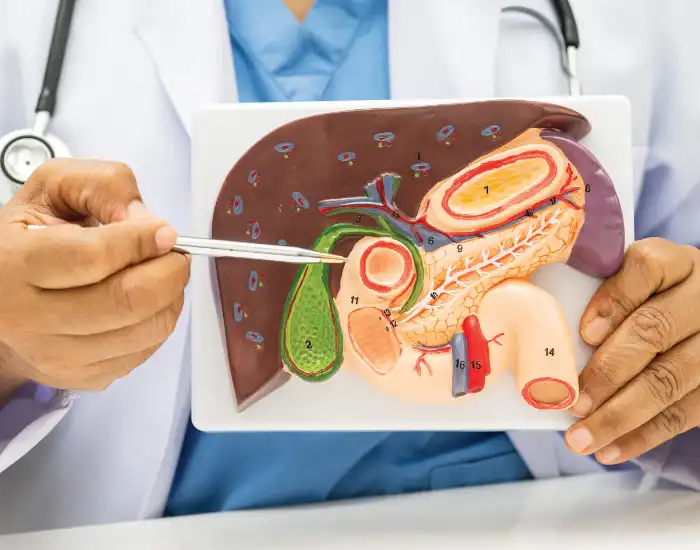
The gallbladder is a small, pear-shaped pouch tucked beneath your liver. Its job is to store and concentrate bile, the yellow-green fluid the liver makes to digest fat. When bile carries too much cholesterol, too much bilirubin, or too few bile salts, it crystallizes. Over time those tiny crystals fuse into hardened deposits called gallstones.
Stones can be as small as a grain of sand or as large as a golf ball, and a person may have one stone or hundreds. Most are cholesterol stones; the rest are pigment stones made of bilirubin. Read more about how Dr. Shakir evaluates and treats stones on our gallbladder surgery page.
2. What does a gallbladder attack feel like, and where is the pain?
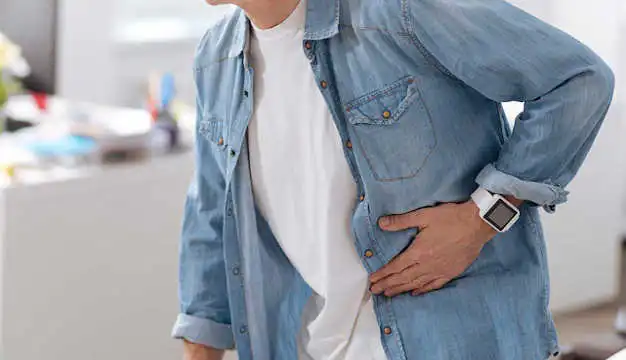
A gallbladder attack (biliary colic) causes intense, steady, gripping pain in the upper right or upper middle abdomen. It often radiates straight through to the back or up into the right shoulder blade. Attacks typically start 30 to 90 minutes after a fatty or greasy meal, last from 30 minutes to several hours, and frequently come with nausea or vomiting.
3. Can I have gallstones and not feel any symptoms?
Yes. About 70 to 80 percent of adults with gallstones have "silent" stones with no pain, nausea, or digestive trouble. These are usually found by accident on an ultrasound or CT scan ordered for something else.
4. What makes someone more likely to develop gallstones?
Gallstones are more common in women, in people over 40, and in anyone with a family history of stones. Weight is a factor at both extremes: obesity and rapid weight loss (including after bariatric surgery) both raise the risk.
- Hormones: pregnancy, birth control pills, and hormone replacement therapy, because estrogen raises cholesterol in bile.
- Metabolic health: type 2 diabetes, high triglycerides, and a sedentary lifestyle.
- Weight changes: obesity, as well as very fast weight loss or crash dieting.
5. How do doctors diagnose gallstones and gallbladder inflammation?
An abdominal ultrasound is the first and most accurate test. It shows stones, sludge, and thickening of the gallbladder wall. If your surgeon suspects a complication or a blocked duct, further tests may follow.
| Test | What it shows |
|---|---|
| Abdominal ultrasound | Stones, sludge, and gallbladder wall thickening. The standard first test. |
| Liver function panel and blood count | Signs of infection, inflammation, or jaundice from a blocked duct. |
| CT scan | Inflammation of nearby organs such as the pancreas, and complications. |
| MRCP (MRI of the bile ducts) | Stones lodged inside the common bile duct. |
| HIDA scan | How well the gallbladder fills and empties. Useful when pain occurs without stones (see biliary dyskinesia). |
6. What can happen if gallstones are left untreated?
Ignoring repeated gallbladder attacks can lead to serious and sometimes life-threatening problems. The most common are acute cholecystitis (a blocked, infected gallbladder), a stone stuck in the common bile duct, cholangitis (infection of the blocked duct system), and gallstone pancreatitis.
- Acute cholecystitis: a prolonged blockage leads to severe inflammation, bacterial infection, and in some cases tissue death.
- Choledocholithiasis: a stone migrates into and blocks the common bile duct, causing jaundice.
- Ascending cholangitis: a bacterial infection of the blocked ducts that needs urgent drainage.
- Gallstone pancreatitis: a stone lodges near the pancreatic duct and triggers inflammation of the pancreas.
Part 2: Non-surgical options and dietary myths
7. Can gallstones be dissolved with medication or a home "flush"?
Bile acid pills such as ursodiol can occasionally dissolve small cholesterol stones, but it takes months to years, works for only a small group of patients, and the stones usually come back once the medicine stops. Online "gallbladder flushes" with olive oil and lemon juice have no clinical support. The "stones" people pass are usually clumps of soap-like oil, and drinking a heavy oil mixture can actually trigger a painful attack.
8. Can the surgeon just remove the stones and leave the gallbladder?
No. Taking out the stones leaves behind a diseased organ with the same bile chemistry that made the stones in the first place, so they quickly re-form. Removing the whole gallbladder is the standard of care worldwide because it gives permanent relief.
9. If my gallstones do not hurt, do I still need surgery?
Usually not. Silent gallstones generally do not need preventive surgery, because the lifetime risk of complications is low and watchful waiting is the safest plan. Surgery for silent stones is reserved for specific high-risk situations, such as a calcified "porcelain" gallbladder, gallbladder polyps larger than 1 cm, or certain blood disorders.
10. Can changing my diet cure gallstones?
No diet can dissolve or reverse stones once they have hardened. A low-fat, high-fiber diet does reduce how hard the gallbladder squeezes after meals, which can make attacks less frequent and less severe while you talk with your surgeon about next steps.
Tip
Keep a simple symptom diary: what you ate, when the pain started, how long it lasted, and whether you felt sick. Bring it to your consultation. It helps Dr. Shakir tell true biliary colic from reflux, ulcer pain, or other causes.
Having repeated gallbladder attacks?
Dr. Murtaza Shakir is double board-certified in General Surgery and Surgical Oncology and performs laparoscopic and robotic gallbladder removal in Katy and Sugar Land. Free consultations and same-week appointments are available.
Part 3: The surgical procedure (cholecystectomy)
11. What is the difference between laparoscopic and open gallbladder surgery?
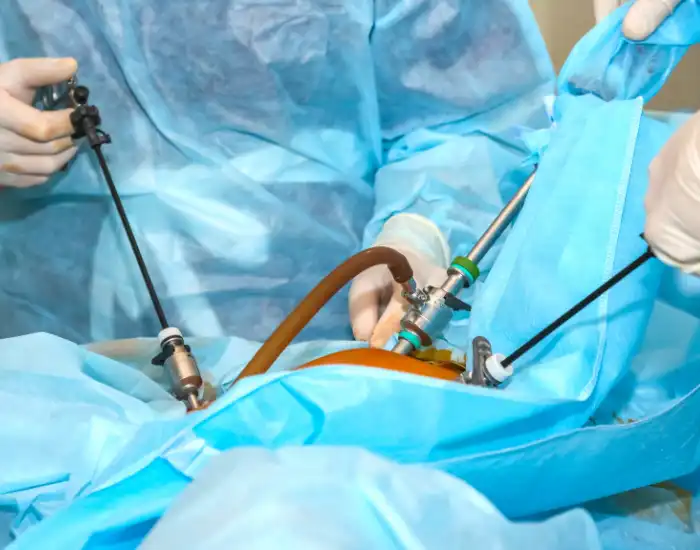
Laparoscopic cholecystectomy is the modern standard: the surgeon makes three or four small incisions (5 to 10 mm), inserts a camera and slender instruments, and removes the gallbladder with very little disruption to the abdominal muscles. Open cholecystectomy uses a single 4- to 6-inch incision below the right rib cage and is reserved for complex emergencies, severe scarring, dense adhesions, or unusual anatomy.
Many patients at Surgical Associates of Southern Texas are candidates for robotic cholecystectomy, which uses the same small incisions with added precision and a magnified 3D view. Learn more about which surgeon removes a gallbladder.
12. How long does gallbladder removal take, and is it outpatient?
A routine laparoscopic cholecystectomy takes about 45 to 90 minutes. In most planned cases it is an outpatient procedure: you recover in the post-anesthesia unit and go home the same day. Open surgery or an emergency operation usually means a hospital stay of two to five days.
13. What are the main risks of a cholecystectomy?
Cholecystectomy is one of the safest abdominal operations, but every surgery carries some risk. Your surgeon will review these with you before the procedure.
- Wound infection or a small collection of blood under the skin
- Bleeding
- Reactions to general anesthesia
- Bile duct injury or a bile leak (less than 0.5 percent of laparoscopic cases)
- Blood clots in the legs (deep vein thrombosis)
14. Why do people get shoulder pain after laparoscopic surgery?
During laparoscopy the abdomen is inflated with carbon dioxide gas so the surgeon can see and work. Small pockets of gas can linger under the diaphragm for a day or two and irritate the phrenic nerve, which shares pathways with the neck and shoulder. The result is referred pain in the right shoulder that usually fades within 48 to 72 hours with gentle walking, fluids, and a warm compress.
Part 4: Recovery, digestion, and long-term lifestyle
15. How long does it take to fully recover after gallbladder removal?
After laparoscopic or robotic surgery most people are back to desk work and light daily activities within 7 to 10 days. Heavy lifting over 10 to 15 pounds and strenuous exercise should wait two to four weeks so the incisions heal without a hernia. Open surgery takes longer: about six to eight weeks before unrestricted physical work.
A typical laparoscopic recovery timeline
- Days 1 to 3Home the same day. Soreness at the incisions and possible shoulder-tip pain. Short walks several times a day.
- Week 1 to 2Back to desk work and driving once you are off narcotic pain medicine. Low-fat, bland meals in small portions.
- Weeks 2 to 4Normal diet returns gradually. No lifting over 10 to 15 pounds. Follow-up visit to check incisions.
- Week 4 and beyondCleared for exercise and heavy lifting. Digestion has usually adapted fully.
16. How does the body digest food without a gallbladder?
The liver, not the gallbladder, makes bile, and it keeps doing so around the clock. After surgery, bile simply drips continuously through the common bile duct into the small intestine instead of being stored and released in a burst. Your digestive system adapts well, though it may struggle at first with very large, very fatty meals.
17. What should I eat in the first weeks after gallbladder surgery?
Focus on bland, easy-to-digest, low-fat foods and reintroduce fat slowly in small portions.
| Choose | Limit for now |
|---|---|
| Skinless chicken or turkey, white fish, egg whites, tofu | Deep-fried foods and heavy gravies |
| Rice, oatmeal, potatoes, bananas, well-cooked vegetables | High-fat dairy such as cheese, butter, and whole milk |
| Plenty of water and small, frequent meals | Cured meats, chocolate, and very spicy dishes |
18. Why do some people have loose stools or diarrhea after surgery?
Without a reservoir to pace the flow of bile, extra bile acids can reach the colon, where they draw in fluid and speed up transit. This bile acid diarrhea usually improves over several weeks. If it persists, your doctor can prescribe a bile acid binder such as cholestyramine or colesevelam, which controls it well in most people.
19. What is post-cholecystectomy syndrome?
Post-cholecystectomy syndrome means ongoing or new digestive symptoms after gallbladder removal, such as right upper abdominal pain, bloating, gas, indigestion, or nausea. It occurs in about 10 to 15 percent of patients. Causes include conditions unrelated to the bile system (irritable bowel syndrome, gastritis, reflux) or biliary causes such as a small retained duct stone or a spasm of the sphincter of Oddi. Most cases can be identified and treated.
20. Which warning signs after surgery need immediate medical attention?
Call your surgeon or go to the nearest emergency room if you develop a fever above 101°F (38.3°C), yellowing of the eyes or skin, worsening abdominal pain not controlled by your prescribed medicine, vomiting that lasts more than 24 hours, spreading redness or drainage at an incision, or sudden shortness of breath, chest pain, or swelling in one calf.
Red flags: when to go to the ER
Emergency symptoms
Whether or not you have had surgery, call 911 or go to the nearest emergency room right away if you have any of the following. These can signal a blocked duct, infection, or pancreatitis.
- Severe abdominal pain that lasts more than a few hours or keeps getting worse
- Fever above 101°F (38.3°C) or shaking chills
- Yellow skin or eyes, dark urine, or pale, clay-colored stools
- Persistent vomiting, or vomiting with abdominal pain
- After surgery: spreading redness, heat, or pus at an incision; chest pain; shortness of breath; or a swollen, painful calf
Our offices are not emergency facilities. Emergency departments can stabilize you and contact our team.
Key takeaways
- Gallstones form when bile chemistry is out of balance. Most never cause symptoms and do not need surgery.
- A true gallbladder attack is steady upper-right pain after a fatty meal, often with nausea. Repeated attacks are the main reason to operate.
- Flushes, cleanses, and diets do not dissolve stones. Removing the whole gallbladder is the only permanent fix.
- Laparoscopic or robotic cholecystectomy is usually a same-day procedure with a 7-to-10-day return to light activity.
- Your liver keeps making bile, so most people eat normally within a few weeks of surgery.
Next steps
If you have been diagnosed with gallstones or are having repeated attacks, a consultation with a board-certified general surgeon is the fastest way to understand your options. Dr. Murtaza Shakir sees patients at our Katy and Sugar Land offices and offers minimally invasive laparoscopic and robotic gallbladder surgery. Call 713-955-9191 or request a free consultation online.