
Gallbladder Surgery • Patient Education
What Kind of Surgeon Removes a Gallbladder?
Gallbladder problems often involve several doctors: an ER physician, a primary care doctor, maybe a gastroenterologist. So when surgery comes up, it is fair to ask who actually performs it, and how the other specialists fit in.
By the surgical team at Surgical Associates of Southern Texas · Updated September 30, 2026
On This Page
Referred for gallbladder surgery?
Meet board-certified general surgeon Dr. Murtaza Shakir in Katy or Sugar Land. Call now, or send us your details and our team will call you back.
THE SHORT ANSWER
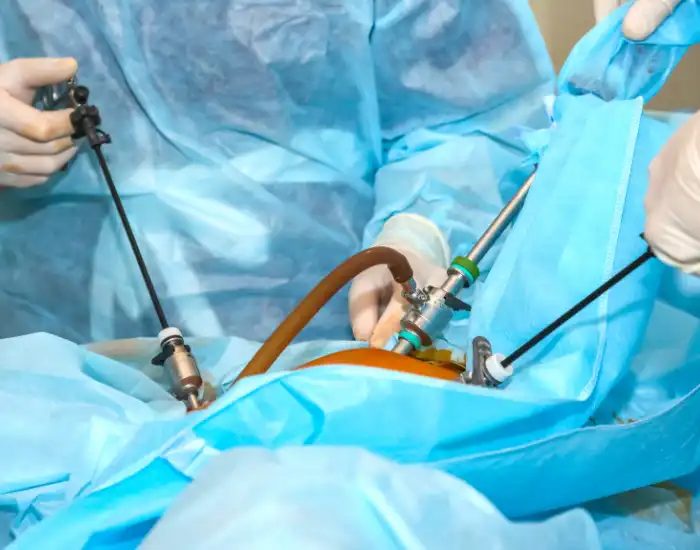
A general surgeon typically performs gallbladder removal, also called cholecystectomy. Most planned gallbladder removals are performed with minimally invasive laparoscopic techniques, with robotic surgery available in selected cases depending on the surgeon and clinical situation. Gastroenterologists diagnose and treat related problems such as bile duct stones, but they do not remove the gallbladder.
Why Is It a General Surgeon?
General surgeons are trained in operations on the abdominal organs, including the gallbladder, bile ducts, appendix, intestines and abdominal wall. Cholecystectomy is one of the operations they perform most often, which is why your primary care doctor or the ER will usually refer you to a general surgeon when gallbladder removal is being considered.
How Do Other Specialists Fit In?
- Primary care physician: often the first to suspect gallstones and order an ultrasound.
- Emergency physician: diagnoses gallbladder attacks, cholecystitis and complications, and arranges admission or follow-up.
- Gastroenterologist: performs ERCP, an endoscopic procedure to remove stones from the bile duct, and evaluates other causes of upper abdominal pain.
- Interventional radiologist: may place a temporary drain in the gallbladder for patients too ill for surgery.
- Hepatobiliary or surgical oncologist: treats complex conditions such as gallbladder or bile duct cancer.
Referred for Gallbladder Surgery?
Board-certified general surgeon Dr. Murtaza Shakir performs laparoscopic and robotic gallbladder removal for patients in Katy, Sugar Land and Greater Houston.
Which Surgical Approaches Are Used?
Laparoscopic removal through several small incisions is the standard for most patients. Robotic removal is another minimally invasive option in selected cases. Open surgery through a larger incision is used when severe inflammation, scarring or other factors make minimally invasive surgery unsafe, sometimes as a conversion during the operation. See robotic gallbladder surgery.
What Should I Look for in a Gallbladder Surgeon?
- Board certification in general surgery by the American Board of Surgery
- Regular experience with laparoscopic and, where relevant, robotic cholecystectomy
- A clear explanation of why surgery is recommended and what the alternatives are
- Convenient follow-up and a team that helps with insurance authorization
For more on this, read what to look for in a gallbladder surgeon.
Frequently Asked Questions
Does a gastroenterologist remove the gallbladder?
No. Gastroenterologists diagnose digestive problems and can remove stones from the bile duct with ERCP, but gallbladder removal is performed by a surgeon.
Do I need a referral to see a general surgeon about my gallbladder?
Not always. Some insurance plans require one, so check your plan. Many patients are referred by their primary care doctor or the ER.
What is the medical name for gallbladder removal?
Cholecystectomy. Laparoscopic cholecystectomy refers to removal through small incisions with a camera.
Is gallbladder removal a major operation?
It is a common operation performed under general anesthesia. Laparoscopic removal usually allows a same-day or next-day discharge and a recovery of about one to two weeks for most people.
Key Takeaway
Gallbladder removal is performed by a general surgeon, usually laparoscopically. Other specialists help with diagnosis and related problems, but the operation itself is the general surgeon’s role.
Sources and Further Reading
- Laparoscopic Cholecystectomy, StatPearls (NCBI Bookshelf)
- Treatment for Gallstones, NIDDK
- Open gallbladder removal, MedlinePlus Medical Encyclopedia
This article is general education, not personal medical advice. For severe abdominal pain, fever with abdominal pain, or yellowing of the skin or eyes, seek emergency care.

Meet the Surgeon
Dr. Murtaza Shakir is a board-certified General Surgeon and is board certified in Complex General Surgical Oncology. He earned his medical degree at Aga Khan University, completed General Surgery residency at Riverside Methodist Hospital in Columbus, Ohio, and a two-year Surgical Oncology fellowship at the University of Pittsburgh Medical Center. He sees patients at Surgical Associates of Southern Texas in Katy and Sugar Land.
Related Reading and Care
Request a Gallbladder Consultation
Meet Dr. Shakir in Katy or Sugar Land to discuss whether gallbladder removal is right for you.
This page provides general information and is not a substitute for medical advice. For severe abdominal pain or other emergencies, call 911 or go to the nearest emergency room. Last updated September 30, 2026.