 EN
 ES
 UR
 HI

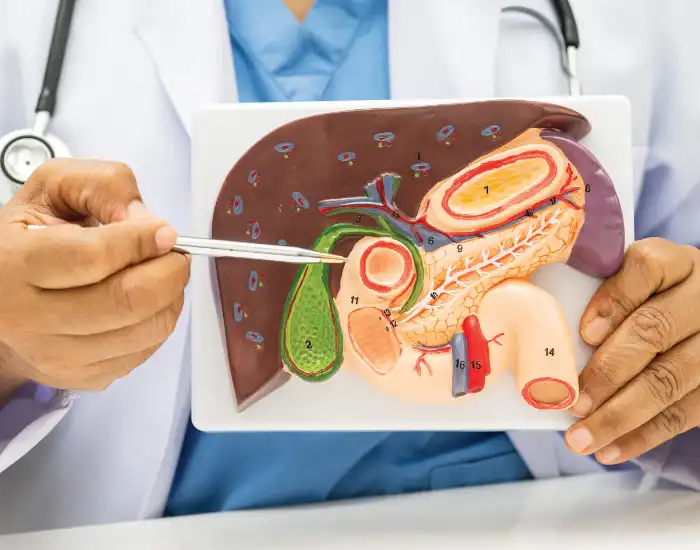
Just left the ER with a gallstone diagnosis?
Bring your ER records to a consultation with board-certified general surgeon Dr. Murtaza Shakir in Katy or Sugar Land. Call (713) 955-9191, or send your details and our team will call you back.
THE SHORT ANSWER
If the ER discharged you with gallstones, the usual next step is a follow-up visit with a general surgeon, ideally within the next few days to weeks. Gallstones that have caused one attack are likely to cause more, and most people with symptomatic gallstones are advised to have the gallbladder removed, usually laparoscopically. Go back to the ER right away for fever, yellow skin or eyes, or pain lasting more than a few hours.
Why Did the ER Send Me Home?
The ER most likely sent you home because your pain improved and your tests showed no sign of infection or a blocked bile duct. Emergency physicians focus on ruling out conditions that need immediate treatment. When the pain settles and the blood work is reassuring, the usual diagnosis is biliary colic: pain caused by a gallstone temporarily blocking the gallbladder outlet. Biliary colic usually settles within a few hours.
If the ER had found acute cholecystitis, an inflamed gallbladder, you probably would have been admitted instead, because inflamed gallbladders are commonly removed during the same hospital stay. Patients with cholecystitis are often given IV fluids and antibiotics, and those who are very ill may first have a drainage tube placed into the gallbladder, with surgery once they improve. Learn the symptoms of acute cholecystitis.
Do Gallstones Found in the ER Always Need Surgery?
Not always, but gallstones that caused the pain that sent you to the ER are a different situation from gallstones found by accident. Stones that have never caused symptoms usually do not need treatment. Once they have caused an attack, further attacks are common, and each one carries some risk of complications such as:
- Cholecystitis, an inflamed or infected gallbladder
- A stone that moves into the bile duct and blocks it
- Gallstone pancreatitis, inflammation of the pancreas
For that reason, surgeons typically recommend removing the gallbladder after symptomatic gallstones, and the NIDDK notes that gallstones causing symptoms need prompt treatment. Medications that dissolve stones exist, but they work slowly, only for certain stones, and are rarely a good option for people whose stones are already causing pain. Read more in do gallstones always need surgery?

How Does a Surgeon Confirm That Gallstones Caused My Pain?
The surgeon confirms it by matching the story of your attack with your exam, imaging and blood work. Gallstones are common, and not every upper belly pain comes from them, so this step matters before any operation is scheduled.
- The pain pattern: typical gallbladder pain sits in the upper right or upper middle belly, lasts at least 30 minutes, may spread to the back or below the right shoulder blade, and often follows a meal, especially a fatty one.
- The exam: tenderness under the right ribs, especially when the surgeon presses on the area.
- The imaging: ultrasound is the first-line test for gallstones and can also show gallbladder wall thickening or a widened bile duct.
- The blood work: liver tests, bilirubin and lipase help show whether a stone has blocked the bile duct or irritated the pancreas.
If anything does not fit, such as abnormal liver tests or a widened bile duct, the surgeon may order more imaging or a procedure to clear the duct before or alongside gallbladder removal.
What Should I Bring to the Surgeon?
Bring every record from the ER visit, because those details help the surgeon confirm that the gallbladder, and not something else, caused your pain. Useful items include:
- Your ER discharge summary
- The ultrasound or CT report, and the images on disc if you have them
- Your blood test results, especially liver tests and lipase
- A list of medications, including blood thinners
- Notes on when the pain started, how long it lasted and what you ate beforehand
If you cannot get copies before your visit, ask the hospital’s records department to send them to the surgeon’s office.
When Should I Go Back to the ER Instead of Waiting?
Go back to the ER, or call 911, if signs suggest infection, a blocked bile duct or pancreatitis. Return right away if you develop:
- Fever or chills with belly pain
- Yellowing of the skin or the whites of the eyes (jaundice)
- Pain in the upper right or middle abdomen that lasts longer than a few hours
- Pain that spreads to the back with nausea and vomiting, which can signal pancreatitis
- Dark urine or pale, clay-colored stools
These can mean the gallbladder is infected or a stone has moved into the bile duct, both of which need prompt treatment. Untreated blockages of the bile ducts or pancreatic duct can become life-threatening, so do not wait for a scheduled appointment if these appear.
Found Gallstones in the ER?
Dr. Murtaza Shakir sees patients after ER visits at the Katy and Sugar Land offices. Bring your ER paperwork and imaging to your consultation.
How Can I Reduce Attacks While I Wait for My Appointment?
Eating smaller meals that are lower in fried and fatty foods may reduce how often attacks happen. Many people notice attacks after large or fatty meals, often in the evening or at night.
Diet changes do not remove the stones, though. Keep your follow-up appointment even if you feel fine; feeling well between attacks is typical of gallstone disease, and once you have had one attack, more are likely.
What Does Gallbladder Surgery Involve?
Gallbladder removal, called cholecystectomy, is one of the most common operations general surgeons perform. Most planned operations are done laparoscopically through a few small incisions, and many patients go home the same day. Robotic surgery is another minimally invasive option in selected cases.
People live normally without a gallbladder because the liver continues to make bile, which then flows directly into the intestine. After laparoscopic surgery, most people return to normal activity in about a week, according to the NIDDK. Learn more about gallbladder surgery, laparoscopic gallbladder removal and recovery after gallbladder removal.
How Do Patients in Katy, Sugar Land and Houston Follow Up After an ER Visit?
Most patients follow up by calling a general surgeon’s office directly with their ER paperwork. Many Houston-area patients are told about gallstones at a hospital ER or freestanding emergency room, and the discharge papers may simply say to see a surgeon.
- Call soon after discharge, and mention that you were seen in the ER for gallstones
- Request your records and imaging from the ER that treated you
- Check whether your insurance plan requires a referral
Dr. Murtaza Shakir sees patients after ER visits at offices in Katy and Sugar Land. Call (713) 955-9191 or request a consultation.
Questions to Ask Your Surgeon After the ER Found Gallstones
- Do my symptoms and ER tests confirm that my gallbladder caused the pain?
- Do I need surgery, and how soon should it be scheduled?
- Did my blood work show any sign of a stone in the bile duct or pancreatitis?
- Will my operation be laparoscopic or robotic, and could it become open?
- What should I eat, and avoid, until surgery?
- Which symptoms mean I should go back to the ER before my surgery date?
Frequently Asked Questions
How soon should I see a surgeon after an ER visit for gallstones?
Many patients are seen within a few days to a few weeks. Follow the timing your ER discharge instructions give, and go back to the ER sooner if pain returns and lasts, or if you develop fever or jaundice.
Can gallstones go away on their own?
Gallstones rarely disappear on their own. Small stones can pass into the bile duct, but that can cause blockage or pancreatitis rather than solving the problem.
Will I need surgery right away?
Usually not, if the ER discharged you. Surgery is typically scheduled after a consultation. Patients with acute cholecystitis are often treated during the same hospital admission.
What kind of doctor removes the gallbladder?
A general surgeon. Your primary care doctor or a gastroenterologist may help with diagnosis, but the operation is performed by a surgeon. See what kind of surgeon removes a gallbladder.
Is it safe to wait for surgery after a gallbladder attack?
For many people with biliary colic, a short wait for a planned operation is reasonable, as long as there are no warning signs. Fever, jaundice or pain lasting several hours means you should return to the ER instead of waiting.
Key Takeaway
Gallstones that sent you to the ER deserve a follow-up with a general surgeon. Most people with symptomatic gallstones do best with gallbladder removal, usually laparoscopic. Fever, jaundice or pain lasting more than a few hours means you should return to the ER.
Sources and Further Reading
- Gallstones, National Institute of Diabetes and Digestive and Kidney Diseases (NIDDK)
- Treatment for Gallstones, National Institute of Diabetes and Digestive and Kidney Diseases (NIDDK)
- Acute Cholecystitis, MedlinePlus Medical Encyclopedia
- Laparoscopic Cholecystectomy, StatPearls (NCBI Bookshelf)
This article is general education, not personal medical advice. For severe abdominal pain, fever with abdominal pain, heavy bleeding, or yellowing of the skin or eyes, seek emergency care.

Meet the Surgeon
Dr. Murtaza Shakir is a board-certified General Surgeon and is board certified in Complex General Surgical Oncology. He earned his medical degree at Aga Khan University, completed General Surgery residency at Riverside Methodist Hospital in Columbus, Ohio, and a two-year Surgical Oncology fellowship at the University of Pittsburgh Medical Center. He sees patients at Surgical Associates of Southern Texas in Katy and Sugar Land.
Related Reading and Care
Schedule a Gallbladder Evaluation
Bring your ER records and meet Dr. Shakir in Katy or Sugar Land to talk through next steps.
This page provides general information and is not a substitute for medical advice. For severe abdominal pain or other emergencies, call 911 or go to the nearest emergency room. Last updated October 16, 2026.