 EN
 ES
 UR
 HI

Pain after meals that keeps coming back?
Have it checked by board-certified general surgeon Dr. Murtaza Shakir in Katy or Sugar Land. Call (713) 955-9191, or send your details and our team will call you back.
THE SHORT ANSWER
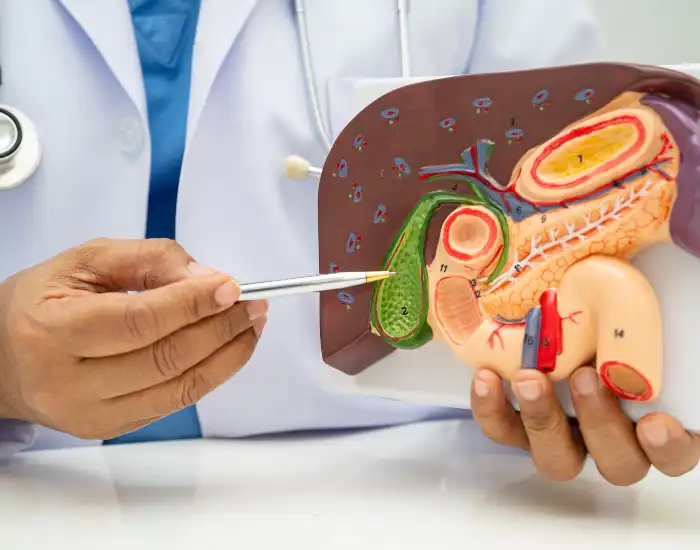
The gallbladder is a small, pear-shaped organ under the liver that stores and concentrates bile, then squeezes it into the small intestine when you eat, especially fatty foods. Bile helps your body break down and absorb fat. The liver keeps making bile without it, so most people digest normally after gallbladder removal.
What Does the Gallbladder Do in the Digestive System?
The gallbladder stores bile made by the liver and releases it into the small intestine at mealtimes, so there is a strong supply of bile ready when you eat. In simple terms, it is a storage and delivery system for bile.
Bile is a digestive fluid that helps break down fats so the body can absorb them. Rather than letting all of it trickle into the intestine around the clock, the body sends much of it to the gallbladder between meals, where it is stored and concentrated.
When you eat, especially a meal that contains fat, the gallbladder contracts. Bile travels through the bile ducts into the small intestine, where it helps the body digest food and absorb nutrients. Although the gallbladder is small, it plays a meaningful role in this process, particularly for fatty foods.
Where Is the Gallbladder, and How Big Is It?
The gallbladder sits beneath the liver in the upper right part of the abdomen. It is:
- A small, pear-shaped organ
- About 3 to 4 inches long (StatPearls lists roughly 7 to 10 centimeters)
- Tucked under the liver
- Connected to the liver and the small intestine through the bile ducts
Despite its size, the gallbladder holds about 30 to 50 milliliters of bile. Its lining absorbs water and salts from the bile, which concentrates it and makes it more effective when it is released during digestion.
Its location explains why gallbladder pain is usually felt in the upper right abdomen, and why it can spread toward the back or right shoulder.
How Does the Gallbladder Help You Digest Fat?
The gallbladder helps digest fat by releasing a concentrated dose of bile right when fatty food reaches the intestine. Dietary fats need bile to be broken down and absorbed properly.
When fatty food leaves the stomach, the small intestine releases hormones that signal the gallbladder to contract. One of these, cholecystokinin, makes the gallbladder squeeze and relaxes the valve where bile enters the intestine. The released bile then helps:
- Break fat into smaller droplets that are easier to digest
- Support the absorption of nutrients
- Improve digestion of oily or fatty foods
Without bile, the body would struggle to digest fat. The liver continues to produce bile even without a gallbladder, but the gallbladder delivers it more efficiently at mealtimes. That timing is why gallbladder pain so often follows a heavy or fatty meal. Read more about gallbladder pain after eating.
What Happens When the Gallbladder Is Not Working Properly?
Most gallbladder problems start when substances in bile harden into gallstones that block the flow of bile and trigger pain. According to the National Institute of Diabetes and Digestive and Kidney Diseases (NIDDK), stones can form when bile contains too much cholesterol or bilirubin, or when the gallbladder does not empty completely or often enough.
Common gallbladder conditions include:
- Gallstones
- Gallbladder inflammation (cholecystitis)
- Bile duct obstruction
- Gallbladder infection
- Gallbladder dysfunction, where the gallbladder does not empty well even without stones (see biliary dyskinesia)
Symptoms of gallbladder problems may include:
- Pain in the upper right abdomen
- Nausea or vomiting after meals
- Bloating or indigestion
- Pain that spreads to the back or shoulder
- Discomfort after eating fatty foods
Mayo Clinic notes that gallstone pain can also be felt just below the breastbone or between the shoulder blades, and may last from several minutes to a few hours. When these symptoms appear, a medical evaluation is a good idea. See gallbladder attack symptoms for more detail.
When Do Gallbladder Symptoms Need Medical Attention?
Gallbladder symptoms need prompt medical attention when pain is severe or long-lasting, or comes with fever, vomiting or yellowing of the skin. Get evaluated if you have:
- Severe abdominal pain lasting several hours
- Fever or chills with abdominal pain
- Yellowing of the skin or the whites of the eyes (jaundice)
- Persistent nausea or vomiting
- Pain after eating fatty meals that keeps coming back
Go to the emergency room if the pain is so severe you cannot sit still or get comfortable, or if pain comes with high fever and chills, jaundice, or tea-colored urine and light-colored stools. These can be signs of an inflamed gallbladder, a stone blocking the bile duct, or pancreatitis, which need urgent treatment. Learn the signs of acute cholecystitis.
Wondering If Your Gallbladder Is the Problem?
A surgical evaluation can match your symptoms to your imaging and explain your options. Request a consultation with Dr. Murtaza Shakir in Katy or Sugar Land.
How Do Doctors Diagnose Gallbladder Problems?
Doctors diagnose gallbladder problems by matching your symptoms and exam with blood tests and imaging, most often an abdominal ultrasound. Evaluation may include:
- Physical examination: checking for tenderness in the upper right abdomen.
- Blood tests: to check liver function and look for signs of infection or a blocked bile duct.
- Abdominal ultrasound: the usual first test for gallstones and gallbladder inflammation.
- CT or MRI: to look at the bile ducts and nearby organs in more detail.
- Specialized imaging of bile flow: such as a scan that shows how well the gallbladder fills and empties.
These tests help sort out whether symptoms come from gallstones, inflammation or another digestive condition. A surgeon looks for a match between the pattern of pain and what the tests show. Gallstones found by chance on a scan, without typical symptoms, often do not need surgery; see do gallstones always need surgery.
Who treats gallbladder conditions?
- Primary care physician: evaluates the first symptoms and may order imaging.
- Gastroenterologist: diagnoses conditions affecting bile flow and the digestive tract.
- General surgeon: performs gallbladder removal when surgery is needed.
Why Is Gallbladder Removal Recommended, and Can You Live Without It?
Gallbladder removal is usually recommended when gallstones cause repeated attacks or complications, and most people live normally afterward. Removal, called cholecystectomy, is one of the most commonly performed operations, and many gallbladder conditions are treated effectively this way.
Surgery may be recommended for:
- Repeated gallstone attacks
- Gallbladder inflammation
- Blockage of the bile ducts
- Complications related to gallstones
Many patients worry about how the body works without the gallbladder. Cleveland Clinic notes that it is not an essential organ. After removal:
- The liver continues producing bile
- Bile flows directly into the small intestine instead of being stored
- Digestion still occurs normally
Some people notice temporary changes, such as mild diarrhea or trouble tolerating fatty foods early in recovery. These usually improve as the digestive system adapts, and many patients return to normal eating. Gallbladder surgery is commonly done with minimally invasive techniques; see laparoscopic gallbladder removal and long-term effects of gallbladder removal.
Can Lifestyle Habits Help Protect the Gallbladder?
Healthy habits may lower the risk of gallstones, although some gallbladder problems develop despite them. Helpful habits include:
- Maintaining a healthy body weight
- Eating balanced meals with moderate fat
- Avoiding extremely high-fat diets
- Staying physically active
- Drinking enough water
Mayo Clinic adds a few practical points: do not skip meals, include fiber from fruits, vegetables and whole grains, and if you are losing weight, do it gradually, because losing weight very quickly is itself a risk factor for gallstones. Other risk factors, such as being female, being over 40, pregnancy and family history, cannot be changed, which is one reason symptoms deserve attention even in people with healthy habits.
Where Can Patients in Katy, Sugar Land and Houston Get Gallbladder Symptoms Evaluated?
Patients can book a surgical consultation at our Katy or Sugar Land office, often after a primary care visit or ER trip where an ultrasound showed gallstones. Bringing the right information makes the visit more useful:
- Copies of any ultrasound, CT or blood test results
- A short log of when pain starts, how long it lasts and which meals trigger it
- A list of your medications and past abdominal surgeries
Dr. Shakir evaluates abdominal pain and gallbladder problems for patients from across the Houston area at offices in Katy and Sugar Land. Learn more about gallbladder surgery, call (713) 955-9191 or request an appointment.
Questions to Ask Your Surgeon About Your Gallbladder
- Do my symptoms fit a gallbladder problem, or could something else be causing them?
- What did my ultrasound or blood tests show?
- Do I need surgery, or is it reasonable to watch and wait?
- If surgery is recommended, will it be done with a minimally invasive approach?
- How will my digestion change after the gallbladder is removed?
- Which symptoms should send me to the emergency room while I wait?
Frequently Asked Questions
What is the main function of the gallbladder?
Its main job is to store and concentrate bile made by the liver and release it into the small intestine when you eat. Bile helps your body break down and absorb fat.
How much bile does the gallbladder hold?
About 30 to 50 milliliters. It concentrates that bile by removing water, so a small amount works efficiently during a meal.
Where do you feel gallbladder pain?
Usually in the upper right abdomen, sometimes just below the breastbone. The pain can spread to the back, between the shoulder blades or to the right shoulder, and often follows a heavy or fatty meal.
Does removing the gallbladder affect digestion?
Usually only a little. Bile flows straight from the liver into the intestine, and digestion continues normally. Some people have loose stools or trouble with fatty foods early on, which usually improves.
Can the gallbladder stop working without gallstones?
Yes. Some people have a gallbladder that does not empty properly, which can cause pain similar to gallstones. Doctors may use a scan of bile flow to check how well it empties. See biliary dyskinesia.
Key Takeaway
The gallbladder stores and concentrates bile and releases it at mealtimes to help digest fat. Gallstones and inflammation can block that process and cause pain after meals, nausea and other symptoms. When removal is needed, the liver keeps supplying bile and most people digest normally afterward.
Sources and Further Reading
- Anatomy, Abdomen and Pelvis: Gallbladder, StatPearls (National Library of Medicine)
- Symptoms & Causes of Gallstones, National Institute of Diabetes and Digestive and Kidney Diseases (NIDDK)
- Gallstones: Symptoms and Causes, Mayo Clinic
- Gallbladder: Function, Location and Anatomy, Cleveland Clinic
This article is general education, not personal medical advice. For severe abdominal pain, fever with abdominal pain, heavy bleeding, or yellowing of the skin or eyes, seek emergency care.
Meet the Surgeon
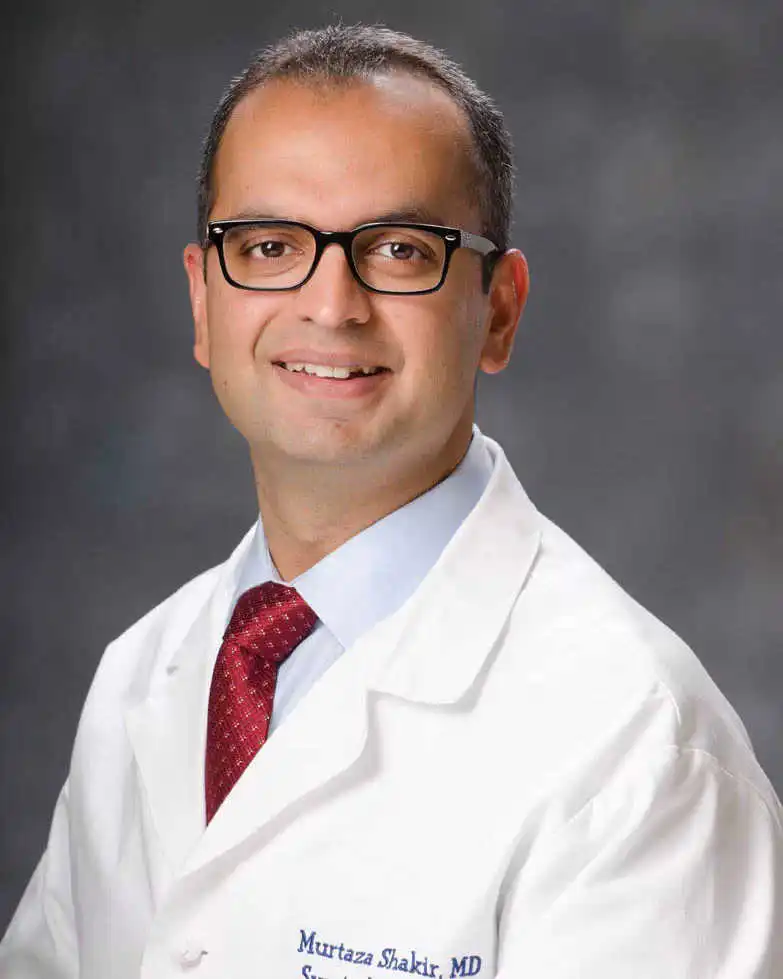
Dr. Murtaza Shakir is a board-certified General Surgeon and is board certified in Complex General Surgical Oncology. He earned his medical degree at Aga Khan University, completed General Surgery residency at Riverside Methodist Hospital in Columbus, Ohio, and a two-year Surgical Oncology fellowship at the University of Pittsburgh Medical Center. He sees patients at Surgical Associates of Southern Texas in Katy and Sugar Land.
Related Reading and Care
Schedule a Gallbladder Evaluation
Have pain after meals or a gallstone finding reviewed by Dr. Shakir in Katy or Sugar Land.
This page provides general information and is not a substitute for medical advice. For severe abdominal pain or other emergencies, call 911 or go to the nearest emergency room. Last updated October 16, 2026.